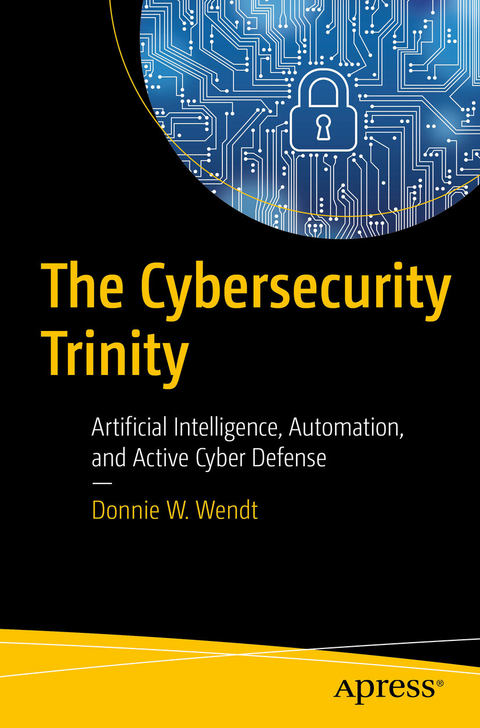
The Cybersecurity Trinity (eBook)
396 Seiten
Apress (Verlag)
979-8-8688-0947-7 (ISBN)
This book explores three crucial topics for cybersecurity professionals: artificial intelligence (AI), automation, and active cyber defense (ACD). The Cybersecurity Trinity will provide cybersecurity professionals with the necessary background to improve their defenses by harnessing the combined power of these three concepts. The book is divided into four sections, one addressing each underlying concept and the final section discussing integrating them to harness their full potential.
With the expected growth of AI and machine learning (ML), cybersecurity professionals must understand its core concepts to defend AI and ML-based systems. Also, most cybersecurity tools now incorporate AI and ML. However, many cybersecurity professionals lack a fundamental understanding of AI and ML. The book's first section aims to demystify AI and ML for cybersecurity practitioners by exploring how AI and ML systems work, where they are vulnerable, and how to defend them.
Next, we turn our attention to security automation. Human-centered cyber defense processes cannot keep pace with the threats targeting organizations. Security automation can help defenders drastically increase the speed of detection and response. This section will discuss core use cases that security teams can implement, including intelligence processing, incident triage, detection, and response. This section will end with strategies for a successful security automation implementation and strategies that can lead to failure.
Accelerating the defense is but one side of the equation. Defenders can also implement ACD methods to disrupt and slow the attacker. Of course, ACD spans a broad spectrum, including some that could raise legal and ethical concerns. This section will explore some ACD methods and discuss their applicability, as well as the need to include business, legal, and ethical considerations when implementing them.
Security teams often treat AI, automation, and ACD as disparate solutions, addressing specific problems. However, there is much overlap, and security teams must develop a cohesive approach to realize the full potential. The last section combines these three concepts to form a comprehensive strategy. The resulting strategy will have AI as the foundation, incorporating automation to speed up defense and ACD to disrupt the attacker.
What You Will Learn:
- Understand the many uses of AI and ML and the concepts underpinning these technologies.
- Learn how to protect AI and ML systems by recognizing the vulnerabilities throughout their lifecycle.
- Integrate AI and ML-based systems to enhance cybersecurity.
- Develop security automation processes to enhance situation awareness, speed the time to respond, and increase the bandwidth of the limited security operations staff.
- Develop an ACD strategy to slow the attackers while minimizing legal and ethical concerns.
- Design a comprehensive strategy with AI as the foundation, incorporating automation to speed up defense and ACD to disrupt the attacker.
Who This Book is for:
The primary audience is cybersecurity professionals looking to improve their organization's security posture by leveraging AI and ML-based security tools and combining them into a comprehensive strategy incorporating automation and ACD. This target audience will have a cybersecurity background and an interest in AI and ML.
Higher education would be a secondary audience.
This book explores three crucial topics for cybersecurity professionals: artificial intelligence (AI), automation, and active cyber defense (ACD). The Cybersecurity Trinity will provide cybersecurity professionals with the necessary background to improve their defenses by harnessing the combined power of these three concepts. The book is divided into four sections, one addressing each underlying concept and the final section discussing integrating them to harness their full potential.With the expected growth of AI and machine learning (ML), cybersecurity professionals must understand its core concepts to defend AI and ML-based systems. Also, most cybersecurity tools now incorporate AI and ML. However, many cybersecurity professionals lack a fundamental understanding of AI and ML. The book's first section aims to demystify AI and ML for cybersecurity practitioners by exploring how AI and ML systems work, where they are vulnerable, and how to defend them.Next, we turn our attention to security automation. Human-centered cyber defense processes cannot keep pace with the threats targeting organizations. Security automation can help defenders drastically increase the speed of detection and response. This section will discuss core use cases that security teams can implement, including intelligence processing, incident triage, detection, and response. This section will end with strategies for a successful security automation implementation and strategies that can lead to failure.Accelerating the defense is but one side of the equation. Defenders can also implement ACD methods to disrupt and slow the attacker. Of course, ACD spans a broad spectrum, including some that could raise legal and ethical concerns. This section will explore some ACD methods and discuss their applicability, as well as the need to include business, legal, and ethical considerations when implementing them.Security teams often treat AI, automation, and ACD as disparate solutions, addressing specific problems. However, there is much overlap, and security teams must develop a cohesive approach to realize the full potential. The last section combines these three concepts to form a comprehensive strategy. The resulting strategy will have AI as the foundation, incorporating automation to speed up defense and ACD to disrupt the attacker. What You Will Learn: Understand the many uses of AI and ML and the concepts underpinning these technologies. Learn how to protect AI and ML systems by recognizing the vulnerabilities throughout their lifecycle. Integrate AI and ML-based systems to enhance cybersecurity. Develop security automation processes to enhance situation awareness, speed the time to respond, and increase the bandwidth of the limited security operations staff. Develop an ACD strategy to slow the attackers while minimizing legal and ethical concerns. Design a comprehensive strategy with AI as the foundation, incorporating automation to speed up defense and ACD to disrupt the attacker. Who This Book is for:The primary audience is cybersecurity professionals looking to improve their organization's security posture by leveraging AI and ML-based security tools and combining them into a comprehensive strategy incorporating automation and ACD. This target audience will have a cybersecurity background and an interest in AI and ML.Higher education would be a secondary audience.
| Erscheint lt. Verlag | 11.12.2024 |
|---|---|
| Zusatzinfo | XXVI, 396 p. 122 illus., 107 illus. in color. |
| Sprache | englisch |
| Themenwelt | Informatik ► Netzwerke ► Sicherheit / Firewall |
| Informatik ► Theorie / Studium ► Künstliche Intelligenz / Robotik | |
| Schlagworte | active cyber defense • Adversarial Machine Learning • AI-based Cybersecurity • Artificial Intelligence • Cyber Deception • cybersecurity • Cybersecurity strategy • machine learning • Securing machine learning • security automation • SOAR (security orchestration, automation, and response) |
| ISBN-13 | 979-8-8688-0947-7 / 9798868809477 |
| Informationen gemäß Produktsicherheitsverordnung (GPSR) | |
| Haben Sie eine Frage zum Produkt? |
 PDF (Wasserzeichen)
Größe: 18,9 MB
DRM: Digitales Wasserzeichen
Dieses eBook enthält ein digitales Wasserzeichen und ist damit für Sie personalisiert. Bei einer missbräuchlichen Weitergabe des eBooks an Dritte ist eine Rückverfolgung an die Quelle möglich.
Dateiformat: PDF (Portable Document Format)
Mit einem festen Seitenlayout eignet sich die PDF besonders für Fachbücher mit Spalten, Tabellen und Abbildungen. Eine PDF kann auf fast allen Geräten angezeigt werden, ist aber für kleine Displays (Smartphone, eReader) nur eingeschränkt geeignet.
Systemvoraussetzungen:
PC/Mac: Mit einem PC oder Mac können Sie dieses eBook lesen. Sie benötigen dafür einen PDF-Viewer - z.B. den Adobe Reader oder Adobe Digital Editions.
eReader: Dieses eBook kann mit (fast) allen eBook-Readern gelesen werden. Mit dem amazon-Kindle ist es aber nicht kompatibel.
Smartphone/Tablet: Egal ob Apple oder Android, dieses eBook können Sie lesen. Sie benötigen dafür einen PDF-Viewer - z.B. die kostenlose Adobe Digital Editions-App.
Buying eBooks from abroad
For tax law reasons we can sell eBooks just within Germany and Switzerland. Regrettably we cannot fulfill eBook-orders from other countries.
aus dem Bereich