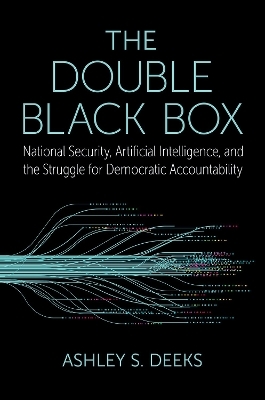
The Double Black Box
Oxford University Press Inc (Verlag)
978-0-19-752090-1 (ISBN)
National security decisions pose a paradox: they are among the most consequential a government can make, but are generally the least transparent to the democratic public. The "black box" nature of national security decision-making --driven by extensive classification and characterized by difficulty overseeing executive actions--has expanded in the United States as executive power continues to grow.
The rise of artificial intelligence (AI) systems to enhance national security decision-making--or even to make autonomous decisions--deepens this challenge, because it is difficult to understand how AI algorithms, often described as "black boxes," reach their conclusions. The widespread use of AI inside the national security ecosystem renders U.S. national security choices even more opaque to the public, congressional overseers, U.S. allies, and even the executive officials making the decisions. How can we be confident that the U.S. governments use of these AI systems comports with our values, including rationality, lawfulness, and accountability?
The Double Black Box: National Security, Artificial Intelligence, and the Struggle for Democratic Accountability addresses these pressing challenges. Because China is committed to becoming the world leader in AI and faces fewer legal and values-based constraints on its pursuit of military AI, democracies' commitment to using AI in lawful and ethical ways will be tested. This book defines and explores the "double black box" phenomenon and then identifies ways that policymakers, military and intelligence officials, and lawyers in democratic states such as the United States can reap the advantages of advanced technologies without surrendering their public law values.
Ashley S. Deeks is the Class of 1948 Professor of Scholarly Research in Law at the University of Virginia Law School and a Faculty Senior Fellow at the Miller Center. She is an elected member of the American Law Institute, a member of the State Department's Advisory Committee on International Law, and a contributing editor to the Lawfare blog. In 2021-22 she worked as the Deputy Legal Advisor at the National Security Council. Before joining UVA, she served for ten years in the U.S. State Department's Office of the Legal Adviser. She graduated with honors from the University of Chicago Law School and clerked on the Third Circuit Court of Appeals.
Introduction
PART I. THE PROBLEM
1: The National Security Black Box
2: The Algorithmic Black Box
3: The Double Black Box
PART II. UNPACKING THE DOUBLE BLACK BOX
4: Using Traditional Checks in the U.S. System
5: Using Nontraditional Checks
6: The Hurdles to International Regulation
Conclusion: The Future of the Double Black Box
| Erscheinungsdatum | 20.05.2025 |
|---|---|
| Verlagsort | New York |
| Sprache | englisch |
| Maße | 155 x 229 mm |
| Gewicht | 522 g |
| Themenwelt | Informatik ► Theorie / Studium ► Künstliche Intelligenz / Robotik |
| Recht / Steuern ► EU / Internationales Recht | |
| Recht / Steuern ► Öffentliches Recht | |
| Recht / Steuern ► Strafrecht ► Besonderes Strafrecht | |
| ISBN-10 | 0-19-752090-1 / 0197520901 |
| ISBN-13 | 978-0-19-752090-1 / 9780197520901 |
| Zustand | Neuware |
| Informationen gemäß Produktsicherheitsverordnung (GPSR) | |
| Haben Sie eine Frage zum Produkt? |
aus dem Bereich