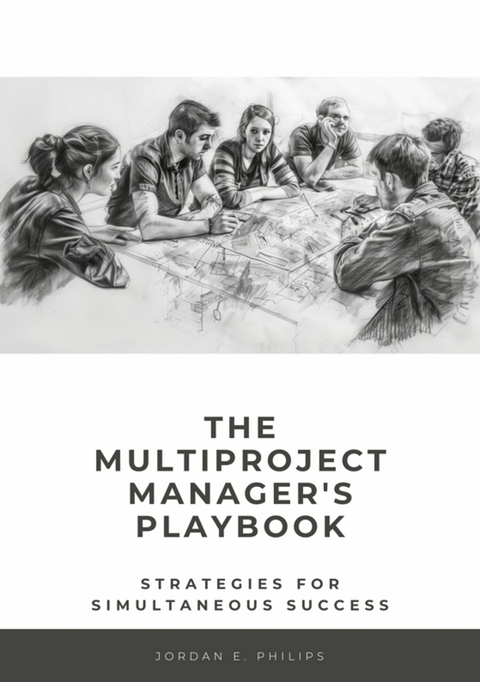
The Multiproject Manager's Playbook (eBook)
196 Seiten
tredition (Verlag)
978-3-384-15738-6 (ISBN)

I. Understanding Multi-Project Management
Foundations of Multi-Project Management
Embarking on the journey of multi-project management requires a deep understanding of the complex challenges and rewards that come with simultaneously handling multiple projects. In this section, we delve into the defining struggles faced in managing diverse projects, explore the benefits that come with successful management, and uncover the delicate balance between risk and reward. By presenting solutions to these challenges, emphasizing proactive planning, and setting the foundations for effective team dynamics, we aim to equip you with the tools needed to navigate the intricate landscape of multi-project management with agility and finesse.
Overview of managing multiple projects
Multi-Project Management involves overseeing and coordinating multiple projects concurrently to meet strategic objectives effectively. This approach is crucial for organizations aiming to optimize resource allocation, maintain project alignment with their overall goals, and enhance productivity across different initiatives. The role of Agile methodologies in Multi-Project Management is particularly significant, as these practices offer flexibility, adaptability, and improved collaboration among project teams, essential for navigating the complexities of managing multiple projects.
Despite its benefits, Multi-Project Management comes with common challenges, including resource conflicts, time constraints, and the need to prioritize tasks effectively. Success in Multi-Project Management hinges on various factors, such as clear communication channels, strategic prioritization of projects based on their impact, setting and monitoring achievable goals, and ensuring continuous progress tracking across all initiatives.
Implementing Multi-Project Management can yield numerous advantages for organizations, including enhanced efficiency, faster project delivery timelines, optimized resource utilization, and improved overall performance. However, it also presents drawbacks such as heightened complexity, the risk of overcommitment, and the necessity for meticulous coordination and communication efforts to ensure seamless project execution. Organizations that master the complexities of Multi-Project Management can ultimately benefit from enhanced agility and the ability to drive multiple projects towards successful outcomes in a cohesive and synchronized manner.
Key challenges and benefits
Unveiling Hidden Challenges:
When one delves into the realm of multi-project management, it quickly becomes apparent that a myriad of challenges exists beneath the surface. Conflicting priorities vie for attention, resources are stretched thin, and the intricacies of coordinating and aligning multiple projects can be overwhelming. Team members find themselves pulled in different directions, adjusting priorities on the fly while striving to maintain quality and meet deadlines. The potential for miscommunication and misunderstandings increases exponentially with each additional project on one’s plate.
Recognizing Benefits of Multi-Project Management:
Despite the complexities and challenges that multi-project management presents, there are also significant rewards to be reaped from mastering this intricate dance. Successfully juggling multiple projects can lead to increased efficiency, as teams learn to optimize resources and streamline processes across projects. The cross-pollination of ideas and experiences between projects can spark innovation and creativity. Additionally, managing simultaneous projects can enhance adaptability and resilience within an organization, fostering a culture of agility and responsiveness to change.
Understanding Risk and Reward Balance:
In the intricate tapestry of managing multiple projects, there is a delicate balance between risk and reward that must be carefully navigated. Risks such as overextension, task switching, and project delays loom large, threatening to derail even the most meticulous plans. However, the potential rewards of multi-project management’such as enhanced skill development, increased project throughput, and improved organizational agility’can be substantial if managed effectively.
Presenting Solutions to Challenges:
To conquer the challenges of multi-project management, one must arm oneself with effective strategies and tools. Strategic prioritization of projects based on organizational goals and resource availability is crucial to ensure that efforts are focused on high-impact activities. Clear and open communication channels must be established to keep all stakeholders informed and aligned. Leveraging technology, such as project management software and collaboration tools, can streamline workflows and enhance coordination across projects.
Highlighting the Importance of Proactive Planning:
Proactive planning serves as a beacon of light in the fog of multi-project management, guiding teams through the complexities and uncertainties that lie ahead. Anticipating challenges before they arise allows teams to mitigate risks and plan for contingencies, ensuring smooth project execution and successful outcomes. By taking a proactive approach to multi-project management, organizations can optimize resource allocation, enhance team productivity, and set the stage for sustained success in navigating the intricacies of simultaneous project management.
Importance of team dynamics
Understanding team dynamics in the realm of multi-project management serves as the linchpin to success in complex work environments. At the core of effective team dynamics lies a deep comprehension of the roles team members hold and the intricate web of relationships that interlace them. Each individual’s unique personality traits and skill sets can either harmonize to propel projects forward or clash, leading to potential friction and setbacks.
Trust acts as the foundational bedrock upon which collaboration thrives, creating a space where team members feel empowered to contribute ideas, engage in shared decision-making, and work towards common goals with collective ownership. Effective communication emerges as the lifeblood of productive team dynamics, necessitating clear, concise, and timely exchanges that prevent misunderstandings, promote transparency, and foster alignment.
In the dynamic landscape of multi-project management, adaptability and flexibility become paramount virtues. Embracing change not as a disruption but as an inherent aspect of progress allows teams to pivot, innovate, and respond swiftly to evolving demands, ensuring sustained momentum.
Equally critical is the art of conflict resolution, where strategies for navigating disagreements and dissenting viewpoints in a constructive manner are vital for maintaining a positive work atmosphere and safeguarding team morale and cohesion.
Common pitfalls to avoid
Neglecting risk management within the realm of managing multiple projects simultaneously can create a precarious environment where various unknown factors pose a threat to the successful completion of projects. Overloading teams beyond their capacity endangers not only the quality of work but also the well-being of team members, potentially leading to burnout and turnover. Inadequate communication policies further exacerbate these challenges by fostering confusion, misalignment, and ultimately project delays.
When prioritization is ignored, projects may lack strategic direction, causing resources to be distributed inefficiently and critical objectives to be sidelined. Failure to learn from past mistakes perpetuates a cycle of inefficiency and missed opportunities for growth and improvement. Disregarding employ ees’ well-being in the face of mounting project demands can result in high levels of stress, decreased motivation, and diminished overall productivity.
To effectively manage multiple projects, it is crucial to address these key areas systematically and proactively. By prioritizing risk management, ensuring balanced workloads, establishing robust communication channels, enforcing strategic prioritization, promoting a culture of continuous improvement, and prioritizing employee well-being, organizations can navigate the complexities of multi-project environments with greater resilience and success.
Introduction to Agile methodologies
Agile methodologies have swiftly gained prominence in project management due to their focus on adaptability, responsiveness, and customer collaboration. Originating in the software development realm, Agile principles emphasize iterative development cycles, self-organizing teams, and a continuous delivery approach. This methodology significantly enhances project management practices by allowing for changes to be incorporated throughout the project’s course, fostering agility and responsiveness to evolving requirements and customer needs.
One of the most prevalent Agile frameworks is Scrum, which divides work into structured time-boxed periods known as sprints. Scrum implements distinct roles such as the Scrum Master, Product Owner, and Team, accompanied by various events like Sprint Planning, Daily Standups, Sprint Review, and Retrospective. By utilizing artifacts such as the Product Backlog, Sprint Backlog, and Increment, Scrum establishes a robust structure for managing projects efficiently and collaboratively.
Kanban, another prominent Agile method, emphasizes visualizing work through a Kanban board, portraying workflow stages via columns and limiting work in...
| Erscheint lt. Verlag | 26.2.2024 |
|---|---|
| Verlagsort | Ahrensburg |
| Sprache | englisch |
| Themenwelt | Mathematik / Informatik ► Informatik ► Office Programme |
| Mathematik / Informatik ► Mathematik | |
| Wirtschaft ► Betriebswirtschaft / Management ► Planung / Organisation | |
| Wirtschaft ► Betriebswirtschaft / Management ► Projektmanagement | |
| Wirtschaft ► Betriebswirtschaft / Management ► Unternehmensführung / Management | |
| Schlagworte | Agile • Enterprise Project Management • Multiproject • Multi-Project-Management • program management • Project Leadership • Project Management • Scaled Project Management • Scrum |
| ISBN-10 | 3-384-15738-9 / 3384157389 |
| ISBN-13 | 978-3-384-15738-6 / 9783384157386 |
| Informationen gemäß Produktsicherheitsverordnung (GPSR) | |
| Haben Sie eine Frage zum Produkt? |
 EPUB (Wasserzeichen)
DRM: Digitales Wasserzeichen
Dieses eBook enthält ein digitales Wasserzeichen und ist damit für Sie personalisiert. Bei einer missbräuchlichen Weitergabe des eBooks an Dritte ist eine Rückverfolgung an die Quelle möglich.
Dateiformat: EPUB (Electronic Publication)
EPUB ist ein offener Standard für eBooks und eignet sich besonders zur Darstellung von Belletristik und Sachbüchern. Der Fließtext wird dynamisch an die Display- und Schriftgröße angepasst. Auch für mobile Lesegeräte ist EPUB daher gut geeignet.
Systemvoraussetzungen:
PC/Mac: Mit einem PC oder Mac können Sie dieses eBook lesen. Sie benötigen dafür die kostenlose Software Adobe Digital Editions.
eReader: Dieses eBook kann mit (fast) allen eBook-Readern gelesen werden. Mit dem amazon-Kindle ist es aber nicht kompatibel.
Smartphone/Tablet: Egal ob Apple oder Android, dieses eBook können Sie lesen. Sie benötigen dafür eine kostenlose App.
Geräteliste und zusätzliche Hinweise
Buying eBooks from abroad
For tax law reasons we can sell eBooks just within Germany and Switzerland. Regrettably we cannot fulfill eBook-orders from other countries.
aus dem Bereich