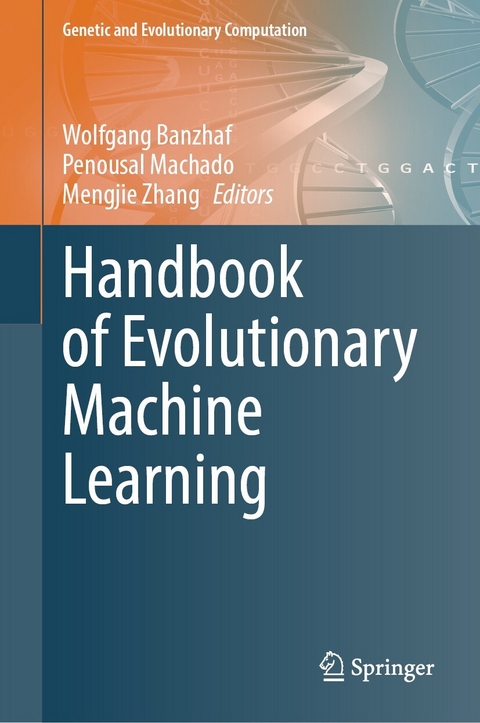
Handbook of Evolutionary Machine Learning (eBook)
768 Seiten
Springer Nature Singapore (Verlag)
978-981-99-3814-8 (ISBN)
This book, written by leading international researchers of evolutionary approaches to machine learning, explores various ways evolution can address machine learning problems and improve current methods of machine learning. Topics in this book are organized into five parts. The first part introduces some fundamental concepts and overviews of evolutionary approaches to the three different classes of learning employed in machine learning. The second addresses the use of evolutionary computation as a machine learning technique describing methodologic improvements for evolutionary clustering, classification, regression, and ensemble learning. The third part explores the connection between evolution and neural networks, in particular the connection to deep learning, generative and adversarial models as well as the exciting potential of evolution with large language models. The fourth part focuses on the use of evolutionary computation for supporting machine learning methods. This includes methodological developments for evolutionary data preparation, model parametrization, design, and validation. The final part covers several chapters on applications in medicine, robotics, science, finance, and other disciplines. Readers find reviews of application areas and can discover large-scale, real-world applications of evolutionary machine learning to a variety of problem domains. This book will serve as an essential reference for researchers, postgraduate students, practitioners in industry and all those interested in evolutionary approaches to machine learning.
| Erscheint lt. Verlag | 1.11.2023 |
|---|---|
| Reihe/Serie | Genetic and Evolutionary Computation | Genetic and Evolutionary Computation |
| Zusatzinfo | XVI, 768 p. 202 illus., 148 illus. in color. |
| Sprache | englisch |
| Themenwelt | Informatik ► Theorie / Studium ► Künstliche Intelligenz / Robotik |
| Naturwissenschaften ► Biologie ► Evolution | |
| Technik ► Bauwesen | |
| Schlagworte | Artificial Evolution • Data Analysis • Evolutionary Classification and Regression • Evolutionary Clustering • Evolutionary Deep Learning • Evolutionary Feature Selection • evolutionary machine learning • Evolutionary Resampling • machine learning |
| ISBN-10 | 981-99-3814-7 / 9819938147 |
| ISBN-13 | 978-981-99-3814-8 / 9789819938148 |
| Informationen gemäß Produktsicherheitsverordnung (GPSR) | |
| Haben Sie eine Frage zum Produkt? |
 PDF (Wasserzeichen)
DRM: Digitales Wasserzeichen
Dieses eBook enthält ein digitales Wasserzeichen und ist damit für Sie personalisiert. Bei einer missbräuchlichen Weitergabe des eBooks an Dritte ist eine Rückverfolgung an die Quelle möglich.
Dateiformat: PDF (Portable Document Format)
Mit einem festen Seitenlayout eignet sich die PDF besonders für Fachbücher mit Spalten, Tabellen und Abbildungen. Eine PDF kann auf fast allen Geräten angezeigt werden, ist aber für kleine Displays (Smartphone, eReader) nur eingeschränkt geeignet.
Systemvoraussetzungen:
PC/Mac: Mit einem PC oder Mac können Sie dieses eBook lesen. Sie benötigen dafür einen PDF-Viewer - z.B. den Adobe Reader oder Adobe Digital Editions.
eReader: Dieses eBook kann mit (fast) allen eBook-Readern gelesen werden. Mit dem amazon-Kindle ist es aber nicht kompatibel.
Smartphone/Tablet: Egal ob Apple oder Android, dieses eBook können Sie lesen. Sie benötigen dafür einen PDF-Viewer - z.B. die kostenlose Adobe Digital Editions-App.
Buying eBooks from abroad
For tax law reasons we can sell eBooks just within Germany and Switzerland. Regrettably we cannot fulfill eBook-orders from other countries.
aus dem Bereich