


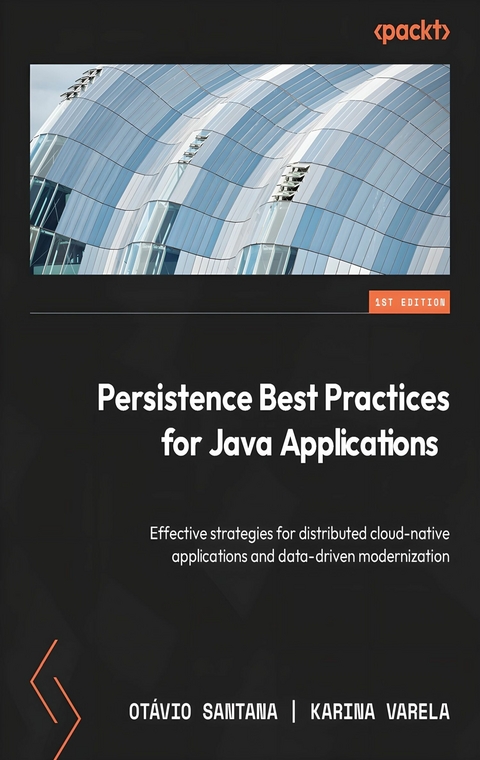
Persistence Best Practices for Java Applications (eBook)
202 Seiten
Packt Publishing (Verlag)
978-1-83763-766-9 (ISBN)
Having a solid software architecture breathes life into tech solutions. In the early stages of an application's development, critical decisions need to be made, such as whether to go for microservices, a monolithic architecture, the event-driven approach, or containerization. In Java contexts, frameworks and runtimes also need to be defi ned. But one aspect is often overlooked - the persistence layer - which plays a vital role similar to that of data stores in modern cloud-native solutions. To optimize applications and data stores, a holistic understanding of best practices, technologies, and existing approaches is crucial.
This book presents well-established patterns and standards that can be used in Java solutions, with valuable insights into the pros and cons of trending technologies and frameworks used in cloud-native microservices, alongside good Java coding practices. As you progress, you'll confront the challenges of cloud adoption head-on, particularly those tied to the growing need for cost reduction through stack modernization. Within these pages, you'll discover application modernization strategies and learn how enterprise data integration patterns and event-driven architectures enable smooth modernization processes with low-to-zero impact on the existing legacy stack.
The definitive guide for designing and delivering reliable and high-performing persistence layers using Java in the cloud-native agePurchase of the print or Kindle book includes a free PDF eBookKey FeaturesUncover database patterns for designing readable and maintainable architectures and Java applicationsMaster various techniques to overcome application and architecture persistence challengesDiscover painless application modernization with change-data-capture powered by cloud-native technologiesBook DescriptionHaving a solid software architecture breathes life into tech solutions. In the early stages of an application s development, critical decisions need to be made, such as whether to go for microservices, a monolithic architecture, the event-driven approach, or containerization. In Java contexts, frameworks and runtimes also need to be defi ned. But one aspect is often overlooked the persistence layer which plays a vital role similar to that of data stores in modern cloud-native solutions. To optimize applications and data stores, a holistic understanding of best practices, technologies, and existing approaches is crucial. This book presents well-established patterns and standards that can be used in Java solutions, with valuable insights into the pros and cons of trending technologies and frameworks used in cloud-native microservices, alongside good Java coding practices. As you progress, you ll confront the challenges of cloud adoption head-on, particularly those tied to the growing need for cost reduction through stack modernization. Within these pages, you ll discover application modernization strategies and learn how enterprise data integration patterns and event-driven architectures enable smooth modernization processes with low-to-zero impact on the existing legacy stack.What you will learnGain insights into data integration in Java services and the inner workings of frameworksApply data design patterns to create a more readable and maintainable design systemUnderstand the impact of design patterns on program performanceExplore the role of cloud-native technologies in modern application persistenceOptimize database schema designs and leverage indexing strategies for improved performanceImplement proven strategies to handle data storage, retrieval, and management efficientlyWho this book is forIf you re a developer, engineer, or software architect working in the field of software development, particularly with a focus on Java solutions, this book is for you.]]>
| Erscheint lt. Verlag | 25.8.2023 |
|---|---|
| Sprache | englisch |
| Themenwelt | Informatik ► Programmiersprachen / -werkzeuge ► Java |
| Informatik ► Software Entwicklung ► Objektorientierung | |
| Mathematik / Informatik ► Informatik ► Theorie / Studium | |
| ISBN-10 | 1-83763-766-0 / 1837637660 |
| ISBN-13 | 978-1-83763-766-9 / 9781837637669 |
| Informationen gemäß Produktsicherheitsverordnung (GPSR) | |
| Haben Sie eine Frage zum Produkt? |
 EPUB (Ohne DRM)
Digital Rights Management: ohne DRM
Dieses eBook enthält kein DRM oder Kopierschutz. Eine Weitergabe an Dritte ist jedoch rechtlich nicht zulässig, weil Sie beim Kauf nur die Rechte an der persönlichen Nutzung erwerben.
Dateiformat: EPUB (Electronic Publication)
EPUB ist ein offener Standard für eBooks und eignet sich besonders zur Darstellung von Belletristik und Sachbüchern. Der Fließtext wird dynamisch an die Display- und Schriftgröße angepasst. Auch für mobile Lesegeräte ist EPUB daher gut geeignet.
Systemvoraussetzungen:
PC/Mac: Mit einem PC oder Mac können Sie dieses eBook lesen. Sie benötigen dafür die kostenlose Software Adobe Digital Editions.
eReader: Dieses eBook kann mit (fast) allen eBook-Readern gelesen werden. Mit dem amazon-Kindle ist es aber nicht kompatibel.
Smartphone/Tablet: Egal ob Apple oder Android, dieses eBook können Sie lesen. Sie benötigen dafür eine kostenlose App.
Geräteliste und zusätzliche Hinweise
Buying eBooks from abroad
For tax law reasons we can sell eBooks just within Germany and Switzerland. Regrettably we cannot fulfill eBook-orders from other countries.
aus dem Bereich


