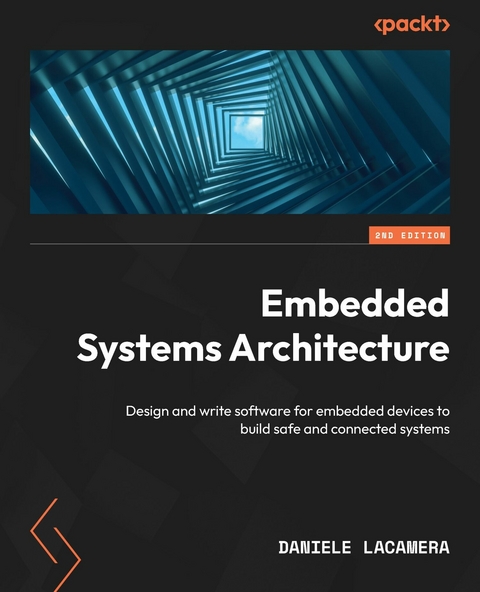
Embedded Systems Architecture (eBook)
342 Seiten
Packt Publishing (Verlag)
9781803242057 (ISBN)
Embedded Systems Architecture begins with a bird's-eye view of embedded development and how it differs from the other systems that you may be familiar with. This book will help you get the hang of the internal working of various components in real-world systems.
You'll start by setting up a development environment and then move on to the core system architectural concepts, exploring system designs, boot-up mechanisms, and memory management. As you progress through the topics, you'll explore the programming interface and device drivers to establish communication via TCP/IP and take measures to increase the security of IoT solutions. Finally, you'll be introduced to multithreaded operating systems through the development of a scheduler and the use of hardware-assisted trusted execution mechanisms.
With the help of this book, you will gain the confidence to work with embedded systems at an architectural level and become familiar with various aspects of embedded software development on microcontrollers-such as memory management, multithreading, and RTOS-an approach oriented to memory isolation.
Design safe and reliable software for embedded systems and explore the internals of device drivers, RTOS, and TEEKey FeaturesIdentify and overcome challenges in embedded environmentsUnderstand and implement the steps required to increase the security of IoT solutionsBuild safety-critical and memory-safe parallel and distributed embedded systemsBook DescriptionEmbedded Systems Architecture begins with a bird's-eye view of embedded development and how it differs from the other systems that you may be familiar with. This book will help you get the hang of the internal working of various components in real-world systems.You'll start by setting up a development environment and then move on to the core system architectural concepts, exploring system designs, boot-up mechanisms, and memory management. As you progress through the topics, you'll explore the programming interface and device drivers to establish communication via TCP/IP and take measures to increase the security of IoT solutions. Finally, you'll be introduced to multithreaded operating systems through the development of a scheduler and the use of hardware-assisted trusted execution mechanisms.With the help of this book, you will gain the confidence to work with embedded systems at an architectural level and become familiar with various aspects of embedded software development on microcontrollers-such as memory management, multithreading, and RTOS-an approach oriented to memory isolation.What you will learnParticipate in the design and definition phase of an embedded productGet to grips with writing code for ARM Cortex-M microcontrollersBuild an embedded development lab and optimize the workflowSecure embedded systems with TLSDemystify the architecture behind the communication interfacesUnderstand the design and development patterns for connected and distributed devices in the IoTMaster multitasking parallel execution patterns and real-time operating systemsBecome familiar with Trusted Execution Environment (TEE)Who this book is forIf you're a software developer or designer looking to learn about embedded programming, this is the book for you. You'll also find this book useful if you're a beginner or a less experienced embedded programmer on a quest to expand your knowledge on embedded systems.
Preface
Embedded systems have become increasingly popular in the last two decades thanks to the technological progress made by microelectronics manufacturers and designers, which has aimed to increase computing power and decrease the size of the logic of microprocessors and peripherals.
Designing, implementing, and integrating the software components for these systems requires a direct approach to the hardware functionalities in most cases, where tasks are implemented in a single thread and there is no operating system to provide abstractions to access CPU features and external peripherals. For this reason, embedded development is considered a domain on its own in the universe of software development, in which the developer’s approach and workflow need to be adapted accordingly.
This book briefly explains the hardware architecture of a typical embedded system, introduces the tools and methodologies needed to get started with the development of a target architecture, and then guides the readers through interaction with the system features and peripheral interaction. Some areas, such as energy efficiency and connectivity, are addressed in more detail to give a closer view of the techniques used to design low-power and connected systems. Later in the book, a more complex design, incorporating a (simplified) real-time operating system, is built from the bottom up, starting from the implementation of single system components. Finally, in this second edition, we have added a detailed analysis of the implementation of TrustZone-M, the TEE technology introduced by ARM as part of its latest family of embedded microcontrollers.
The discussion often focuses on specific security and safety mechanisms by suggesting specific technologies aimed at improving the robustness of the system against programming errors in the application code, or even malicious attempts to compromise its integrity.
Who this book is for
If you’re a software developer or designer that wants to learn about embedded programming, this is the book for you. You’ll also find this book useful if you’re a less experienced or a beginner embedded programmer willing to expand your knowledge of embedded systems. More experience embedded software engineers may find this book useful for refreshing their knowledge of the internals of device drivers, memory safety, secure data transfers, privilege separation, and secure execution domains.
What this book covers
Chapter 1, Embedded Systems – A Pragmatic Approach, is an introduction to microcontroller-based embedded systems. The scope of the book is identified, from a broader definition of “embedded systems” to the actual domain that will be analyzed – 32-bit microcontrollers with physical memory mapping.
Chapter 2, Work Environment and Workflow Optimization, outlines the tools used and the development workflow. This is an introduction to the toolchain, debuggers, and emulators that can be used to produce code in a binary format that can be uploaded and run on the target platform.
Chapter 3, Architectural Patterns, is all about the strategies and development methodologies for collaborative development and testing. This chapter proposes a description of the processes that are typically used while developing and testing software for embedded systems.
Chapter 4, The Boot-Up Procedure, analyzes the boot phase of an embedded system, boot stages, and bootloaders. It contains a detailed description of the bring-up code and the mechanisms used to separate the software into several boot stages.
Chapter 5, Memory Management, suggests some optimal strategies for memory management by pointing out common pitfalls and explaining how to avoid memory errors that can result in unpredictable or bad behavior in the application code.
Chapter 6, General-Purpose Peripherals, walks through accessing GPIO pins and other generic integrated peripherals. This is the first interaction of the target platform with the outside world, using electric signals to perform simple input/output operations.
Chapter 7, Local Bus Interfaces, guides you through the integration of serial bus controllers (UART, SPI, and I2C). A code-oriented, detailed analysis of the most common bus communication protocols is introduced by explaining the code required to interact with the transceivers commonly available in embedded systems.
Chapter 8, Power Management and Energy Saving, explores the techniques available to reduce power consumption in energy-efficient systems. Designing low-power and ultra-low-power embedded systems requires specific steps to be performed for reducing energy consumption while running the required tasks.
Chapter 9, Distributed Systems and IoT Architecture, introduces the available protocols and interfaces required to build distributed and connected systems. IoT systems need to communicate with remote endpoints using standard network protocols that are implemented using third-party libraries. Particular attention is dedicated to securing communication between endpoints using secure sockets.
Chapter 10, Parallel Tasks and Scheduling, explains the infrastructure of a multitasking operating system through the implementation of a real-time task scheduler. This chapter proposes three approaches for implementing operating systems for microcontrollers from scratch, using different schedulers (cooperative, pre-emptive, and safe).
Chapter 11, Trusted Execution Environment, describes the TEE mechanisms typically available on embedded systems and provides an example of running secure and non-secure domains using ARM TrustZone-M. On modern microcontrollers, TEE provides the opportunity to secure specific areas of memory or peripherals by limiting their access from the non-secure execution domain.
To get the most out of this book
It is expected that you are proficient in the C language and understand how computer systems work. A GNU or Linux development machine is required to apply the concepts explained. Going through the example code provided is sometimes necessary to fully understand the mechanisms implemented. You are encouraged to modify, improve, and reuse the examples provided, applying the suggested methodologies.
Additional usage instructions for the requested tools are available in Chapter 2, Work Environment and Workflow Optimization.
If you are using the digital version of this book, we advise you to type the code yourself or access the code from the book’s GitHub repository (a link is available in the next section). Doing so will help you avoid any potential errors related to the copying and pasting of code.
Download the example code files
You can download the example code files for this book from GitHub at https://github.com/PacktPublishing/Embedded-Systems-Architecture-Second-Edition. If there’s an update to the code, it will be updated in the GitHub repository.
We also have other code bundles from our rich catalog of books and videos available at https://github.com/PacktPublishing/. Check them out!
Download the color images
We also provide a PDF file that has color images of the screenshots and diagrams used in this book. You can download it here: https://packt.link/kVMr1.
Conventions used
There are a number of text conventions used throughout this book.
Code in text: Indicates code words in text, database table names, folder names, filenames, file extensions, pathnames, dummy URLs, user input, and Twitter handles. Here is an example: “A single configuration file must be provided from the command-line invocation, with several platforms and development board configurations provided under the /scripts directory.”
A block of code is set as follows:
/* Jump to non secure app_entry */ asm volatile("mov r12, %0" ::"r" ((uint32_t)app_entry - 1)); asm volatile("blxns r12" );When we wish to draw your attention to a particular part of a code block, the relevant lines or items are set in bold:
Secure Area 1: SECWM1_PSTRT : 0x0 (0x8000000) SECWM1_PEND : 0x39 (0x8039000)Any command-line input or output is written as follows:
$ renode /opt/renode/scripts/single-node/stm32f4_discovery.rescCommands for the debugger console are written as follows:
> add-symbol-file app.elf...| Erscheint lt. Verlag | 13.1.2023 |
|---|---|
| Sprache | englisch |
| Themenwelt | Informatik ► Programmiersprachen / -werkzeuge ► C / C++ |
| ISBN-13 | 9781803242057 / 9781803242057 |
| Informationen gemäß Produktsicherheitsverordnung (GPSR) | |
| Haben Sie eine Frage zum Produkt? |
 EPUB (Ohne DRM)
Digital Rights Management: ohne DRM
Dieses eBook enthält kein DRM oder Kopierschutz. Eine Weitergabe an Dritte ist jedoch rechtlich nicht zulässig, weil Sie beim Kauf nur die Rechte an der persönlichen Nutzung erwerben.
Dateiformat: EPUB (Electronic Publication)
EPUB ist ein offener Standard für eBooks und eignet sich besonders zur Darstellung von Belletristik und Sachbüchern. Der Fließtext wird dynamisch an die Display- und Schriftgröße angepasst. Auch für mobile Lesegeräte ist EPUB daher gut geeignet.
Systemvoraussetzungen:
PC/Mac: Mit einem PC oder Mac können Sie dieses eBook lesen. Sie benötigen dafür die kostenlose Software Adobe Digital Editions.
eReader: Dieses eBook kann mit (fast) allen eBook-Readern gelesen werden. Mit dem amazon-Kindle ist es aber nicht kompatibel.
Smartphone/Tablet: Egal ob Apple oder Android, dieses eBook können Sie lesen. Sie benötigen dafür eine kostenlose App.
Geräteliste und zusätzliche Hinweise
Buying eBooks from abroad
For tax law reasons we can sell eBooks just within Germany and Switzerland. Regrettably we cannot fulfill eBook-orders from other countries.
aus dem Bereich