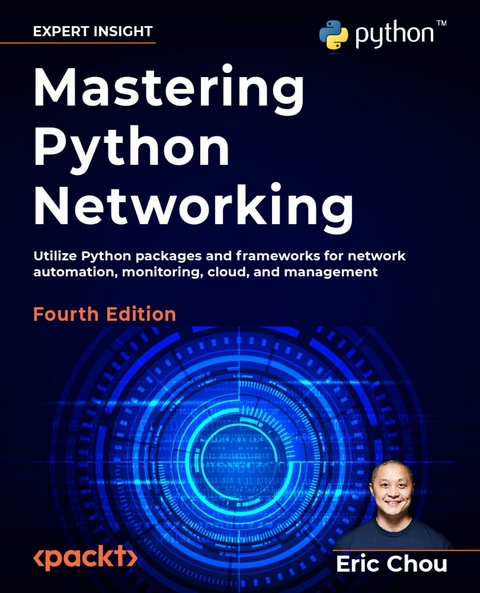
Mastering Python Networking (eBook)
594 Seiten
Packt Publishing (Verlag)
978-1-80324-232-3 (ISBN)
Networks in your infrastructure set the foundation for deploying, maintaining, and servicing applications. Python is the ideal language for network engineers to explore tools that were previously available to systems engineers and application developers. Mastering Python Networking, Fourth edition, guides you on a Python-driven journey from traditional network engineering to modern network development.
This new edition incorporates the latest Python features and DevOps frameworks. In addition to new chapters on introducing Docker containers and Python 3 Async IO for network engineers, each chapter is updated with the latest libraries and working examples to ensure compatibility and clarity of the concepts.
Starting with a basic overview of Python, the book teaches you how it can interact with both legacy and API-enabled network devices. You will learn to leverage high-level Python packages and frameworks to perform network automation tasks, monitoring, management, and enhanced network security, followed by AWS and Azure cloud networking. You will use Git for code management, GitLab for continuous integration, and Python-based testing tools to verify your network.
By the end of this book, you'll be a confident network developer capable of automating modern infrastructure using Python, DevOps practices, and cloud technologies.
Get to grips with the latest container examples, Python 3 features, GitLab DevOps, network data analysis, and cloud networking to get the most out of Python for network engineering with the latest edition of this bestselling guidePurchase of the print or Kindle book includes a free eBook in PDF format.Key FeaturesLeverage Python's powerful libraries and frameworks to build production-ready network automation solutions efficiently and effectivelyImplement network security, monitoring, and management solutions using modern DevOps tools and cloud-native approachesUtilize AsyncIO and cloud capabilities in Python 3 for AWS and Azure network solutionsBook DescriptionNetworks in your infrastructure set the foundation for deploying, maintaining, and servicing applications. Python is the ideal language for network engineers to explore tools that were previously available to systems engineers and application developers. Mastering Python Networking, Fourth edition, guides you on a Python-driven journey from traditional network engineering to modern network development. This new edition incorporates the latest Python features and DevOps frameworks. In addition to new chapters on introducing Docker containers and Python 3 Async IO for network engineers, each chapter is updated with the latest libraries and working examples to ensure compatibility and clarity of the concepts. Starting with a basic overview of Python, the book teaches you how it can interact with both legacy and API-enabled network devices. You will learn to leverage high-level Python packages and frameworks to perform network automation tasks, monitoring, management, and enhanced network security, followed by AWS and Azure cloud networking. You will use Git for code management, GitLab for continuous integration, and Python-based testing tools to verify your network. By the end of this book, you'll be a confident network developer capable of automating modern infrastructure using Python, DevOps practices, and cloud technologies.What you will learnUse Python to interact with network devicesExplore Docker for efficient network application development and deploymentExtract network insights using Python and monitoring tools like NetFlow and SNMPAnalyze network data with ELK for real-time visualizationBuild high-level API with Flask for in-house applicationsDiscover the new AsyncIO feature and its concepts in Python 3Explore test-driven development concepts and use PyTest to drive code test coverageUnderstand how to implement DevOps best practices with GitLab in networkingWho this book is forMastering Python Networking, Fourth edition is for network engineers, developers, and SREs who want to learn Python for network automation, programmability, monitoring, cloud, and data analysis. Network engineers who want to transition from manual to automation-based networks using the latest DevOps tools will also get a lot of useful information from this book. Basic familiarity with Python programming and networking-related concepts such as Transmission Control Protocol/Internet Protocol (TCP/IP) will be helpful in getting the most out of this book.]]>
Contents
- Preface
- Review of TCP/IP Protocol Suite and Python
- Low-Level Network Device Interactions
- APIs and Intent-Driven Networking
- The Python Automation Framework – Ansible
- Docker Containers for Network Engineers
- Network Security with Python
| Erscheint lt. Verlag | 20.1.2023 |
|---|---|
| Sprache | englisch |
| Themenwelt | Informatik ► Netzwerke ► Sicherheit / Firewall |
| Mathematik / Informatik ► Informatik ► Programmiersprachen / -werkzeuge | |
| ISBN-10 | 1-80324-232-9 / 1803242329 |
| ISBN-13 | 978-1-80324-232-3 / 9781803242323 |
| Informationen gemäß Produktsicherheitsverordnung (GPSR) | |
| Haben Sie eine Frage zum Produkt? |
 EPUB (Ohne DRM)
Digital Rights Management: ohne DRM
Dieses eBook enthält kein DRM oder Kopierschutz. Eine Weitergabe an Dritte ist jedoch rechtlich nicht zulässig, weil Sie beim Kauf nur die Rechte an der persönlichen Nutzung erwerben.
Dateiformat: EPUB (Electronic Publication)
EPUB ist ein offener Standard für eBooks und eignet sich besonders zur Darstellung von Belletristik und Sachbüchern. Der Fließtext wird dynamisch an die Display- und Schriftgröße angepasst. Auch für mobile Lesegeräte ist EPUB daher gut geeignet.
Systemvoraussetzungen:
PC/Mac: Mit einem PC oder Mac können Sie dieses eBook lesen. Sie benötigen dafür die kostenlose Software Adobe Digital Editions.
eReader: Dieses eBook kann mit (fast) allen eBook-Readern gelesen werden. Mit dem amazon-Kindle ist es aber nicht kompatibel.
Smartphone/Tablet: Egal ob Apple oder Android, dieses eBook können Sie lesen. Sie benötigen dafür eine kostenlose App.
Geräteliste und zusätzliche Hinweise
Buying eBooks from abroad
For tax law reasons we can sell eBooks just within Germany and Switzerland. Regrettably we cannot fulfill eBook-orders from other countries.
aus dem Bereich