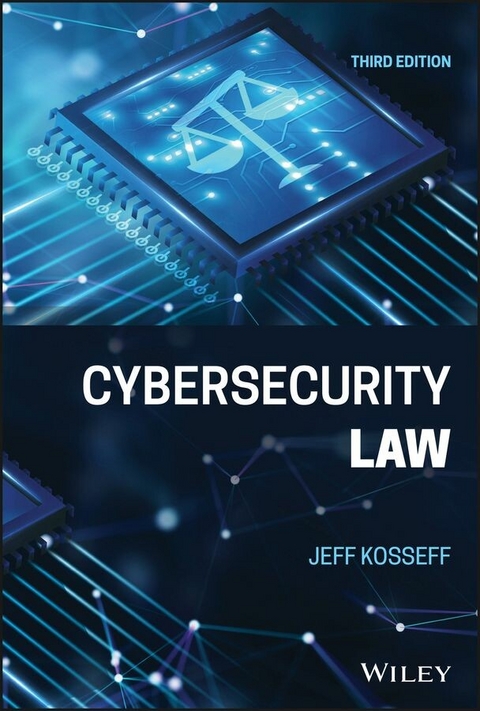
Cybersecurity Law (eBook)
John Wiley & Sons (Verlag)
978-1-119-82218-9 (ISBN)
Learn to protect your clients with this definitive guide to cybersecurity law in this fully-updated third edition
Cybersecurity is an essential facet of modern society, and as a result, the application of security measures that ensure the confidentiality, integrity, and availability of data is crucial. Cybersecurity can be used to protect assets of all kinds, including data, desktops, servers, buildings, and most importantly, humans. Understanding the ins and outs of the legal rules governing this important field is vital for any lawyer or other professionals looking to protect these interests.
The thoroughly revised and updated Cybersecurity Law offers an authoritative guide to the key statutes, regulations, and court rulings that pertain to cybersecurity, reflecting the latest legal developments on the subject. This comprehensive text deals with all aspects of cybersecurity law, from data security and enforcement actions to anti-hacking laws, from surveillance and privacy laws to national and international cybersecurity law. New material in this latest edition includes many expanded sections, such as the addition of more recent FTC data security consent decrees, including Zoom, SkyMed, and InfoTrax.
Readers of the third edition of Cybersecurity Law will also find:
- An all-new chapter focused on laws related to ransomware and the latest attacks that compromise the availability of data and systems
- New and updated sections on new data security laws in New York and Alabama, President Biden's cybersecurity executive order, the Supreme Court's first opinion interpreting the Computer Fraud and Abuse Act, American Bar Association guidance on law firm cybersecurity, Internet of Things cybersecurity laws and guidance, the Cybersecurity Maturity Model Certification, the NIST Privacy Framework, and more
- New cases that feature the latest findings in the constantly evolving cybersecurity law space
- An article by the author of this textbook, assessing the major gaps in U.S. cybersecurity law
- A companion website for instructors that features expanded case studies, discussion questions by chapter, and exam questions by chapter
Cybersecurity Law is an ideal textbook for undergraduate and graduate level courses in cybersecurity, cyber operations, management-oriented information technology (IT), and computer science. It is also a useful reference for IT professionals, government personnel, business managers, auditors, cybersecurity insurance agents, and academics in these fields, as well as academic and corporate libraries that support these professions.
Jeff Kosseff, JD, MPP, is Associate Professor of Cybersecurity Law at the United States Naval Academy in Annapolis, Maryland. He frequently speaks and writes about cybersecurity and was a journalist covering technology and politics at The Oregonian, a finalist for the Pulitzer Prize, and a recipient of the George Polk Award for national reporting.
CYBERSECURITY LAW Learn to protect your clients with this definitive guide to cybersecurity law in this fully-updated third edition Cybersecurity is an essential facet of modern society, and as a result, the application of security measures that ensure the confidentiality, integrity, and availability of data is crucial. Cybersecurity can be used to protect assets of all kinds, including data, desktops, servers, buildings, and most importantly, humans. Understanding the ins and outs of the legal rules governing this important field is vital for any lawyer or other professionals looking to protect these interests. The thoroughly revised and updated Cybersecurity Law offers an authoritative guide to the key statutes, regulations, and court rulings that pertain to cybersecurity, reflecting the latest legal developments on the subject. This comprehensive text deals with all aspects of cybersecurity law, from data security and enforcement actions to anti-hacking laws, from surveillance and privacy laws to national and international cybersecurity law. New material in this latest edition includes many expanded sections, such as the addition of more recent FTC data security consent decrees, including Zoom, SkyMed, and InfoTrax. Readers of the third edition of Cybersecurity Law will also find: An all-new chapter focused on laws related to ransomware and the latest attacks that compromise the availability of data and systems New and updated sections on new data security laws in New York and Alabama, President Biden s cybersecurity executive order, the Supreme Court s first opinion interpreting the Computer Fraud and Abuse Act, American Bar Association guidance on law firm cybersecurity, Internet of Things cybersecurity laws and guidance, the Cybersecurity Maturity Model Certification, the NIST Privacy Framework, and more New cases that feature the latest findings in the constantly evolving cybersecurity law space An article by the author of this textbook, assessing the major gaps in U.S. cybersecurity law A companion website for instructors that features expanded case studies, discussion questions by chapter, and exam questions by chapter Cybersecurity Law is an ideal textbook for undergraduate and graduate level courses in cybersecurity, cyber operations, management-oriented information technology (IT), and computer science. It is also a useful reference for IT professionals, government personnel, business managers, auditors, cybersecurity insurance agents, and academics in these fields, as well as academic and corporate libraries that support these professions.
Jeff Kosseff, JD, MPP, is Associate Professor of Cybersecurity Law at the United States Naval Academy in Annapolis, Maryland. He frequently speaks and writes about cybersecurity and was a journalist covering technology and politics at The Oregonian, a finalist for the Pulitzer Prize, and a recipient of the George Polk Award for national reporting.
| Erscheint lt. Verlag | 1.11.2022 |
|---|---|
| Sprache | englisch |
| Themenwelt | Mathematik / Informatik ► Informatik ► Theorie / Studium |
| Schlagworte | anti-hacking law • Computer Criminal Law • Computerkriminalität • Computer Science • Computer Security & Cryptography • Computersicherheit • Computersicherheit u. Kryptographie • cryptography • cyber operation • data security law • FTC data security consent decree • Informatik • internet of things • Kryptographie • Law • LifeLock • management-oriented information technology • Mathematics • Mathematik • Privacy Law • Ransomware • Rechtswissenschaft • SkyMed • surveillance and cyber • Zoom |
| ISBN-10 | 1-119-82218-1 / 1119822181 |
| ISBN-13 | 978-1-119-82218-9 / 9781119822189 |
| Informationen gemäß Produktsicherheitsverordnung (GPSR) | |
| Haben Sie eine Frage zum Produkt? |
 PDF (Adobe DRM)
Kopierschutz: Adobe-DRM
Adobe-DRM ist ein Kopierschutz, der das eBook vor Mißbrauch schützen soll. Dabei wird das eBook bereits beim Download auf Ihre persönliche Adobe-ID autorisiert. Lesen können Sie das eBook dann nur auf den Geräten, welche ebenfalls auf Ihre Adobe-ID registriert sind.
Details zum Adobe-DRM
Dateiformat: PDF (Portable Document Format)
Mit einem festen Seitenlayout eignet sich die PDF besonders für Fachbücher mit Spalten, Tabellen und Abbildungen. Eine PDF kann auf fast allen Geräten angezeigt werden, ist aber für kleine Displays (Smartphone, eReader) nur eingeschränkt geeignet.
Systemvoraussetzungen:
PC/Mac: Mit einem PC oder Mac können Sie dieses eBook lesen. Sie benötigen eine
eReader: Dieses eBook kann mit (fast) allen eBook-Readern gelesen werden. Mit dem amazon-Kindle ist es aber nicht kompatibel.
Smartphone/Tablet: Egal ob Apple oder Android, dieses eBook können Sie lesen. Sie benötigen eine
Geräteliste und zusätzliche Hinweise
Buying eBooks from abroad
For tax law reasons we can sell eBooks just within Germany and Switzerland. Regrettably we cannot fulfill eBook-orders from other countries.
aus dem Bereich