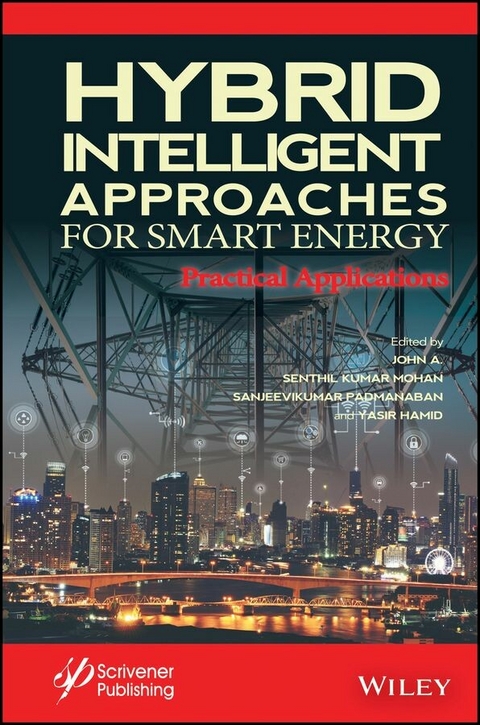
John A, PhD, is an assistant professor at Galgotias University, Greater Noida, India, and he received his PhD in computer science and engineering from Manonmaniam Sundaranar University, Tirunelveli, India. He has presented papers in various national and international conferences and has published papers in scientific journals. Senthil Kumar Mohan, PhD, is an associate professor in the Department of Software and System Engineering at the School of Information Technology and Engineering, Vellore Institute of Technology, Vellore, India. He received his PhD in engineering and technology from Vellore Institute of Technology, and he has contributed to many research articles in various technical journals and conferences. Sanjeevikumar Padmanaban, PhD, is a faculty member with the Department of Energy Technology, Aalborg University, Esbjerg, Denmark. He has almost ten years of teaching, research and industrial experience and is an associate editor on a number of international scientific refereed journals. He has published more than 300 research papers and has won numerous awards for his research and teaching. Yasir Hamid, PhD, is an assistant professor in the Department of Information Security Engineering Technology at Abu Dhabi Polytechnic. He earned his PhD in 2019 from Pondicherry University in Computer Science and Engineering. Before joining ADPOLY, he was an assistant professor in the Department of Computer Science, Islamic University of Science and Technology, India. He is an editorial board member on many scientific and technical journals.
| Erscheint lt. Verlag | 19.9.2022 |
|---|---|
| Reihe/Serie | Next Generation Computing and Communication Engineering | Next Generation Computing and Communication Engineering |
| Sprache | englisch |
| Themenwelt | Mathematik / Informatik ► Informatik ► Theorie / Studium |
| Schlagworte | AI Technique • Artificial Intelligence • Big Data • biofeedstocks • Biofuels • Clean Coal • Cloud Computing • Computations • Computer Science • DC • DC converters • Distributed Computing • Doubly-Fed Induction Generators • Drilling • Electrical & Electronics Engineering • Electrical Systems • Electric Vehicle • Elektrotechnik u. Elektronik • Energie • Energy • energy efficiency • Energy-efficient systems • Energy Management Systems (EMS) • Energy Model Simulation • energy optimization • Fabrication process of Solar cell • Floating Solar Plant • Fuel cells • Gas • Geothermal Energy • Green Energy • Green Technology • Harris Hawks Optimization • Informatik • Intelligente Systeme u. Agenten • Intelligent Systems & Agents • internet of things • IOT • Künstliche Intelligenz • Li-ion batteries • Low Power • machine learning • Microgrid • Multi-Level Inverters • nuclear energy • Oil • Portable wearables • Power devices • Power Electronics • power grid • Power Quality • Power Systems • Privacy and Security • Process Engineering • renewable resources • smart cities • smart energy • Smart Grid • Smart Healthcare • Solar cell • Solar cells • Solar energy • Solar Panel • urban planning • waste management • Wave energy • Wind Energy • Wind Power Generation |
| ISBN-13 | 9781119821861 / 9781119821861 |
| Informationen gemäß Produktsicherheitsverordnung (GPSR) | |
| Haben Sie eine Frage zum Produkt? |
 PDF (Adobe DRM)
Kopierschutz: Adobe-DRM
Adobe-DRM ist ein Kopierschutz, der das eBook vor Mißbrauch schützen soll. Dabei wird das eBook bereits beim Download auf Ihre persönliche Adobe-ID autorisiert. Lesen können Sie das eBook dann nur auf den Geräten, welche ebenfalls auf Ihre Adobe-ID registriert sind.
Details zum Adobe-DRM
Dateiformat: PDF (Portable Document Format)
Mit einem festen Seitenlayout eignet sich die PDF besonders für Fachbücher mit Spalten, Tabellen und Abbildungen. Eine PDF kann auf fast allen Geräten angezeigt werden, ist aber für kleine Displays (Smartphone, eReader) nur eingeschränkt geeignet.
Systemvoraussetzungen:
PC/Mac: Mit einem PC oder Mac können Sie dieses eBook lesen. Sie benötigen eine
eReader: Dieses eBook kann mit (fast) allen eBook-Readern gelesen werden. Mit dem amazon-Kindle ist es aber nicht kompatibel.
Smartphone/Tablet: Egal ob Apple oder Android, dieses eBook können Sie lesen. Sie benötigen eine
Geräteliste und zusätzliche Hinweise
Buying eBooks from abroad
For tax law reasons we can sell eBooks just within Germany and Switzerland. Regrettably we cannot fulfill eBook-orders from other countries.
aus dem Bereich