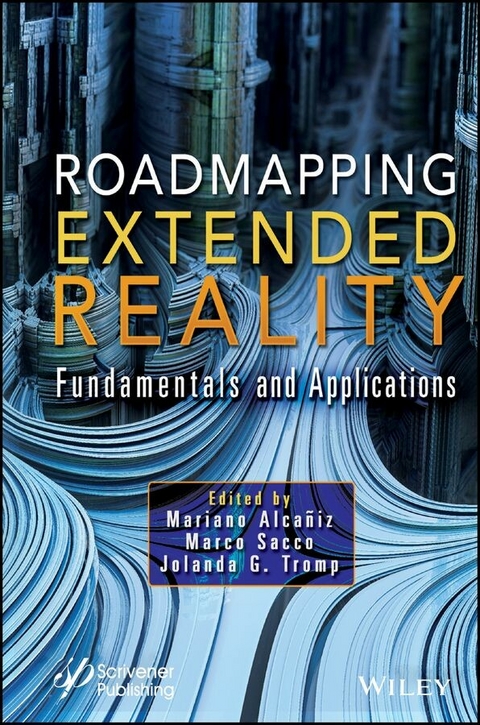
This book offers a comprehensive overview of the technological aspects of Extended Realities (XR) and discusses the main challenges and future directions in the field.
This book is important and timely - XR technologies have overcome the 3 main aspects that were holding it back from mainstream adoption: cost, cables, and size. However, there are many aspects of XR technologies that are now going to be explored and developed that still need urgent research in terms of security, privacy, health and safety, long-term effects, addiction risks, and age-related developmental concerns, and the aim of the book is to inform all readers of these open issues and challenges. There are currently a great number of interdisciplinary researchers and developers working in the XR R&D field. Recently, XR technologies moved from the Gartner Hype Cycle onto the Plateau of Productivity on the Gartner Hype Cycle signaling that the fundamental XR technologies are now deemed mature technologies and ready for deployment in a wide variety of application areas. Corroborated by the fact that XR technologies are part of the future Metaverse, a concept that went rapidly mainstream during the time of writing of this book.
Roadmapping Extended Reality is divided into two parts: (1) fundamentals and (2) applications. The first part covers the main technological aspects of XR. The chapters in this section review and discuss relevant fundamental concepts of XR, the actual state-of-the-art, and future challenges. The second part of the book focuses on covering a wide range of applications of XR including a future roadmap. All in all, the book offers a snapshot of the state-of-the-art in XR and addresses the needs of a multidisciplinary audience working in both academia and the industry, as well as stakeholders at government agencies and non-profit organizations.
Audience
This book is aimed at academic and industrial developers, exploring and developing applications in the XR, VR, AR, AI, smart IoT, 4th Industrial Revolution space, including those that are solving technology requirements, human factors, evaluation methodology advances, and ROI investigations.
Mariano Alcañiz, PhD, is the founding director of the Immersive Neurotechnologies Lab (LabLENI) as well as a Full Professor of Biomedical Engineering at the Polytechnic University of Valencia, Spain. He has published more than 350 academic papers in interdisciplinary journals such as Scientific Reports and PLoS One, as well as domain-specific journals in the fields of biomedical engineering, computer science, psychology, marketing, management, psychology, and education.
Marco Sacco, PhD, is a Senior Researcher, head of CNR-STIIMA Lecco subsidiary, and head of the division, Enterprise Engineering, and Virtual Applications. President of EuroXR (European Association of Extended Reality). He has more than 160 publications including papers in academic journals and conference proceedings.
Jolanda G. Tromp, PhD, is a consultant to the EuroXR association for the Delphi consensus study; Director Center for Visualization & Simulation (CVS), Duy Tan University, Da Nang, Viet Nam; founding CIO spinout company for Visualization & Simulation, Viet Nam; visiting research professor XR lab Grupo DIANA, University of Malaga, Spain, and XR R&D Study Abroad internships Adjunct Instructor HCI Master and XR curriculum R&D, State University of New York in Oswego, NY, USA, and Duy Tan University, Viet Nam.
ROADMAPPING EXTENDED REALITY This book offers a comprehensive overview of the technological aspects of Extended Realities (XR) and discusses the main challenges and future directions in the field. This book is important and timely XR technologies have overcome the 3 main aspects that were holding it back from mainstream adoption: cost, cables, and size. However, there are many aspects of XR technologies that are now going to be explored and developed that still need urgent research in terms of security, privacy, health and safety, long-term effects, addiction risks, and age-related developmental concerns, and the aim of the book is to inform all readers of these open issues and challenges. There are currently a great number of interdisciplinary researchers and developers working in the XR R&D field. Recently, XR technologies moved from the Gartner Hype Cycle onto the Plateau of Productivity on the Gartner Hype Cycle signaling that the fundamental XR technologies are now deemed mature technologies and ready for deployment in a wide variety of application areas. Corroborated by the fact that XR technologies are part of the future Metaverse, a concept that went rapidly mainstream during the time of writing of this book. Roadmapping Extended Reality is divided into two parts: (1) fundamentals and (2) applications. The first part covers the main technological aspects of XR. The chapters in this section review and discuss relevant fundamental concepts of XR, the actual state-of-the-art, and future challenges. The second part of the book focuses on covering a wide range of applications of XR including a future roadmap. All in all, the book offers a snapshot of the state-of-the-art in XR and addresses the needs of a multidisciplinary audience working in both academia and the industry, as well as stakeholders at government agencies and non-profit organizations. Audience This book is aimed at academic and industrial developers, exploring and developing applications in the XR, VR, AR, AI, smart IoT, 4th Industrial Revolution space, including those that are solving technology requirements, human factors, evaluation methodology advances, and ROI investigations.
Mariano Alcañiz, PhD, is the founding director of the Immersive Neurotechnologies Lab (LabLENI) as well as a Full Professor of Biomedical Engineering at the Polytechnic University of Valencia, Spain. He has published more than 350 academic papers in interdisciplinary journals such as Scientific Reports and PLoS One, as well as domain-specific journals in the fields of biomedical engineering, computer science, psychology, marketing, management, psychology, and education. Marco Sacco, PhD, is a Senior Researcher, head of CNR-STIIMA Lecco subsidiary, and head of the division, Enterprise Engineering, and Virtual Applications. President of EuroXR (European Association of Extended Reality). He has more than 160 publications including papers in academic journals and conference proceedings. Jolanda G. Tromp, PhD, is a consultant to the EuroXR association for the Delphi consensus study; Director Center for Visualization & Simulation (CVS), Duy Tan University, Da Nang, Viet Nam; founding CIO spinout company for Visualization & Simulation, Viet Nam; visiting research professor XR lab Grupo DIANA, University of Malaga, Spain, and XR R&D Study Abroad internships Adjunct Instructor HCI Master and XR curriculum R&D, State University of New York in Oswego, NY, USA, and Duy Tan University, Viet Nam.
1
Future Directions for XR 2021-2030: International Delphi Consensus Study
Jolanda G. Tromp1,2*, Gabriel Zachmann3, Jerome Perret4 and Beatrice Palacco5
1Center for Visualization & Simulation (CVS), Duy Tan University, Da Nang, Viet Nam
23D DIANA Research Group, E.T.S.I. de Telecomunicacion, University of Malaga, Malaga, Spain
3CGVR Lab, University of Bremen, Bremen, Germany
4Haption, Laval, France
5EuroXR Association, Brussels, Belgium
Abstract
XR has been put forward as one of the “Essential Eight” key enabling technologies of the 21st century. Together, they are expected to drive the digital transformation that has started only recently in many areas of business, daily life, and leisure. Importantly, XR has the potential to play a major role in supporting the achievement of several if not all 17 Sustainable Development Goals set forth by the UN. The path towards realizing the full potential of XR technologies needs to be clarified in order to make informed decisions about research and development agendas, investment, funding, and regulations. In order to provide insights into the best approach to further develop XR towards its full potential, the EuroXR Association initiated a study using the well-established Delphi consensus method, drawing on the expertise of independent senior XR experts to formulate future directions for XR R&D. The results are presented in terms of a roadmap for the future of XR, identifying the prerequisites to clear the path for this, and clarifying the roles and responsibilities for the XR research community, the XR business community, and the government and regulation bodies. The main findings of our XR roadmap are summarized into a number of specific areas for the stakeholders to act upon, in order to push the cutting edge of XR and be part of the early-adopters who have this key enabling technology at their disposal throughout industry, education and society.
Keywords: Extended reality, Delphi method, XR Roadmap, XR and 17 SDGs
1.1 Introduction
Leaders, governments, companies, educational institutions, researchers, and members of the general public aim to understand and anticipate the opportunities offered by new technologies. Of particular interest are emerging technologies that are expected to have a transformational or high impact potential. Currently the synergy of a number of technology developments is converging with such transformational potential, referred to as the “Essential Eight” Key Enabling Technologies (KETs) that are transforming the way we organize work, education, communication, socialization, information access, and our identity (see Figure 1.1):
- Augmented Reality (AR): location-based, multi-sensory, window between real and virtual;
- Virtual Reality (VR): real-time interactive 3D Computer Graphics (CG), collaborative design spaces, simulation, testing, and optimization spaces;
- Artificial Intelligence (AI): big data analytics, machine learning (ML), micro and macro process analysis, and optimization;
- 5G Cloud Computing: decentralization, mobile computing;
- Blockchain: cybersecurity, privacy, and trust;
- 5G Internet of Things (5G IoT): high-speed connectivity between IT and Operational Technology (OT), smart cyber-physical twins;
- Drones: autonomous and semi-autonomous robots and virtual agents
- 3D Printing: additive manufacturing.
Extended Reality (XR) technology solutions consist of various combinations of the KETs, using VR, AR, Mixed Reality, and 360° interactive 3D scanned real world spaces and objects, to provide an interface to interact with remote machines or view 3D computer generated visualizations and simulations, and display augmentations and big data results dynamically, facilitating and facilitated by the other current KETs. XR provides the online 3D communication and interaction space, similar to how AI provides the underlying intelligence for the behaviors of cyber-physical IoT systems, 3D CG spaces, and VR/AR user interactions. XR facilitates the embodiment of the interactions, the space in which the activities are situated, providing a spatial context to the information. While AI has recently been prioritized by many governments and companies, XR has not been prioritized as much yet.
Figure 1.1 The essential eight key enabling technologies. Illustration by: Maxelante Bussemaker.
The innovations that the current KETs are predicted to enable are expected to greatly change our local and global societies because they will allow us to optimize the time needed to get things done, and the way we do it, and in the process creating a multi-billion industry. The increased interest can already be witnessed by the plethora of research publications, business reports, and forecasts about the anticipated opportunities of the KETs that have been produced recently and are rapidly increasing in volume [1–23]. The early adopters of novel solutions using XR in combination with AI and IoT will be able to optimize their product or service design via big data analysis using Machine Learning (ML) and this will enable them to gain a rapid advantage [5, 24–27].
These days, advancements in eye and hand-tracking capabilities are built into XR headsets and allow for psychophysiological measurements of the user while interacting with the XR experience. This information is used to analyze customer engagement, and what is more, it can be tested and quantified, thus allowing calculations to measure Return-On-Investment (ROI) to be based on actual time and motion studies with quantitative data [15]. There is clearly a huge potential advantage in being able to save users and institutions time and money, accelerate development processes, measure user engagement to personalize their experience, facilitate communication and collaboration better than a videoconference, and enable a rapid iteration of new business models with increasingly more optimized processes and profitable ROI.
To better understand where funding for future XR applications research and development will be best allocated to facilitate the cutting-edge advantages, the EuroXR Association conducted a consensus survey among global XR experts using the Delphi consensus seeking method. This chapter summarizes the results.
1.2 XR and the Delphi Study Forecast
The Delphi method is an interactive multi-stage forecasting procedure where specific experts identify technical developments and trends in an iterative process to achieve clarification and consensus [28–32]. The method was developed by the RAND Corporation to generate scenarios for long-range strategic planning in the 1950–1960s and became a widely accepted approach to facilitate the development of reliable group opinions using expert panels [33, 34]. It was developed to structure time-consuming group opinion seeking processes, among a set of experts by getting them to participate in a panel, and seek consensus on future developments for complex problems, using participative inquiry that has its roots in humanistic psychology [35]. The Delphi forecast consists of statements formulated by the group of domain experts regarding the topic that is being studied.
A core benefit of the Delphi method is the opportunity to provide domain experts an anonymous place to express different opinions and reach consensus within a structured asynchronous and synchronous text-based information exchange setting. The domain experts express and share views in the group, directly or mediated by the Delphi organizers, depending on the online consensus tool interface and design of the study [36–38]. Since the start of the COVID-19 pandemic, the frequency of use and popularity of using consensus tools via the internet such as online Delphi have risen considerably. The full description of the Delphi study reported here can be found in [39].
The preparation for the Delphi consensus process starts with an open survey to collect topics regarding the theme of the Delphi from the wider forum of experts. These themes provide the basis for the initial forecast statements. The Delphi consensus seeking process itself uses a group of specifically selected participants, a panel of domain experts. The panel of experts is asked to assess and rewrite the statements until they can fully agree with the contents. Typically, for Delphi studies, depending on budget and time available, the consensus seeking rounds are repeated until a minimum of 70% consensus has been achieved for each statement by the panel.
The preparation survey that aims at collecting the starting points for the Delphi statements was distributed via the EuroXR Association (www.euroxr-association.org), the VRISI network (www.vrisi.de), and other international XR professional groups, and many members of these lists forwarded the invitation to their mailing lists, such as the German and the French VR/AR/XR Association. Respondents were invited to nominate themselves for the Delphi XR Expert panel. Eighty-two respondents submitted a response to the online survey; however, of those 82, 40 had to be discarded because they were very incomplete, leaving 42 complete records for our analysis. On average, it took respondents 1 hour to reply to the survey. There were 24 academics...
| Erscheint lt. Verlag | 26.7.2022 |
|---|---|
| Sprache | englisch |
| Themenwelt | Mathematik / Informatik ► Informatik ► Theorie / Studium |
| Schlagworte | Artificial Intelligence • augmented reality (AR) • Business & Management • Communication technology • Computer Science • Electrical & Electronics Engineering • Elektrotechnik u. Elektronik • Informatik • Key Emerging Technologies • Key Enabling Technologies (KETs) • Kommunikationstechnik • Künstliche Intelligenz • metaverse • Metaverse of metaverses • Mixed Reality (MR) • Roadmap for 21st century eXtended Reality technologies • Roadmap for 21st century new technologies • Roadmap for XR • spatial computing • Strategic Management • Strategisches Management • Virtual Reality (VR) • Wirtschaft u. Management • XR and Spatial Computing • XR Roadmap • xtended Reality (XR) |
| ISBN-13 | 9781119865797 / 9781119865797 |
| Informationen gemäß Produktsicherheitsverordnung (GPSR) | |
| Haben Sie eine Frage zum Produkt? |
 EPUB (Adobe DRM)
Kopierschutz: Adobe-DRM
Adobe-DRM ist ein Kopierschutz, der das eBook vor Mißbrauch schützen soll. Dabei wird das eBook bereits beim Download auf Ihre persönliche Adobe-ID autorisiert. Lesen können Sie das eBook dann nur auf den Geräten, welche ebenfalls auf Ihre Adobe-ID registriert sind.
Details zum Adobe-DRM
Dateiformat: EPUB (Electronic Publication)
EPUB ist ein offener Standard für eBooks und eignet sich besonders zur Darstellung von Belletristik und Sachbüchern. Der Fließtext wird dynamisch an die Display- und Schriftgröße angepasst. Auch für mobile Lesegeräte ist EPUB daher gut geeignet.
Systemvoraussetzungen:
PC/Mac: Mit einem PC oder Mac können Sie dieses eBook lesen. Sie benötigen eine
eReader: Dieses eBook kann mit (fast) allen eBook-Readern gelesen werden. Mit dem amazon-Kindle ist es aber nicht kompatibel.
Smartphone/Tablet: Egal ob Apple oder Android, dieses eBook können Sie lesen. Sie benötigen eine
Geräteliste und zusätzliche Hinweise
Buying eBooks from abroad
For tax law reasons we can sell eBooks just within Germany and Switzerland. Regrettably we cannot fulfill eBook-orders from other countries.
aus dem Bereich