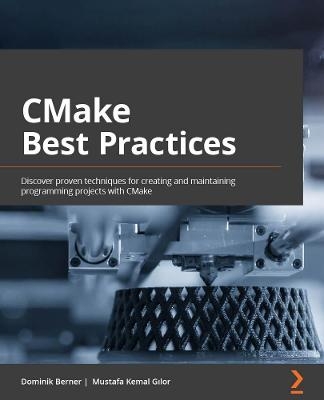
CMake Best Practices
Packt Publishing Limited (Verlag)
978-1-80323-972-9 (ISBN)
Explore a compendium of tips, tricks, and techniques for leveraging CMake and empowering your software development workflow.
Key Features
Understand what CMake is, how it works, and how to interact with it
Discover how to properly create and maintain well-structured CMake projects
Explore tools and techniques to get the most out of your CMake project
Book DescriptionCMake is a powerful tool used to perform a wide variety of tasks, so finding a good starting point for learning CMake is difficult. This book cuts to the core and covers the most common tasks that can be accomplished with CMake without taking an academic approach. While the CMake documentation is comprehensive, it is often hard to find good examples of how things fit together, especially since there are lots of dirty hacks and obsolete solutions available on the internet. This book focuses on helping you to tie things together and create clean and maintainable projects with CMake.
You'll not only get to grips with the basics but also work through real-world examples of structuring large and complex maintainable projects and creating builds that run in any programming environment. You'll understand the steps to integrate and automate various tools for improving the overall software quality, such as testing frameworks, fuzzers, and automatic generation of documentation. And since writing code is only half of the work, the book also guides you in creating installers and packaging and distributing your software. All this is tailored to modern development workflows that make heavy use of CI/CD infrastructure.
By the end of this CMake book, you'll be able to set up and maintain complex software projects using CMake in the best way possible.
What you will learn
Get to grips with architecting a well-structured CMake project
Modularize and reuse CMake code across projects
Integrate various tools for static analysis, linting, formatting, and documentation into a CMake project
Get hands-on with performing cross-platform builds
Discover how you can easily use different toolchains with CMake
Get started with crafting a well-defined and portable build environment for your project
Who this book is forThis book is for software engineers and build system maintainers working with C or C++ on a regular basis and trying to use CMake to better effect for their everyday tasks. Basic C++ and general programming knowledge will help you to better understand the examples covered in the book.
Dominik Berner is a software engineer, blogger and conference speaker with 20 years of professional software development under his belt. He codes mainly in C++ and has worked on many software projects, from writing bleeding edge software for surgical simulators in a startup, over maintaining large legacy platforms for large corporations in the MedTech industry to creating IoT solutions for companies in between. He beliefs that well designed and maintained build environments are one of the key elements to enable teams to write software efficiently and excel at creating quality software. When he is not writing code, he occasionally writes articles for his blog or speaks at conferences about software development. Mustafa is an experienced professional working in performance-critical software development for the telecommunication, defense industries, and open-source software. His expertise is in high-performance and scalable software design, network technologies, DevOps, and software architecture. His interest in computers emerged very early on in his childhood. He learned programming to hack MMORPG games at around the age of 12, and he has been writing software ever since. His favorite programming language is C++, and he enjoys doing framework design & system programming. He is also a strong advocate of CMake; he maintained many codebases and ported many legacy projects to CMake throughout his career.
Table of Contents
Kickstarting CMake
Accessing CMake in Best Ways
Creating a CMake Project
Packaging, Deploying and Installing a CMake Project Effortlessly
Integrating Third- Party Libraries and Dependency Management
Automatically Generating Documentation with CMake
Seamless Integration of Code Quality Tools with CMake
Executing Custom Tasks with CMake
Creating Reproducible Build Environments
Handling Distributed Repositories and Dependencies in a Super-build
Automated Fuzzing with CMake
Cross-Platform-Compiling Custom Toolchains
Reusing CMake Code
Optimizing and Maintaining CMake Projects
Migrating to CMake
Contributing to CMake and Further Reading Material
| Erscheinungsdatum | 30.05.2022 |
|---|---|
| Verlagsort | Birmingham |
| Sprache | englisch |
| Maße | 75 x 93 mm |
| Themenwelt | Mathematik / Informatik ► Informatik ► Theorie / Studium |
| ISBN-10 | 1-80323-972-7 / 1803239727 |
| ISBN-13 | 978-1-80323-972-9 / 9781803239729 |
| Zustand | Neuware |
| Informationen gemäß Produktsicherheitsverordnung (GPSR) | |
| Haben Sie eine Frage zum Produkt? |
aus dem Bereich