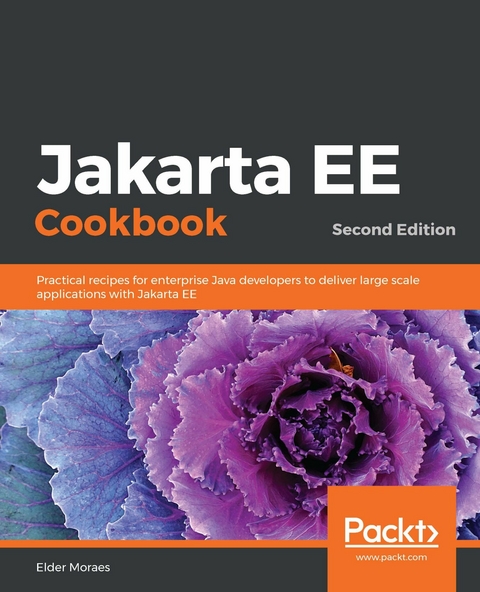
Jakarta EE Cookbook (eBook)
380 Seiten
Packt Publishing (Verlag)
978-1-83864-032-3 (ISBN)
An enterprise Java developer's guide to learning JAX-RS, context and dependency injection, JavaServer Faces (JSF), and microservices with Eclipse MicroProfile using the latest features of Jakarta EE
Key Features
- Explore Jakarta EE's latest features and API specifications and discover their benefits
- Build and deploy microservices using Jakarta EE 8 and Eclipse MicroProfile
- Build robust RESTful web services for various enterprise scenarios using the JAX-RS, JSON-P, and JSON-B APIs
Book Description
Jakarta EE is widely used around the world for developing enterprise applications for a variety of domains. With this book, Java professionals will be able to enhance their skills to deliver powerful enterprise solutions using practical recipes.
This second edition of the Jakarta EE Cookbook takes you through the improvements introduced in its latest version and helps you get hands-on with its significant APIs and features used for server-side development. You'll use Jakarta EE for creating RESTful web services and web applications with the JAX-RS, JSON-P, and JSON-B APIs and learn how you can improve the security of your enterprise solutions. Not only will you learn how to use the most important servers on the market, but you'll also learn to make the best of what they have to offer for your project. From an architectural point of view, this Jakarta book covers microservices, cloud computing, and containers. It allows you to explore all the tools for building reactive applications using Jakarta EE and core Java features such as lambdas. Finally, you'll discover how professionals can improve their projects by engaging with and contributing to the community.
By the end of this book, you'll have become proficient in developing and deploying enterprise applications using Jakarta EE.
What you will learn
- Work with Jakarta EE's most commonly used APIs and features for server-side development
- Enable fast and secure communication in web applications with the help of HTTP2
- Build enterprise applications with reusable components
- Break down monoliths into microservices using Jakarta EE and Eclipse MicroProfile
- Improve your enterprise applications with multithreading and concurrency
- Run applications in the cloud with the help of containers
- Get to grips with continuous delivery and deployment for shipping your applications effectively
Who this book is for
This book is for Java EE developers who want to build enterprise applications or update their legacy apps with Jakarta EE's latest features and specifications. Some experience of working with Java EE and knowledge of web and cloud computing will assist with understanding the concepts covered in this book.
An enterprise Java developer's guide to learning JAX-RS, context and dependency injection, JavaServer Faces (JSF), and microservices with Eclipse MicroProfile using the latest features of Jakarta EEKey FeaturesExplore Jakarta EE's latest features and API specifications and discover their benefitsBuild and deploy microservices using Jakarta EE 8 and Eclipse MicroProfileBuild robust RESTful web services for various enterprise scenarios using the JAX-RS, JSON-P, and JSON-B APIsBook DescriptionJakarta EE is widely used around the world for developing enterprise applications for a variety of domains. With this book, Java professionals will be able to enhance their skills to deliver powerful enterprise solutions using practical recipes.This second edition of the Jakarta EE Cookbook takes you through the improvements introduced in its latest version and helps you get hands-on with its significant APIs and features used for server-side development. You'll use Jakarta EE for creating RESTful web services and web applications with the JAX-RS, JSON-P, and JSON-B APIs and learn how you can improve the security of your enterprise solutions. Not only will you learn how to use the most important servers on the market, but you'll also learn to make the best of what they have to offer for your project. From an architectural point of view, this Jakarta book covers microservices, cloud computing, and containers. It allows you to explore all the tools for building reactive applications using Jakarta EE and core Java features such as lambdas. Finally, you'll discover how professionals can improve their projects by engaging with and contributing to the community.By the end of this book, you'll have become proficient in developing and deploying enterprise applications using Jakarta EE.What you will learnWork with Jakarta EE's most commonly used APIs and features for server-side developmentEnable fast and secure communication in web applications with the help of HTTP2Build enterprise applications with reusable componentsBreak down monoliths into microservices using Jakarta EE and Eclipse MicroProfileImprove your enterprise applications with multithreading and concurrencyRun applications in the cloud with the help of containersGet to grips with continuous delivery and deployment for shipping your applications effectivelyWho this book is forThis book is for Java EE developers who want to build enterprise applications or update their legacy apps with Jakarta EE's latest features and specifications. Some experience of working with Java EE and knowledge of web and cloud computing will assist with understanding the concepts covered in this book.
| Erscheint lt. Verlag | 29.5.2020 |
|---|---|
| Sprache | englisch |
| Themenwelt | Mathematik / Informatik ► Informatik |
| Schlagworte | Building microservices • CI/CD • HTTP 2 • Jakarta EE • Java EE • Java MicroProfile • Microservices Architecture • MVC • Reactive Microservices |
| ISBN-10 | 1-83864-032-0 / 1838640320 |
| ISBN-13 | 978-1-83864-032-3 / 9781838640323 |
| Informationen gemäß Produktsicherheitsverordnung (GPSR) | |
| Haben Sie eine Frage zum Produkt? |
 EPUB (Adobe DRM)
Größe: 8,0 MB
Kopierschutz: Adobe-DRM
Adobe-DRM ist ein Kopierschutz, der das eBook vor Mißbrauch schützen soll. Dabei wird das eBook bereits beim Download auf Ihre persönliche Adobe-ID autorisiert. Lesen können Sie das eBook dann nur auf den Geräten, welche ebenfalls auf Ihre Adobe-ID registriert sind.
Details zum Adobe-DRM
Dateiformat: EPUB (Electronic Publication)
EPUB ist ein offener Standard für eBooks und eignet sich besonders zur Darstellung von Belletristik und Sachbüchern. Der Fließtext wird dynamisch an die Display- und Schriftgröße angepasst. Auch für mobile Lesegeräte ist EPUB daher gut geeignet.
Systemvoraussetzungen:
PC/Mac: Mit einem PC oder Mac können Sie dieses eBook lesen. Sie benötigen eine
eReader: Dieses eBook kann mit (fast) allen eBook-Readern gelesen werden. Mit dem amazon-Kindle ist es aber nicht kompatibel.
Smartphone/Tablet: Egal ob Apple oder Android, dieses eBook können Sie lesen. Sie benötigen eine
Geräteliste und zusätzliche Hinweise
Buying eBooks from abroad
For tax law reasons we can sell eBooks just within Germany and Switzerland. Regrettably we cannot fulfill eBook-orders from other countries.
EPUB (Ohne DRM)Digital Rights Management: ohne DRM
Dieses eBook enthält kein DRM oder Kopierschutz. Eine Weitergabe an Dritte ist jedoch rechtlich nicht zulässig, weil Sie beim Kauf nur die Rechte an der persönlichen Nutzung erwerben.
Dateiformat: EPUB (Electronic Publication)
EPUB ist ein offener Standard für eBooks und eignet sich besonders zur Darstellung von Belletristik und Sachbüchern. Der Fließtext wird dynamisch an die Display- und Schriftgröße angepasst. Auch für mobile Lesegeräte ist EPUB daher gut geeignet.
Systemvoraussetzungen:
PC/Mac: Mit einem PC oder Mac können Sie dieses eBook lesen. Sie benötigen dafür die kostenlose Software Adobe Digital Editions.
eReader: Dieses eBook kann mit (fast) allen eBook-Readern gelesen werden. Mit dem amazon-Kindle ist es aber nicht kompatibel.
Smartphone/Tablet: Egal ob Apple oder Android, dieses eBook können Sie lesen. Sie benötigen dafür eine kostenlose App.
Geräteliste und zusätzliche Hinweise
Buying eBooks from abroad
For tax law reasons we can sell eBooks just within Germany and Switzerland. Regrettably we cannot fulfill eBook-orders from other countries.
aus dem Bereich