Systematic Cloud Migration (eBook)
XXIII, 230 Seiten
Apress (Verlag)
978-1-4842-7252-7 (ISBN)
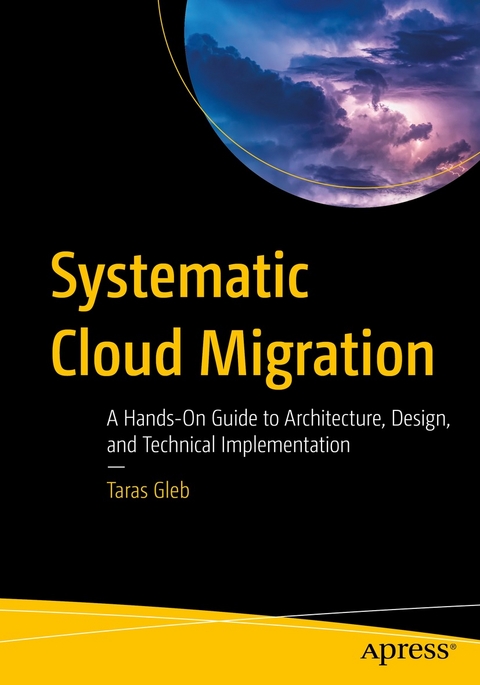
This book is your systematic cloud migration guide. Experiences shared by the author are drawn from real-life migration projects and contain practical advice, as well as step-by-step architecture, design, and technical implementation instructions using sample application code on GitLab. Following the guidance in this book will provide much needed support to your teams, and help you successfully complete the application cloud migration journey.
Systematic Cloud Migration consists of four major parts. Part one starts with a fundamental introduction of cloud computing to establish the context for migration, including paradigm changes in five important areas: software application, DevSecOps, operations, infrastructure, and security. And these are the areas that the book follows throughout. Next, it introduces a real-life migration process that your team can follow.
Part two presents the migration process for the application code, including architecture diagrams and presented by demo application code and supporting infrastructure in AWS cloud. Part three dives into DevSecOps and automation. In addition to concepts, a real-life migration diagram and sample pipeline code implemented with GitLab are include. Part four deals with efficient cloud operations.
Each chapter has a practical structure: objectives, roles, inputs, process/activities, outputs/deliverables, best practices, and summary. There is a wealth of cloud production-grade template style artifacts that can be used as is.
What You Will Learn
- Design applications in the cloud, including determining the design criteria (e.g., solution cost is a design criterion, same as security, and is not an afterthought)
- Understand the major migration areas: software development (application code, data, integration, and configuration), software delivery (pipeline and automation), and software operations (observability)
- Migrate each application element: client and business components code, data, integration and services, logging, monitoring, alerting, as well as configurations
- Understand cloud-critical static application security testing (SAST), dynamic application security testing (DAST), containers compliance and security scanning, and open source dependency testing
- Know the directions and implementation details on cost-efficient, automated, cloud-native software operations
Who This Book Is For
Primarily designed with software developers, team leads, development managers, DevOps engineers, and software architects in mind. Their day-to-day activities include architecting, designing, developing, delivering, and operating software in the cloud environment. In addition, this book will benefit infrastructure, network, security, and operations engineers, who in turn, can provide better support for the software development product teams.
This book is your systematic cloud migration guide. Experiences shared by the author are drawn from real-life migration projects and contain practical advice, as well as step-by-step architecture, design, and technical implementation instructions using sample application code on GitLab. Following the guidance in this book will provide much needed support to your teams, and help you successfully complete the application cloud migration journey. Systematic Cloud Migration consists of four major parts. Part one starts with a fundamental introduction of cloud computing to establish the context for migration, including paradigm changes in five important areas: software application, DevSecOps, operations, infrastructure, and security. And these are the areas that the book follows throughout. Next, it introduces a real-life migration process that your team can follow. Part two presents the migration process for the application code, including architecture diagrams and presented by demo application code and supporting infrastructure in AWS cloud. Part three dives into DevSecOps and automation. In addition to concepts, a real-life migration diagram and sample pipeline code implemented with GitLab are include. Part four deals with efficient cloud operations.Each chapter has a practical structure: objectives, roles, inputs, process/activities, outputs/deliverables, best practices, and summary. There is a wealth of cloud production-grade template style artifacts that can be used as is. What You Will LearnDesign applications in the cloud, including determining the design criteria (e.g., solution cost is a design criterion, same as security, and is not an afterthought)Understand the major migration areas: software development (application code, data, integration, and configuration), software delivery (pipeline and automation), and software operations(observability)Migrate each application element: client and business components code, data, integration and services, logging, monitoring, alerting, as well as configurationsUnderstand cloud-critical static application security testing (SAST), dynamic application security testing (DAST), containers compliance and security scanning, and open source dependency testingKnow the directions and implementation details on cost-efficient, automated, cloud-native software operationsWho This Book Is ForPrimarily designed with software developers, team leads, development managers, DevOps engineers, and software architects in mind. Their day-to-day activities include architecting, designing, developing, delivering, and operating software in the cloud environment. In addition, this book will benefit infrastructure, network, security, and operations engineers, who in turn, can provide better support for the software development product teams.
| Erscheint lt. Verlag | 21.9.2021 |
|---|---|
| Zusatzinfo | XXIII, 230 p. 42 illus. |
| Sprache | englisch |
| Themenwelt | Mathematik / Informatik ► Informatik ► Netzwerke |
| Schlagworte | Cloud • Cloud Migration • Cloud migration process • Cloud-native applications • Cloud-native architecture • Cloud Operations • DevSecOps • GitLab automation • Java • observability • Spring Boot |
| ISBN-10 | 1-4842-7252-8 / 1484272528 |
| ISBN-13 | 978-1-4842-7252-7 / 9781484272527 |
| Informationen gemäß Produktsicherheitsverordnung (GPSR) | |
| Haben Sie eine Frage zum Produkt? |
 PDF (Wasserzeichen)
DRM: Digitales Wasserzeichen
Dieses eBook enthält ein digitales Wasserzeichen und ist damit für Sie personalisiert. Bei einer missbräuchlichen Weitergabe des eBooks an Dritte ist eine Rückverfolgung an die Quelle möglich.
Dateiformat: PDF (Portable Document Format)
Mit einem festen Seitenlayout eignet sich die PDF besonders für Fachbücher mit Spalten, Tabellen und Abbildungen. Eine PDF kann auf fast allen Geräten angezeigt werden, ist aber für kleine Displays (Smartphone, eReader) nur eingeschränkt geeignet.
Systemvoraussetzungen:
PC/Mac: Mit einem PC oder Mac können Sie dieses eBook lesen. Sie benötigen dafür einen PDF-Viewer - z.B. den Adobe Reader oder Adobe Digital Editions.
eReader: Dieses eBook kann mit (fast) allen eBook-Readern gelesen werden. Mit dem amazon-Kindle ist es aber nicht kompatibel.
Smartphone/Tablet: Egal ob Apple oder Android, dieses eBook können Sie lesen. Sie benötigen dafür einen PDF-Viewer - z.B. die kostenlose Adobe Digital Editions-App.
Buying eBooks from abroad
For tax law reasons we can sell eBooks just within Germany and Switzerland. Regrettably we cannot fulfill eBook-orders from other countries.
aus dem Bereich