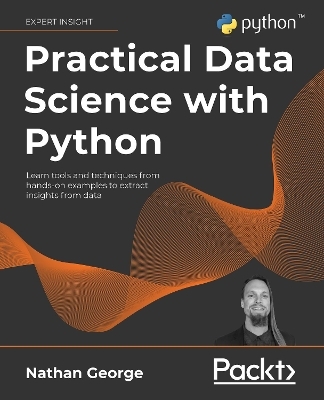
Practical Data Science with Python
Packt Publishing Limited (Verlag)
978-1-80107-197-0 (ISBN)
Learn to effectively manage data and execute data science projects from start to finish using Python
Key Features
Understand and utilize data science tools in Python, such as specialized machine learning algorithms and statistical modeling
Build a strong data science foundation with the best data science tools available in Python
Add value to yourself, your organization, and society by extracting actionable insights from raw data
Book DescriptionPractical Data Science with Python teaches you core data science concepts, with real-world and realistic examples, and strengthens your grip on the basic as well as advanced principles of data preparation and storage, statistics, probability theory, machine learning, and Python programming, helping you build a solid foundation to gain proficiency in data science.
The book starts with an overview of basic Python skills and then introduces foundational data science techniques, followed by a thorough explanation of the Python code needed to execute the techniques. You'll understand the code by working through the examples. The code has been broken down into small chunks (a few lines or a function at a time) to enable thorough discussion.
As you progress, you will learn how to perform data analysis while exploring the functionalities of key data science Python packages, including pandas, SciPy, and scikit-learn. Finally, the book covers ethics and privacy concerns in data science and suggests resources for improving data science skills, as well as ways to stay up to date on new data science developments.
By the end of the book, you should be able to comfortably use Python for basic data science projects and should have the skills to execute the data science process on any data source.
What you will learn
Use Python data science packages effectively
Clean and prepare data for data science work, including feature engineering and feature selection
Data modeling, including classic statistical models (such as t-tests), and essential machine learning algorithms, such as random forests and boosted models
Evaluate model performance
Compare and understand different machine learning methods
Interact with Excel spreadsheets through Python
Create automated data science reports through Python
Get to grips with text analytics techniques
Who this book is forThe book is intended for beginners, including students starting or about to start a data science, analytics, or related program (e.g. Bachelor’s, Master’s, bootcamp, online courses), recent college graduates who want to learn new skills to set them apart in the job market, professionals who want to learn hands-on data science techniques in Python, and those who want to shift their career to data science.
The book requires basic familiarity with Python. A "getting started with Python" section has been included to get complete novices up to speed.
Nathan George is a data scientist at Tink in Stockholm, Sweden, and taught data science as a professor at Regis University in Denver, CO for over 4 years. Nathan has created online courses on Pythonic data science and uses Python data science tools for electroencephalography (EEG) research with the OpenBCI headset and public EEG data. His education includes the Galvanize data science immersive, a PhD from UCSB in Chemical Engineering, and a BS in Chemical Engineering from the Colorado School of Mines.
Table of Contents
Introduction to Data Science
Getting Started with Python
SQL and Built-in File Handling Modules in Python
Loading and Wrangling Data with Pandas and NumPy
Exploratory Data Analysis and Visualization
Data Wrangling Documents and Spreadsheets
Web Scraping
Probability, Distributions, and Sampling
Statistical Testing for Data Science
Preparing Data for Machine Learning: Feature Selection, Feature Engineering, and Dimensionality Reduction
Machine Learning for Classification
Evaluating Machine Learning Classification Models and Sampling for Classification
Machine Learning with Regression
(N.B. Please use the Look Inside option to see further chapters)
| Erscheinungsdatum | 04.10.2021 |
|---|---|
| Verlagsort | Birmingham |
| Sprache | englisch |
| Maße | 75 x 93 mm |
| Themenwelt | Mathematik / Informatik ► Informatik ► Datenbanken |
| Mathematik / Informatik ► Informatik ► Programmiersprachen / -werkzeuge | |
| Informatik ► Theorie / Studium ► Künstliche Intelligenz / Robotik | |
| ISBN-10 | 1-80107-197-7 / 1801071977 |
| ISBN-13 | 978-1-80107-197-0 / 9781801071970 |
| Zustand | Neuware |
| Informationen gemäß Produktsicherheitsverordnung (GPSR) | |
| Haben Sie eine Frage zum Produkt? |
aus dem Bereich