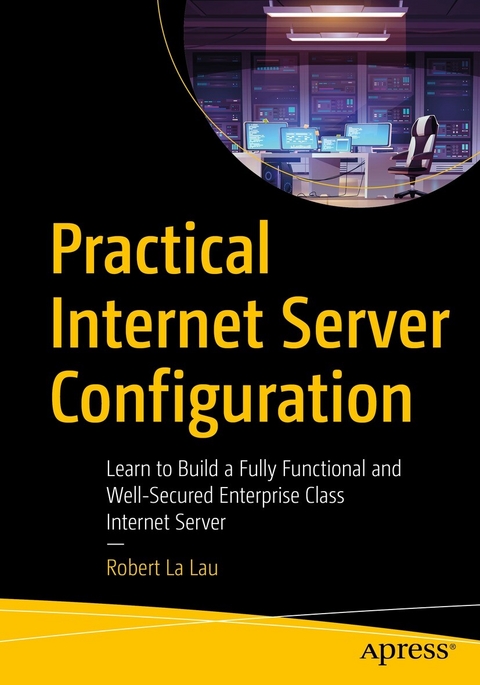
Practical Internet Server Configuration (eBook)
394 Seiten
Apress (Verlag)
978-1-4842-6960-2 (ISBN)
After a chapter explaining the most important Unix basics, you will start with a vanilla server as delivered by a hosting provider and by the end of the book, you will have a fully functional and well-secured enterprise class internet server. You will also be equipped with the expertise needed to keep your server secured and up to date. All configuration examples are given for FreeBSD, Debian and CentOS, so you are free to choose your operating system.
No single blueprint exists for an internet server, and an important part of the work of a system administrator consists of analyzing, interpreting and implementing specific wishes, demands and restrictions from different departments and viewpoints within an organization. Practical Internet Server Configuration provides the information you need to succeed as a sysadmin.
What You'll Learn
- Configure DNS using Bind 9
- Set up Apache and Nginx
- Customize a mail server: IMAP (Dovecot) and SMTP (Postfix), spam filtering included
- Authenticate mail users using LDAP
- Install and maintain MariaDB and PostgreSQL databases
- Prepare SSL/TLS certificates for the encryption of web, mail and LDAP traffic
- Synchronize files, calendars and address books between devices
- Build a firewall: PF for FreeBSD and nftables for Linux
Who This Book Is For
This book can be used by aspiring and beginning system administrators who are working on personal servers, or more experienced system administrators who may know Unix well but need a reference book for the more specialized work that falls outside the daily routine. Basic understanding of Unix and working on the command line is necessary.
Robert La Lau has been active on the internet since the mid-90s. What started as a hobby - playing around with Linux, and developing small games and applications using Perl, HTML and JavaScript - turned into a job when he became a full-time freelance web developer in 1999. Shortly thereafter, a web hosting server and freelance Linux and FreeBSD administration were added. In the years that followed, new programming languages were learned, and software development was added to the range of services offered. In his spare time, Rob was involved in several smaller and larger open source projects; among other things, he was the initiator and first administrator for the official online KDE forums. After 15 years of freelance IT work, Rob thought he'd had enough of IT work, finished his running affairs, and left the Netherlands to discover the world. However, the IT kept calling him, and once installed in his new home country France, he decided to return to his old métier. Only this time, it was not to get his own hands dirty in the field, executing orders for clients, but to transfer his knowledge and experience onto the next generations of system administrators and developers. He rebooted his IT career translating and narrating educational books and videos, taught some Unix classes, and seems to have found his destination publishing books now.
Learn the skills to complete the full installation, configuration, and maintenance of an enterprise class internet server, no matter what Unix-like operating system you prefer. This book will rapidly guide you towards real system administration, with clear explanations along the way.After a chapter explaining the most important Unix basics, you will start with a vanilla server as delivered by a hosting provider and by the end of the book, you will have a fully functional and well-secured enterprise class internet server. You will also be equipped with the expertise needed to keep your server secured and up to date. All configuration examples are given for FreeBSD, Debian and CentOS, so you are free to choose your operating system.No single blueprint exists for an internet server, and an important part of the work of a system administrator consists of analyzing, interpreting and implementing specific wishes, demands and restrictions from different departmentsand viewpoints within an organization. Practical Internet Server Configuration provides the information you need to succeed as a sysadmin.What You'll LearnConfigure DNS using Bind 9Set up Apache and NginxCustomize a mail server: IMAP (Dovecot) and SMTP (Postfix), spam filtering includedAuthenticate mail users using LDAPInstall and maintain MariaDB and PostgreSQL databasesPrepare SSL/TLS certificates for the encryption of web, mail and LDAP trafficSynchronize files, calendars and address books between devicesBuild a firewall: PF for FreeBSD and nftables for LinuxWho This Book Is ForThis book can be used by aspiring and beginning system administrators who are working on personal servers, or more experienced system administrators who may know Unix well but need a reference book for the more specialized work that falls outside the daily routine. Basic understanding of Unix and working on the command line is necessary.
| Erscheint lt. Verlag | 10.4.2021 |
|---|---|
| Zusatzinfo | XVII, 394 p. 2 illus. |
| Sprache | englisch |
| Themenwelt | Mathematik / Informatik ► Informatik |
| Schlagworte | Apache • Debian • DNS • FreeBSD • LDAP authentication • Linux • Mail server • NGINX • Server Administration • Web Server |
| ISBN-10 | 1-4842-6960-8 / 1484269608 |
| ISBN-13 | 978-1-4842-6960-2 / 9781484269602 |
| Informationen gemäß Produktsicherheitsverordnung (GPSR) | |
| Haben Sie eine Frage zum Produkt? |
 PDF (Wasserzeichen)
Größe: 3,9 MB
DRM: Digitales Wasserzeichen
Dieses eBook enthält ein digitales Wasserzeichen und ist damit für Sie personalisiert. Bei einer missbräuchlichen Weitergabe des eBooks an Dritte ist eine Rückverfolgung an die Quelle möglich.
Dateiformat: PDF (Portable Document Format)
Mit einem festen Seitenlayout eignet sich die PDF besonders für Fachbücher mit Spalten, Tabellen und Abbildungen. Eine PDF kann auf fast allen Geräten angezeigt werden, ist aber für kleine Displays (Smartphone, eReader) nur eingeschränkt geeignet.
Systemvoraussetzungen:
PC/Mac: Mit einem PC oder Mac können Sie dieses eBook lesen. Sie benötigen dafür einen PDF-Viewer - z.B. den Adobe Reader oder Adobe Digital Editions.
eReader: Dieses eBook kann mit (fast) allen eBook-Readern gelesen werden. Mit dem amazon-Kindle ist es aber nicht kompatibel.
Smartphone/Tablet: Egal ob Apple oder Android, dieses eBook können Sie lesen. Sie benötigen dafür einen PDF-Viewer - z.B. die kostenlose Adobe Digital Editions-App.
Buying eBooks from abroad
For tax law reasons we can sell eBooks just within Germany and Switzerland. Regrettably we cannot fulfill eBook-orders from other countries.
aus dem Bereich