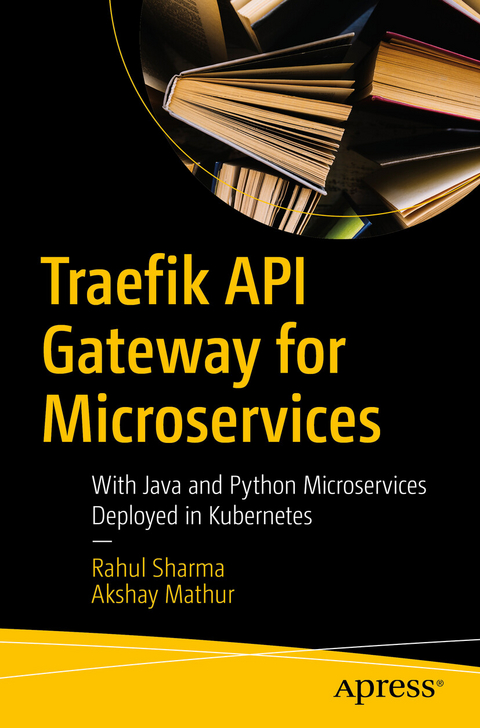
Traefik API Gateway for Microservices (eBook)
255 Seiten
Apress (Verlag)
978-1-4842-6376-1 (ISBN)
Use Traefik as a load balancer or a reverse proxy for microservices-based architecture. This book covers Traefik integration for microservices architecture concerns such as service discovery, telemetry, and resiliency.
The book focuses on building an in-depth understanding of Traefik. It starts with the fundamentals of Traefik, including different load balancing algorithms available, and failure handling for application resiliency. Examples are included for the failure scenarios. TLS support is explained, including scenarios of TLS termination and TLS forwarding. Traefik supports TLS termination using Let's Encrypt. Traefik deployment in prominent microservices ecosystems is discussed, including Docker and Kubernetes.
Traefik is a language-neutral component. This book presents examples of its deployment with Java-based microservices. The examples in the book show Traefik integration with Jaeger/Zipkin, Prometheus, Grafana, and FluentD. Also covered is Traefik for Python-based services and Java-based services deployed in the Kubernetes cluster. By the end of the book, you will confidently know how to deploy and integrate Traefik into prominent microservices ecosystems.
- Understand Traefik basics and its components
- Explore different load balancing scenarios and TLS termination
- Configure service discovery, circuit breakers, timeouts, and throttling
- Monitor Traefik using Prometheus and request tracing
Who This Book Is For
Developers and project managers who have developed microservices and are deploying them in cloud and on-premise environments with Kubernetes or Docker. The book is not specifically written for any particular programming language. The examples presented use Java or Python.
Rahul Sharma is a seasoned Java developer with over 15 years of industry experience. In his career he has worked with companies of various sizes from enterprises to startups. During this time he has developed and managed microservices on the cloud (AWS/GCE/DigitalOcean) using open source software. He is an open source enthusiast and shares his experience at local meetups. He co-authored Java Unit Testing with JUnit 5 (Apress) and Getting Started with Istio Service Mesh (Apress).
Akshay Mathur is a software engineer with 15 years of experience, mostly in Java and web technologies. Most of his career has been spent building B2B platforms for enterprises, dealing with concerns such as scalability, configurability, multi-tenancy, and cloud engineering. He has hands-on experience implementing and operating microservices and Kubernetes in these ecosystems. Currently, he enjoys public speaking and blogging on new cloud native technologies (especially plain Kubernetes) and effective engineering culture.
Use Traefik as a load balancer or a reverse proxy for microservices-based architecture. This book covers Traefik integration for microservices architecture concerns such as service discovery, telemetry, and resiliency.The book focuses on building an in-depth understanding of Traefik. It starts with the fundamentals of Traefik, including different load balancing algorithms available, and failure handling for application resiliency. Examples are included for the failure scenarios. TLS support is explained, including scenarios of TLS termination and TLS forwarding. Traefik supports TLS termination using Let's Encrypt. Traefik deployment in prominent microservices ecosystems is discussed, including Docker and Kubernetes.Traefik is a language-neutral component. This book presents examples of its deployment with Java-based microservices. The examples in the book show Traefik integration with Jaeger/Zipkin, Prometheus, Grafana, and FluentD. Also covered is Traefik for Python-based services and Java-based services deployed in the Kubernetes cluster. By the end of the book, you will confidently know how to deploy and integrate Traefik into prominent microservices ecosystems.What You Will LearnUnderstand Traefik basics and its componentsExplore different load balancing scenarios and TLS terminationConfigure service discovery, circuit breakers, timeouts, and throttlingMonitor Traefik using Prometheus and request tracingWho This Book Is ForDevelopers and project managers who have developed microservices and are deploying them in cloud and on-premise environments with Kubernetes or Docker. The book is not specifically written for any particular programming language. The examples presented use Java or Python.
| Erscheint lt. Verlag | 27.11.2020 |
|---|---|
| Zusatzinfo | XV, 255 p. 113 illus. |
| Sprache | englisch |
| Themenwelt | Mathematik / Informatik ► Informatik ► Programmiersprachen / -werkzeuge |
| Schlagworte | Kubernetes • Load Balancing • Microservices • TLS • Traefik |
| ISBN-10 | 1-4842-6376-6 / 1484263766 |
| ISBN-13 | 978-1-4842-6376-1 / 9781484263761 |
| Informationen gemäß Produktsicherheitsverordnung (GPSR) | |
| Haben Sie eine Frage zum Produkt? |
 PDF (Wasserzeichen)
Größe: 6,3 MB
DRM: Digitales Wasserzeichen
Dieses eBook enthält ein digitales Wasserzeichen und ist damit für Sie personalisiert. Bei einer missbräuchlichen Weitergabe des eBooks an Dritte ist eine Rückverfolgung an die Quelle möglich.
Dateiformat: PDF (Portable Document Format)
Mit einem festen Seitenlayout eignet sich die PDF besonders für Fachbücher mit Spalten, Tabellen und Abbildungen. Eine PDF kann auf fast allen Geräten angezeigt werden, ist aber für kleine Displays (Smartphone, eReader) nur eingeschränkt geeignet.
Systemvoraussetzungen:
PC/Mac: Mit einem PC oder Mac können Sie dieses eBook lesen. Sie benötigen dafür einen PDF-Viewer - z.B. den Adobe Reader oder Adobe Digital Editions.
eReader: Dieses eBook kann mit (fast) allen eBook-Readern gelesen werden. Mit dem amazon-Kindle ist es aber nicht kompatibel.
Smartphone/Tablet: Egal ob Apple oder Android, dieses eBook können Sie lesen. Sie benötigen dafür einen PDF-Viewer - z.B. die kostenlose Adobe Digital Editions-App.
Buying eBooks from abroad
For tax law reasons we can sell eBooks just within Germany and Switzerland. Regrettably we cannot fulfill eBook-orders from other countries.
aus dem Bereich