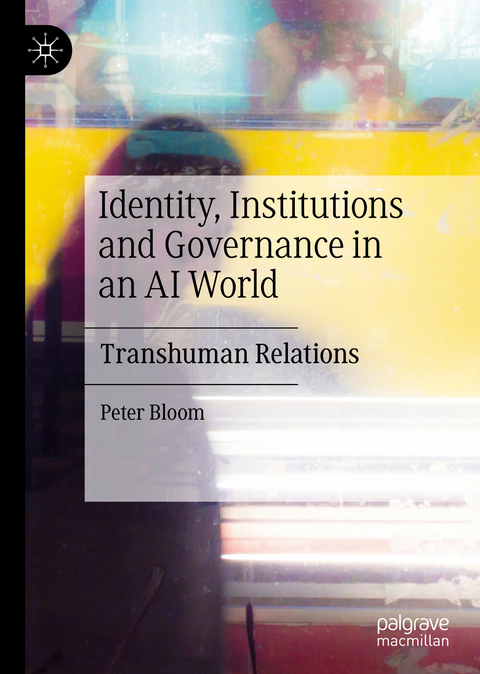
Identity, Institutions and Governance in an AI World (eBook)
VIII, 268 Seiten
Springer International Publishing (Verlag)
978-3-030-36181-5 (ISBN)
Acknowledgements 5
Contents 6
Chapter 1: Introduction: Preparing for a “Transhuman” Future 8
Aim 10
Towards Transhuman Relations? 10
What Is Transhuman Relations? 14
The Artificial Road to Heaven or Hell? 18
Living in Existence 4.0 21
Developing a Theory of “Smart Consciousness” 25
Preparing for a “Transhuman” World 29
References 31
Chapter 2: Evolving Beyond Human Relations 37
Looking Past a Human—Centred World 39
Managing Human Relations 41
Living in an Anthropocene World 45
New Materialism for “Smart” Times 49
Going Beyond a Human Centred World 53
Sharing Intelligence 56
Evolving Beyond Human Relations 60
References 63
Chapter 3: Heading Toward Integration: The Rise of the Human Machines 72
The Threat of Singularity 73
The Danger of Human Bias 77
Manufacturing “Ethical” Intelligence 80
Disruptive Debates 83
Bridging the AI Divide 85
Heading Toward Integration 88
References 91
Chapter 4: Leading Future Lives: Producing Meaningful Intelligence 98
Alienation 4.0 99
Caring Machines 105
transhuman Lives 109
Healthy Robots, Happy Humans 114
Integrated Possibilities 119
Producing Meaningful Intelligence 123
References 125
Chapter 5: Creating Smart Economies: Administrating Empowering Futures 136
Smart Governance 137
Breaking Our Digital Chains 142
Creating transhuman Value 146
Empowering transhuman Organisation 152
Creating Integrative Economies 158
Administrating Shared Futures 163
References 167
Chapter 6: Reprogramming Politics: Mutual Intelligent Design 178
Cyborg Politics 179
Developing TransHuman Democracy 185
Simulating Progress 189
“Unhumanising” Politics 193
Reprogramming Politics 198
Mutual Intelligent Design 202
References 206
Chapter 7: Legal Reboot: From Human Control to Transhuman Possibilities 216
Transhuman Rights 217
Updating Autonomy 222
Enhancing the Law 225
Licit Pathologies 230
Legal Reboot 234
From Human Control to Transhuman Possibilities 238
References 242
Chapter 8: Shared Consciousness: Toward a World of Transhuman Relations 252
The Need for Radical Dehumanization and Disruptive Integration 253
From Disruption to Transformation 254
Deprogramming and Unhumanising “Industry 4.0” 258
Liberating Intelligence 261
ReCoding Reality 263
References 266
Correction to: Leading Future Lives: Producing Meaningful Intelligence 270
Index 271
| Erscheint lt. Verlag | 10.1.2020 |
|---|---|
| Zusatzinfo | VIII, 268 p. |
| Sprache | englisch |
| Themenwelt | Informatik ► Theorie / Studium ► Künstliche Intelligenz / Robotik |
| Sozialwissenschaften ► Politik / Verwaltung ► Staat / Verwaltung | |
| Technik ► Maschinenbau | |
| Schlagworte | Anthropocentrism • Cyborgs • Future Lives • human control • Human machines • Human Relations • Integration • legal reboot • meaningful intelligence • mutual intelligent design • reprogramming politics • Shared Value • Singularity • smart consciousness • smart economies • transhuman collaboration • transhuman democracy • Transhumanism • transhuman relations • transhuman wellbeing |
| ISBN-10 | 3-030-36181-0 / 3030361810 |
| ISBN-13 | 978-3-030-36181-5 / 9783030361815 |
| Informationen gemäß Produktsicherheitsverordnung (GPSR) | |
| Haben Sie eine Frage zum Produkt? |
 PDF (Wasserzeichen)
DRM: Digitales Wasserzeichen
Dieses eBook enthält ein digitales Wasserzeichen und ist damit für Sie personalisiert. Bei einer missbräuchlichen Weitergabe des eBooks an Dritte ist eine Rückverfolgung an die Quelle möglich.
Dateiformat: PDF (Portable Document Format)
Mit einem festen Seitenlayout eignet sich die PDF besonders für Fachbücher mit Spalten, Tabellen und Abbildungen. Eine PDF kann auf fast allen Geräten angezeigt werden, ist aber für kleine Displays (Smartphone, eReader) nur eingeschränkt geeignet.
Systemvoraussetzungen:
PC/Mac: Mit einem PC oder Mac können Sie dieses eBook lesen. Sie benötigen dafür einen PDF-Viewer - z.B. den Adobe Reader oder Adobe Digital Editions.
eReader: Dieses eBook kann mit (fast) allen eBook-Readern gelesen werden. Mit dem amazon-Kindle ist es aber nicht kompatibel.
Smartphone/Tablet: Egal ob Apple oder Android, dieses eBook können Sie lesen. Sie benötigen dafür einen PDF-Viewer - z.B. die kostenlose Adobe Digital Editions-App.
Buying eBooks from abroad
For tax law reasons we can sell eBooks just within Germany and Switzerland. Regrettably we cannot fulfill eBook-orders from other countries.
aus dem Bereich