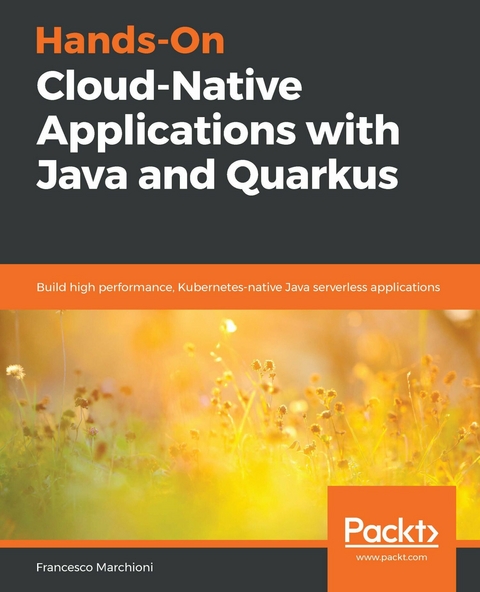
Hands-On Cloud-Native Applications with Java and Quarkus (eBook)
314 Seiten
Packt Publishing (Verlag)
978-1-83882-818-9 (ISBN)
Build robust and reliable Java applications that works on modern infrastructure, such as containers and cloud, using the new features in Quarkus 1.0
Key Features
- Build apps with faster boot time and low RSS memory using the latest Quarkus 1.0 features
- Seamlessly integrate imperative and reactive programming models to build modern Java applications
- Discover effective solutions for running Java on serverless apps, microservices, containers, FaaS, and the cloud
Book Description
Quarkus is a new Kubernetes-native framework that allows Java developers to combine the power of containers, microservices, and cloud-native to build reliable applications. The book is a development guide that will teach you how to build Java-native applications using Quarkus and GraalVM.
We start by learning about the basic concepts of a cloud-native application and its advantages over standard enterprise applications. Then we will quickly move on to application development, by installing the tooling required to build our first application on Quarkus. Next, we'll learn how to create a container-native image of our application and execute it in a Platform-as-a-Service environment such as Minishift. Later, we will build a complete real-world application that will use REST and the Contexts and Dependency injection stack with a web frontend. We will also learn how to add database persistence to our application using PostgreSQL. We will learn how to work with various APIs available to Quarkus such as Camel, Eclipse MicroProfile, and Spring DI. Towards the end, we will learn advanced development techniques such as securing applications, application configuration, and working with non-blocking programming models using Vert.x.
By the end of this book, you will be proficient with all the components of Quarkus and develop-blazing fast applications leveraging modern technology infrastructure.
What you will learn
- Build a native application using Quarkus and GraalVM
- Secure your applications using Elytron and the MicroProfile JWT extension
- Manage data persistence with Quarkus using PostgreSQL
- Use a non-blocking programming model with Quarkus
- Learn how to get Camel and Infinispan working in native mode
- Deploy an application in a Kubernetes-native environment using Minishift
- Discover Reactive Programming with Vert.x
Who this book is for
The book is for Java developers and software architects who are interested in learning a promising microservice architecture for building reliable and robust applications. Knowledge of Java, Spring Framework, and REST APIs is assumed.
Build robust and reliable Java applications that works on modern infrastructure, such as containers and cloud, using the new features in Quarkus 1.0Key FeaturesBuild apps with faster boot time and low RSS memory using the latest Quarkus 1.0 featuresSeamlessly integrate imperative and reactive programming models to build modern Java applicationsDiscover effective solutions for running Java on serverless apps, microservices, containers, FaaS, and the cloudBook DescriptionQuarkus is a new Kubernetes-native framework that allows Java developers to combine the power of containers, microservices, and cloud-native to build reliable applications. The book is a development guide that will teach you how to build Java-native applications using Quarkus and GraalVM.We start by learning about the basic concepts of a cloud-native application and its advantages over standard enterprise applications. Then we will quickly move on to application development, by installing the tooling required to build our first application on Quarkus. Next, we'll learn how to create a container-native image of our application and execute it in a Platform-as-a-Service environment such as Minishift. Later, we will build a complete real-world application that will use REST and the Contexts and Dependency injection stack with a web frontend. We will also learn how to add database persistence to our application using PostgreSQL. We will learn how to work with various APIs available to Quarkus such as Camel, Eclipse MicroProfile, and Spring DI. Towards the end, we will learn advanced development techniques such as securing applications, application configuration, and working with non-blocking programming models using Vert.x.By the end of this book, you will be proficient with all the components of Quarkus and develop-blazing fast applications leveraging modern technology infrastructure.What you will learnBuild a native application using Quarkus and GraalVMSecure your applications using Elytron and the MicroProfile JWT extensionManage data persistence with Quarkus using PostgreSQLUse a non-blocking programming model with QuarkusLearn how to get Camel and Infinispan working in native modeDeploy an application in a Kubernetes-native environment using MinishiftDiscover Reactive Programming with Vert.xWho this book is forThe book is for Java developers and software architects who are interested in learning a promising microservice architecture for building reliable and robust applications. Knowledge of Java, Spring Framework, and REST APIs is assumed.
| Erscheint lt. Verlag | 13.12.2019 |
|---|---|
| Vorwort | Little Mark Little |
| Sprache | englisch |
| Themenwelt | Mathematik / Informatik ► Informatik |
| Schlagworte | Docker • GraalVM • JavaScript • Kubernetes • OpenShift • Quarkus • Vert.x |
| ISBN-10 | 1-83882-818-4 / 1838828184 |
| ISBN-13 | 978-1-83882-818-9 / 9781838828189 |
| Informationen gemäß Produktsicherheitsverordnung (GPSR) | |
| Haben Sie eine Frage zum Produkt? |
 EPUB (Adobe DRM)
Größe: 3,4 MB
Kopierschutz: Adobe-DRM
Adobe-DRM ist ein Kopierschutz, der das eBook vor Mißbrauch schützen soll. Dabei wird das eBook bereits beim Download auf Ihre persönliche Adobe-ID autorisiert. Lesen können Sie das eBook dann nur auf den Geräten, welche ebenfalls auf Ihre Adobe-ID registriert sind.
Details zum Adobe-DRM
Dateiformat: EPUB (Electronic Publication)
EPUB ist ein offener Standard für eBooks und eignet sich besonders zur Darstellung von Belletristik und Sachbüchern. Der Fließtext wird dynamisch an die Display- und Schriftgröße angepasst. Auch für mobile Lesegeräte ist EPUB daher gut geeignet.
Systemvoraussetzungen:
PC/Mac: Mit einem PC oder Mac können Sie dieses eBook lesen. Sie benötigen eine
eReader: Dieses eBook kann mit (fast) allen eBook-Readern gelesen werden. Mit dem amazon-Kindle ist es aber nicht kompatibel.
Smartphone/Tablet: Egal ob Apple oder Android, dieses eBook können Sie lesen. Sie benötigen eine
Geräteliste und zusätzliche Hinweise
Buying eBooks from abroad
For tax law reasons we can sell eBooks just within Germany and Switzerland. Regrettably we cannot fulfill eBook-orders from other countries.
EPUB (Ohne DRM)Digital Rights Management: ohne DRM
Dieses eBook enthält kein DRM oder Kopierschutz. Eine Weitergabe an Dritte ist jedoch rechtlich nicht zulässig, weil Sie beim Kauf nur die Rechte an der persönlichen Nutzung erwerben.
Dateiformat: EPUB (Electronic Publication)
EPUB ist ein offener Standard für eBooks und eignet sich besonders zur Darstellung von Belletristik und Sachbüchern. Der Fließtext wird dynamisch an die Display- und Schriftgröße angepasst. Auch für mobile Lesegeräte ist EPUB daher gut geeignet.
Systemvoraussetzungen:
PC/Mac: Mit einem PC oder Mac können Sie dieses eBook lesen. Sie benötigen dafür die kostenlose Software Adobe Digital Editions.
eReader: Dieses eBook kann mit (fast) allen eBook-Readern gelesen werden. Mit dem amazon-Kindle ist es aber nicht kompatibel.
Smartphone/Tablet: Egal ob Apple oder Android, dieses eBook können Sie lesen. Sie benötigen dafür eine kostenlose App.
Geräteliste und zusätzliche Hinweise
Buying eBooks from abroad
For tax law reasons we can sell eBooks just within Germany and Switzerland. Regrettably we cannot fulfill eBook-orders from other countries.
aus dem Bereich