


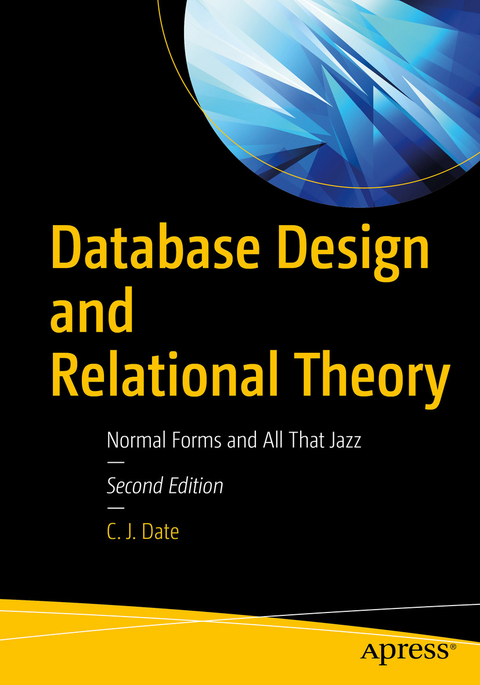
Database Design and Relational Theory (eBook)
451 Seiten
Apress (Verlag)
978-1-4842-5540-7 (ISBN)
- Understand what design theory is and is not
- Be aware of the two different goals of normalization
- Know which normal forms are truly significant
- Apply design theory in practice
- Be familiar with techniques for dealing with redundancy
- Understand what consistency is and why it is crucially important
Create database designs that scale, meet business requirements, and inherently work toward keeping your data structured and usable in the face of changing business models and software systems.This book is about database design theory. Design theory is the scientific foundation for database design, just as the relational model is the scientific foundation for database technology in general. Databases lie at the heart of so much of what we do in the computing world that negative impacts of poor design can be extraordinarily widespread. This second edition includes greatly expanded coverage of exotic and little understood normal forms such as: essential tuple normal form (ETNF), redundancy free normal form (RFNF), superkey normal form (SKNF), sixth normal form (6NF), and domain key normal form (DKNF). Also included are new appendixes, including one that provides an in-depth look into the crucial notion of data consistency.Sequencing of topics has been improved, and many explanations and examples have been rewritten and clarified based upon the author's teaching of the content in instructor-led courses. This book aims to be different from other books on design by bridging the gap between the theory of design and the practice of design. The book explains theory in a way that practitioners should be able to understand, and it explains why that theory is of considerable practical importance. Reading this book provides you with an important theoretical grounding on which to do the practical work of database design. Reading the book also helps you in going to and understanding the more academic texts as you build your base of knowledge and expertise. Anyone with a professional interest in database design can benefit from using this book as a stepping-stone toward a more rigorous design approach and more lasting database models.What You Will LearnUnderstand what design theory is and is notBe aware of the two different goals of normalizationKnow which normal forms are truly significant Apply design theory in practice Be familiar with techniques for dealing with redundancy Understand what consistency is and why it is crucially important Who This Book Is ForThose having a professional interest in database design, including data and database administrators; educators and students specializing in database matters; information modelers and database designers; DBMS designers, implementers, and other database vendor personnel; and database consultants. The book is product independent.
| Erscheint lt. Verlag | 12.12.2019 |
|---|---|
| Zusatzinfo | XIX, 451 p. 59 illus. |
| Sprache | englisch |
| Original-Titel | Database Design and Relational Theory: Normal Forms and All That Jazz |
| Themenwelt | Mathematik / Informatik ► Informatik ► Datenbanken |
| Mathematik / Informatik ► Informatik ► Software Entwicklung | |
| Schlagworte | Boyce-Codd Normal Form (BCNF) • Database Design • Data Consistency • denormalization • Essential Tuple Normal Form (ETNF) • Fifth Normal Form • Fourth Normal Form • Functional Dependence • Join Dependence • Multivalued Dependence • Orthogonal Design • Redundancy Free Normal Form (RFNF) • relational theory • Sixth Normal Form • Superkey Normal Form (SKNF) |
| ISBN-10 | 1-4842-5540-2 / 1484255402 |
| ISBN-13 | 978-1-4842-5540-7 / 9781484255407 |
| Informationen gemäß Produktsicherheitsverordnung (GPSR) | |
| Haben Sie eine Frage zum Produkt? |
 PDF (Wasserzeichen)
Größe: 5,9 MB
DRM: Digitales Wasserzeichen
Dieses eBook enthält ein digitales Wasserzeichen und ist damit für Sie personalisiert. Bei einer missbräuchlichen Weitergabe des eBooks an Dritte ist eine Rückverfolgung an die Quelle möglich.
Dateiformat: PDF (Portable Document Format)
Mit einem festen Seitenlayout eignet sich die PDF besonders für Fachbücher mit Spalten, Tabellen und Abbildungen. Eine PDF kann auf fast allen Geräten angezeigt werden, ist aber für kleine Displays (Smartphone, eReader) nur eingeschränkt geeignet.
Systemvoraussetzungen:
PC/Mac: Mit einem PC oder Mac können Sie dieses eBook lesen. Sie benötigen dafür einen PDF-Viewer - z.B. den Adobe Reader oder Adobe Digital Editions.
eReader: Dieses eBook kann mit (fast) allen eBook-Readern gelesen werden. Mit dem amazon-Kindle ist es aber nicht kompatibel.
Smartphone/Tablet: Egal ob Apple oder Android, dieses eBook können Sie lesen. Sie benötigen dafür einen PDF-Viewer - z.B. die kostenlose Adobe Digital Editions-App.
Buying eBooks from abroad
For tax law reasons we can sell eBooks just within Germany and Switzerland. Regrettably we cannot fulfill eBook-orders from other countries.
aus dem Bereich


