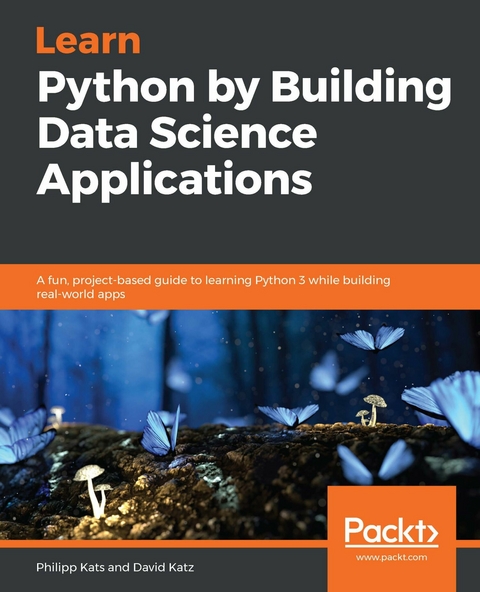
Learn Python by Building Data Science Applications (eBook)
482 Seiten
Packt Publishing (Verlag)
978-1-78953-306-4 (ISBN)
Understand the constructs of the Python programming language and use them to build data science projects
Key Features
- Learn the basics of developing applications with Python and deploy your first data application
- Take your first steps in Python programming by understanding and using data structures, variables, and loops
- Delve into Jupyter, NumPy, Pandas, SciPy, and sklearn to explore the data science ecosystem in Python
Book Description
Python is the most widely used programming language for building data science applications. Complete with step-by-step instructions, this book contains easy-to-follow tutorials to help you learn Python and develop real-world data science projects. The 'secret sauce' of the book is its curated list of topics and solutions, put together using a range of real-world projects, covering initial data collection, data analysis, and production.
This Python book starts by taking you through the basics of programming, right from variables and data types to classes and functions. You'll learn how to write idiomatic code and test and debug it, and discover how you can create packages or use the range of built-in ones. You'll also be introduced to the extensive ecosystem of Python data science packages, including NumPy, Pandas, scikit-learn, Altair, and Datashader. Furthermore, you'll be able to perform data analysis, train models, and interpret and communicate the results. Finally, you'll get to grips with structuring and scheduling scripts using Luigi and sharing your machine learning models with the world as a microservice.
By the end of the book, you'll have learned not only how to implement Python in data science projects, but also how to maintain and design them to meet high programming standards.
What you will learn
- Code in Python using Jupyter and VS Code
- Explore the basics of coding - loops, variables, functions, and classes
- Deploy continuous integration with Git, Bash, and DVC
- Get to grips with Pandas, NumPy, and scikit-learn
- Perform data visualization with Matplotlib, Altair, and Datashader
- Create a package out of your code using poetry and test it with PyTest
- Make your machine learning model accessible to anyone with the web API
Who this book is for
If you want to learn Python or data science in a fun and engaging way, this book is for you. You'll also find this book useful if you're a high school student, researcher, analyst, or anyone with little or no coding experience with an interest in the subject and courage to learn, fail, and learn from failing. A basic understanding of how computers work will be useful.
Understand the constructs of the Python programming language and use them to build data science projectsKey FeaturesLearn the basics of developing applications with Python and deploy your first data applicationTake your first steps in Python programming by understanding and using data structures, variables, and loopsDelve into Jupyter, NumPy, Pandas, SciPy, and sklearn to explore the data science ecosystem in PythonBook DescriptionPython is the most widely used programming language for building data science applications. Complete with step-by-step instructions, this book contains easy-to-follow tutorials to help you learn Python and develop real-world data science projects. The "e;secret sauce"e; of the book is its curated list of topics and solutions, put together using a range of real-world projects, covering initial data collection, data analysis, and production.This Python book starts by taking you through the basics of programming, right from variables and data types to classes and functions. You'll learn how to write idiomatic code and test and debug it, and discover how you can create packages or use the range of built-in ones. You'll also be introduced to the extensive ecosystem of Python data science packages, including NumPy, Pandas, scikit-learn, Altair, and Datashader. Furthermore, you'll be able to perform data analysis, train models, and interpret and communicate the results. Finally, you'll get to grips with structuring and scheduling scripts using Luigi and sharing your machine learning models with the world as a microservice.By the end of the book, you'll have learned not only how to implement Python in data science projects, but also how to maintain and design them to meet high programming standards.What you will learnCode in Python using Jupyter and VS CodeExplore the basics of coding - loops, variables, functions, and classesDeploy continuous integration with Git, Bash, and DVCGet to grips with Pandas, NumPy, and scikit-learnPerform data visualization with Matplotlib, Altair, and DatashaderCreate a package out of your code using poetry and test it with PyTestMake your machine learning model accessible to anyone with the web APIWho this book is forIf you want to learn Python or data science in a fun and engaging way, this book is for you. You'll also find this book useful if you're a high school student, researcher, analyst, or anyone with little or no coding experience with an interest in the subject and courage to learn, fail, and learn from failing. A basic understanding of how computers work will be useful.
| Erscheint lt. Verlag | 30.8.2019 |
|---|---|
| Sprache | englisch |
| Themenwelt | Mathematik / Informatik ► Informatik |
| Schlagworte | Data Science • Projects • Python |
| ISBN-10 | 1-78953-306-6 / 1789533066 |
| ISBN-13 | 978-1-78953-306-4 / 9781789533064 |
| Informationen gemäß Produktsicherheitsverordnung (GPSR) | |
| Haben Sie eine Frage zum Produkt? |
 EPUB (Adobe DRM)
Größe: 14,2 MB
Kopierschutz: Adobe-DRM
Adobe-DRM ist ein Kopierschutz, der das eBook vor Mißbrauch schützen soll. Dabei wird das eBook bereits beim Download auf Ihre persönliche Adobe-ID autorisiert. Lesen können Sie das eBook dann nur auf den Geräten, welche ebenfalls auf Ihre Adobe-ID registriert sind.
Details zum Adobe-DRM
Dateiformat: EPUB (Electronic Publication)
EPUB ist ein offener Standard für eBooks und eignet sich besonders zur Darstellung von Belletristik und Sachbüchern. Der Fließtext wird dynamisch an die Display- und Schriftgröße angepasst. Auch für mobile Lesegeräte ist EPUB daher gut geeignet.
Systemvoraussetzungen:
PC/Mac: Mit einem PC oder Mac können Sie dieses eBook lesen. Sie benötigen eine
eReader: Dieses eBook kann mit (fast) allen eBook-Readern gelesen werden. Mit dem amazon-Kindle ist es aber nicht kompatibel.
Smartphone/Tablet: Egal ob Apple oder Android, dieses eBook können Sie lesen. Sie benötigen eine
Geräteliste und zusätzliche Hinweise
Buying eBooks from abroad
For tax law reasons we can sell eBooks just within Germany and Switzerland. Regrettably we cannot fulfill eBook-orders from other countries.
EPUB (Ohne DRM)Digital Rights Management: ohne DRM
Dieses eBook enthält kein DRM oder Kopierschutz. Eine Weitergabe an Dritte ist jedoch rechtlich nicht zulässig, weil Sie beim Kauf nur die Rechte an der persönlichen Nutzung erwerben.
Dateiformat: EPUB (Electronic Publication)
EPUB ist ein offener Standard für eBooks und eignet sich besonders zur Darstellung von Belletristik und Sachbüchern. Der Fließtext wird dynamisch an die Display- und Schriftgröße angepasst. Auch für mobile Lesegeräte ist EPUB daher gut geeignet.
Systemvoraussetzungen:
PC/Mac: Mit einem PC oder Mac können Sie dieses eBook lesen. Sie benötigen dafür die kostenlose Software Adobe Digital Editions.
eReader: Dieses eBook kann mit (fast) allen eBook-Readern gelesen werden. Mit dem amazon-Kindle ist es aber nicht kompatibel.
Smartphone/Tablet: Egal ob Apple oder Android, dieses eBook können Sie lesen. Sie benötigen dafür eine kostenlose App.
Geräteliste und zusätzliche Hinweise
Buying eBooks from abroad
For tax law reasons we can sell eBooks just within Germany and Switzerland. Regrettably we cannot fulfill eBook-orders from other countries.
aus dem Bereich