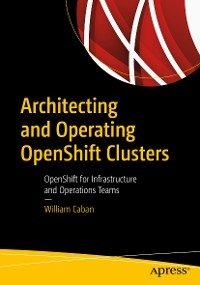
Architecting and Operating OpenShift Clusters (eBook)
XVII, 286 Seiten
Apress (Verlag)
978-1-4842-4985-7 (ISBN)
Design and architect resilient OpenShift clusters and gain a keen understanding of how hundreds of projects are integrated into a powerful solution. While there are many OpenShift resources available for developers, this book focuses on the key elements of infrastructure and operations that teams need when looking to integrate and maintain this platform.
You'll review important concepts, such as repeatable deployment techniques, advanced OpenShift RBAC capabilities, monitoring clusters, and integrating with external services. You'll also see how to run specialized workloads in OpenShift and how to deploy non-web based applications on the platform, all designed to help cultivate best practices as your organization continue evolve in microservices architectures.
OpenShift has become the main enterprise Kubernetes distribution and its market penetration continues to growth at rapid rate. While OpenShift's documentation provides a great list of configuration options to work with the platform, it can be a daunting task to wade through. Architecting and Operating OpenShift Clusters breaks this content down into clear and useful concepts to provide you with a solid understanding of the OpenShift internal architecture.
What You'll Learn
- Operate high availability in muti-tenant OCP clusters Understand OpenShift SDN models, capabilities, and storage classes
- Integrate OCP with existing data center capabilities and CI/CD pipelines
- Support advanced capabilities like: Istio, Multus, Kubernetes Operators, hybrid deployments
Who This Book Is For
Cloud architects, OpenShift cluster administrators, and teams supporting developers in OpenShift environments who have a basic understanding of this platform and microservices architectures.
Design and architect resilient OpenShift clusters and gain a keen understanding of how hundreds of projects are integrated into a powerful solution. While there are many OpenShift resources available for developers, this book focuses on the key elements of infrastructure and operations that teams need when looking to integrate and maintain this platform. You'll review important concepts, such as repeatable deployment techniques, advanced OpenShift RBAC capabilities, monitoring clusters, and integrating with external services. You'll also see how to run specialized workloads in OpenShift and how to deploy non-web based applications on the platform, all designed to help cultivate best practices as your organization continue evolve in microservices architectures.OpenShift has become the main enterprise Kubernetes distribution and its market penetration continues to growth at rapid rate. While OpenShift s documentation provides a great list of configurationoptions to work with the platform, it can be a daunting task to wade through. Architecting and Operating OpenShift Clusters breaks this content down into clear and useful concepts to provide you with a solid understanding of the OpenShift internal architecture.What You'll Learn Operate high availability in muti-tenant OCP clusters Understand OpenShift SDN models, capabilities, and storage classes Integrate OCP with existing data center capabilities and CI/CD pipelines Support advanced capabilities like: Istio, Multus, Kubernetes Operators, hybrid deployments Who This Book Is ForCloud architects, OpenShift cluster administrators, and teams supporting developers in OpenShift environments who have a basic understanding of this platform and microservices architectures.
| Erscheint lt. Verlag | 6.9.2019 |
|---|---|
| Zusatzinfo | XVII, 286 p. 145 illus. |
| Sprache | englisch |
| Themenwelt | Mathematik / Informatik ► Informatik |
| Schlagworte | high availability clustering • MiniShift • OKD architecture • OKD Kubernetes • OKD storage and security • OpenShift storage • Origin architecture • Origin Kubernetes |
| ISBN-10 | 1-4842-4985-2 / 1484249852 |
| ISBN-13 | 978-1-4842-4985-7 / 9781484249857 |
| Informationen gemäß Produktsicherheitsverordnung (GPSR) | |
| Haben Sie eine Frage zum Produkt? |
 PDF (Wasserzeichen)
DRM: Digitales Wasserzeichen
Dieses eBook enthält ein digitales Wasserzeichen und ist damit für Sie personalisiert. Bei einer missbräuchlichen Weitergabe des eBooks an Dritte ist eine Rückverfolgung an die Quelle möglich.
Dateiformat: PDF (Portable Document Format)
Mit einem festen Seitenlayout eignet sich die PDF besonders für Fachbücher mit Spalten, Tabellen und Abbildungen. Eine PDF kann auf fast allen Geräten angezeigt werden, ist aber für kleine Displays (Smartphone, eReader) nur eingeschränkt geeignet.
Systemvoraussetzungen:
PC/Mac: Mit einem PC oder Mac können Sie dieses eBook lesen. Sie benötigen dafür einen PDF-Viewer - z.B. den Adobe Reader oder Adobe Digital Editions.
eReader: Dieses eBook kann mit (fast) allen eBook-Readern gelesen werden. Mit dem amazon-Kindle ist es aber nicht kompatibel.
Smartphone/Tablet: Egal ob Apple oder Android, dieses eBook können Sie lesen. Sie benötigen dafür einen PDF-Viewer - z.B. die kostenlose Adobe Digital Editions-App.
Buying eBooks from abroad
For tax law reasons we can sell eBooks just within Germany and Switzerland. Regrettably we cannot fulfill eBook-orders from other countries.
aus dem Bereich