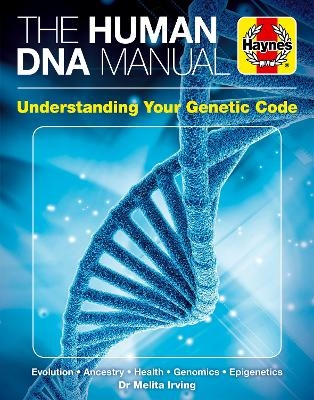
DNA Human Genome Manual
J H Haynes & Co Ltd (Verlag)
978-1-78521-594-0 (ISBN)
- Titel ist leider vergriffen;
keine Neuauflage - Artikel merken
• Explains the structure and purpose of DNA and how it was discovered
• Tracks the history of human DNA, the development of our species, genetic disorders and mapping the human genome
• Includes sections on the significance of DNA in crime detection and in the future of medicine
Dr Melita Irving is an expert London-based consultant and honorary reader in clinical genetics. Her specialist interests include chromosomal disorders, rare genetic symptoms, and conditions with an underlying genetic cause. She currently acts as the chief investigator for clinical trials in children with skeletal dysplasia, developing the diagnosis of genetic conditions and improving the accurate diagnosis of severe skeletal conditions. Her work is featured in many peer-reviewed publications and she has published extensively on various aspects of clinical genetics.
THE HUMAN DNA MANUAL
INTRODUCTION
What is DNA and why should I care about it?
The recipe for life
SECTION ONE: The DNA Toolbox
Chapter 1: The History of DNA discovery
CELLS
Organelles
Nucleus
Endoplasmic Reticulum
Golgi apparatus
Mitochondria
CHROMOSOMES
Karyotype
Autosomes
Sex chromosomes
Cell division
Mitosis
Meiosis
Gametes and zygosity
HEREDITY
Inheritance patterns and Mendel
Genes; Bateson, Hugo de Vries
DNA
Avery-MacLeod-McCarty
Nucleic acid
Mieschner & Altmann
Double helix
Franklin-Wilkins, Watson-Crick
Sugar-phosphate backbone
Base pairs
DNA replication, Meselson-Stahl
Exons, introns
“Junk” DNA (or what does 98% of human DNA actually do?
RNA and ribosomes
PROTEINS
Cracking the genetic code
Nirenberg-Leder, Khorana
Aminoacids
The shape of you - how protein structure works
DNA MODIFICATION/EPIGENETICS
Imprinting
Uniparental disomy
Methylation
Coiling
Histones, chromatin
THE HUMAN GENOME
Introduction
Sequencing, Sanger
Human Genome Project
The 100 000 Genomes Project
Chapter 2: Genetics in action
What is the genetic code?
Human gene variation
Genetic disease
Naming genes, Sonic Hedgehog and Lunatic Fringe
Genome builds and browsers
Bioinformatics made easy
Big data
Relatedness and Consanguinity
Chapter 3: Practical applications of DNA
How to extract DNA in your kitchen
Extract DNA from strawberries using household equipment
Take the genetic test
Conduct the cracker test; find out how quickly you digest carbohydrate
Bump, the congenial genealogy dating app
The photic sneeze reflex or ACHOO syndrome
After a meal of asparagus
Is tongue rolling a genetic trait?
Always getting a bad hangover?
SECTION TWO: DNA Past
Chapter 4: History and DNA
Genes and Evolution
The ABC of extracting ancient DNA
What ancient DNA says about us
From field to laboratory: what DNA can tell us about the fossil record
Home habilis, Home erectus, Homo neanderthalis, Homo sapiens
Gene clusters in human speciation
Charles Darwin
Genes and extinction
Could we use ancient DNA to bring Neanderthal man back to life?
DNA and race
How ancient DNA is transforming history
Ancient DNA and the history of the human population
Eugenics
SECTION THREE: DNA Present
Chapter 5: Crime and punishment
The history of DNA analysis:
Blood typing, Tissue typing, Restriction enzyme, Sanger sequencing, SNPs
DNA fingerprinting
Alec Jeffreys
DNA profiling
DNA evidence for crime solving
The Genetics of criminality
Paternity testing
DNA profiling and disaster victim identification
Chapter 6: DNA in Medicine
Inheritance patterns revisited
Autosomal dominant
Autosomal recessive
X-linked recessive
X-linked dominant; Royalty, Rasputin and the Romanovs
Mitochondrial
Personalised Medicine
Pharmacogenomics
Genetic predisposition to late-onset disease
The difference between diagnostic and predictive genetic testing
Genetic anticipation
Woody Guthrie’s genetic disease
Can genetic diseases ever be treated?
Skipping generations
Genetic predisposition to cancer
Modifying genetic risk
Reproductive carrier testing for genetic diseases
The protective effect of being a carrier
The case for cystic fibrosis
The case for sickle cell anaemia
Consanguinity and recessive disorders revisited
Chromosome abnormalities
Genetics and reproductive medicine
Prenatal diagnosis
Preimplantation genetic diagnosis
mitochondrial transfer
Preimplantation genetic screening
Cell-free fetal DNA
Gene therapy
How is it done?
What can it be used to treat?
What are its limitations?
The microbiome
What is the microbiome?
How can it affect our health?
Obesity and the microbiome
Parkinson’s disease and the microbiome
Microbiome and mental health
Special considerations in genetic testing
Genetic testing in children
Adoption
Genetics and insurance
Breaking confidentiality: genetic testing and the law
SECTION FOUR: DNA FUTURE
Chapter 7: Don’t believe the hype?
The consumer genomics revolution
Direct to consumer genetic testing (DTC)
Ancestry DNA
DNA and data privacy
Is obesity genetic?
Is gender genetically determined?
Chapter 8: What happens next?
The Era of epigenetics – nature versus nurture under the microscope
Epigenomics
Epigenetics and smoking
Epigenetics and aging: the epigenetic clock
Genetic engineering
Gene editing
Human reproductive cloning
Therapeutic cloning
Cancer genomics
| Erscheinungsdatum | 12.10.2019 |
|---|---|
| Zusatzinfo | 200 Illustrations |
| Verlagsort | Somerset |
| Sprache | englisch |
| Maße | 210 x 270 mm |
| Gewicht | 745 g |
| Themenwelt | Informatik ► Weitere Themen ► Bioinformatik |
| Naturwissenschaften ► Biologie ► Genetik / Molekularbiologie | |
| ISBN-10 | 1-78521-594-9 / 1785215949 |
| ISBN-13 | 978-1-78521-594-0 / 9781785215940 |
| Zustand | Neuware |
| Informationen gemäß Produktsicherheitsverordnung (GPSR) | |
| Haben Sie eine Frage zum Produkt? |
aus dem Bereich