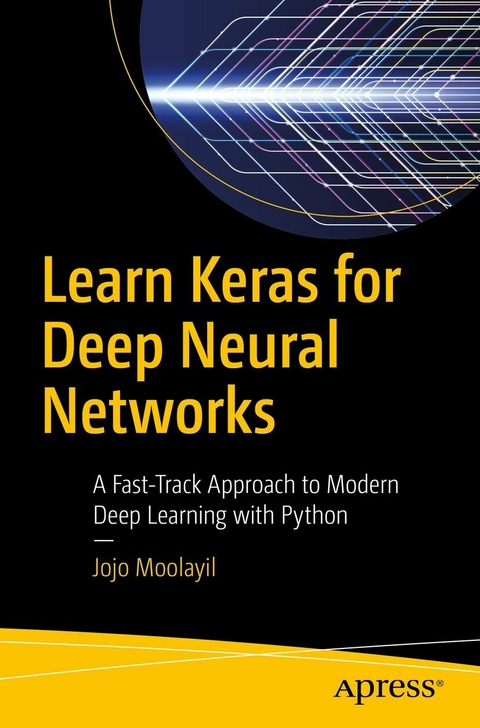
Learn Keras for Deep Neural Networks (eBook)
XV, 182 Seiten
Apress (Verlag)
978-1-4842-4240-7 (ISBN)
Learn, understand, and implement deep neural networks in a math- and programming-friendly approach using Keras and Python. The book focuses on an end-to-end approach to developing supervised learning algorithms in regression and classification with practical business-centric use-cases implemented in Keras.
The overall book comprises three sections with two chapters in each section. The first section prepares you with all the necessary basics to get started in deep learning. Chapter 1 introduces you to the world of deep learning and its difference from machine learning, the choices of frameworks for deep learning, and the Keras ecosystem. You will cover a real-life business problem that can be solved by supervised learning algorithms with deep neural networks. You'll tackle one use case for regression and another for classification leveraging popular Kaggle datasets.
Later, you will see an interesting and challenging part of deep learning: hyperparameter tuning; helping you further improve your models when building robust deep learning applications. Finally, you'll further hone your skills in deep learning and cover areas of active development and research in deep learning.
At the end of Learn Keras for Deep Neural Networks, you will have a thorough understanding of deep learning principles and have practical hands-on experience in developing enterprise-grade deep learning solutions in Keras.
What You'll Learn
Who This Book Is For
Software engineers and data engineers with basic programming skills in any language and who are keen on exploring deep learning for a career move or an enterprise project.Jojo Moolayil is an artificial intelligence, deep learning, machine learning, and decision science professional with over five years of industrial experience and is a published author of the book Smarter Decisions - The Intersection of IoT and Decision Science. He has worked with several industry leaders on high-impact and critical data science and machine learning projects across multiple verticals. He is currently associated with Amazon Web Services as a research scientist. He was born and raised in Pune, India and graduated from the University of Pune with a major in Information Technology Engineering. He started his career with Mu Sigma Inc., the world's largest pure-play analytics provider and worked with the leaders of many Fortune 50 clients. He later worked with Flutura - an IoT analytics startup and GE. He currently resides in Vancouver, BC. Apart from writing books on decision science and IoT, Jojo has also been a technical reviewer for various books on machine learning, deep learning and business analytics with Apress and Packt publications. He is an active data science tutor and maintains a blog at http://blog.jojomoolayil.com.
Learn, understand, and implement deep neural networks in a math- and programming-friendly approach using Keras and Python. The book focuses on an end-to-end approach to developing supervised learning algorithms in regression and classification with practical business-centric use-cases implemented in Keras.The overall book comprises three sections with two chapters in each section. The first section prepares you with all the necessary basics to get started in deep learning. Chapter 1 introduces you to the world of deep learning and its difference from machine learning, the choices of frameworks for deep learning, and the Keras ecosystem. You will cover a real-life business problem that can be solved by supervised learning algorithms with deep neural networks. You ll tackle one use case for regression and another for classification leveraging popular Kaggle datasets. Later, you will see an interesting and challenging part of deep learning: hyperparameter tuning; helping you further improve your models when building robust deep learning applications. Finally, you ll further hone your skills in deep learning and cover areas of active development and research in deep learning. At the end of Learn Keras for Deep Neural Networks, you will have a thorough understanding of deep learning principles and have practical hands-on experience in developing enterprise-grade deep learning solutions in Keras.What You ll Learn Master fast-paced practical deep learning concepts with math- and programming-friendly abstractions. Design, develop, train, validate, and deploy deep neural networks using the Keras framework Use best practices for debugging and validating deep learning models Deploy and integrate deep learning as a service into a larger software service or product Extend deep learning principles into other popular frameworks Who This Book Is For Software engineers and data engineers with basic programming skills in any language and who are keen on exploring deep learning for a career move or an enterprise project.
Jojo Moolayil is an artificial intelligence, deep learning, machine learning, and decision science professional with over five years of industrial experience and is a published author of the book Smarter Decisions – The Intersection of IoT and Decision Science. He has worked with several industry leaders on high-impact and critical data science and machine learning projects across multiple verticals. He is currently associated with Amazon Web Services as a research scientist. He was born and raised in Pune, India and graduated from the University of Pune with a major in Information Technology Engineering. He started his career with Mu Sigma Inc., the world’s largest pure-play analytics provider and worked with the leaders of many Fortune 50 clients. He later worked with Flutura – an IoT analytics startup and GE. He currently resides in Vancouver, BC. Apart from writing books on decision science and IoT, Jojo has also been a technical reviewer for various books on machine learning, deep learning and business analytics with Apress and Packt publications. He is an active data science tutor and maintains a blog at http://blog.jojomoolayil.com.
SECTION 1: Prepares the reader with all the necessary gears to get started on the fast track ride in deep learning. Chapter 1: Deep Learning & Keras Chapter Goal: Introduce the reader to the deep learning and keras framework
Sub -Topics
1. Exploring the popular Deep Learning frameworks2. Overview of Keras, Pytorch, mxnet, Tensorflow,
3. A closer look at Keras: What’s special about Keras?
Chapter 2: Keras in Action Chapter Goal: Help the reader to engage with hands-on exercises with Keras and implement the first basic deep neural network
Sub - Topics
1. A closer look at the deep learning building blocks
2. Exploring the keras building blocks for deep learning
3. Implementing a basic deep neural network with dummy data
SECTION 2 – Help the reader embrace the core fundamentals in simple lucid language while abstracting the math and the complexities of model training and validation with the least amount of code without compromising on flexibility, scale and the required sophistication Chapter 3: Deep Neural networks for Supervised Learning Chapter Goal: Embrace the core fundamentals of deep learning and its development
Sub - Topics:
1. Introduction to supervised learning
2. Classification use-case – implementing DNN
3. Regression use-case – implementing DNN
Chapter 4: Measuring Performance for DNN Chapter Goal: Aid the reader in understanding the craft of validating deep neural networks
Sub - Topics:
1. Metrics for success – regression
2. Analyzing the regression neural network performance
3. Metrics for success – classification
4. Analyzing the regression neural network performance
SECTION 3 – Tuning and deploying robust DL models
Chapter 5: Hyperparameter Tuning & Model Deployment Chapter Goal: Understand how to tune the model hyperparameters to achieve improved performance
Sub - Topics:
1. Hyperparameter tuning for deep learning models
2. Model deployment and transfer learning
Chapter 6: The Path Forward
Chapter goal – Educate the reader about additional reading for advanced topics within deep learning.
Sub - Topics:
1. What’s next for deep learning expertise?
2. Further reading
3. GPU for deep learning
4. Active research areas and breakthroughs in deep learning5. Conclusion
| Erscheint lt. Verlag | 7.12.2018 |
|---|---|
| Zusatzinfo | XV, 182 p. 37 illus. |
| Verlagsort | Berkeley |
| Sprache | englisch |
| Themenwelt | Mathematik / Informatik ► Informatik ► Programmiersprachen / -werkzeuge |
| Informatik ► Theorie / Studium ► Künstliche Intelligenz / Robotik | |
| Schlagworte | Deep learning • Deep Neural Network • Keras • Learning Algorithms • machine learning • Python |
| ISBN-10 | 1-4842-4240-8 / 1484242408 |
| ISBN-13 | 978-1-4842-4240-7 / 9781484242407 |
| Informationen gemäß Produktsicherheitsverordnung (GPSR) | |
| Haben Sie eine Frage zum Produkt? |
 PDF (Wasserzeichen)
DRM: Digitales Wasserzeichen
Dieses eBook enthält ein digitales Wasserzeichen und ist damit für Sie personalisiert. Bei einer missbräuchlichen Weitergabe des eBooks an Dritte ist eine Rückverfolgung an die Quelle möglich.
Dateiformat: PDF (Portable Document Format)
Mit einem festen Seitenlayout eignet sich die PDF besonders für Fachbücher mit Spalten, Tabellen und Abbildungen. Eine PDF kann auf fast allen Geräten angezeigt werden, ist aber für kleine Displays (Smartphone, eReader) nur eingeschränkt geeignet.
Systemvoraussetzungen:
PC/Mac: Mit einem PC oder Mac können Sie dieses eBook lesen. Sie benötigen dafür einen PDF-Viewer - z.B. den Adobe Reader oder Adobe Digital Editions.
eReader: Dieses eBook kann mit (fast) allen eBook-Readern gelesen werden. Mit dem amazon-Kindle ist es aber nicht kompatibel.
Smartphone/Tablet: Egal ob Apple oder Android, dieses eBook können Sie lesen. Sie benötigen dafür einen PDF-Viewer - z.B. die kostenlose Adobe Digital Editions-App.
Buying eBooks from abroad
For tax law reasons we can sell eBooks just within Germany and Switzerland. Regrettably we cannot fulfill eBook-orders from other countries.
aus dem Bereich