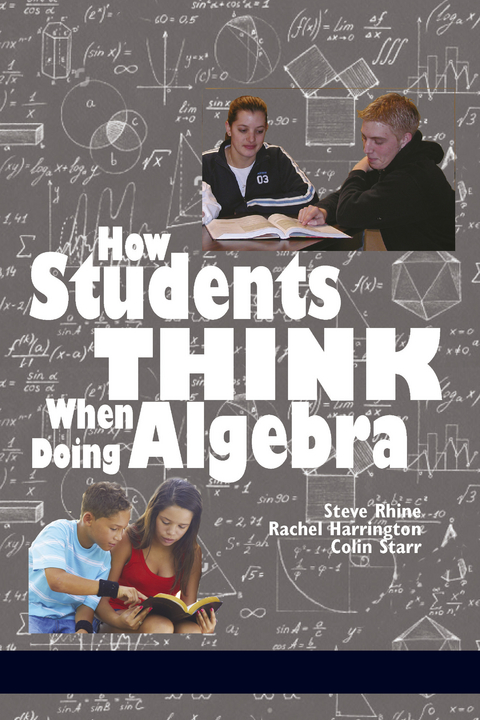
Over time, veteran math teachers develop extensive knowledge of how students engage with algebraic concepts—their misconceptions, ways of thinking, and when and how they are challenged to understand—and use that knowledge to anticipate students’ struggles with particular lessons and plan accordingly. Veteran teachers learn to evaluate whether an incorrect response is a simple error or the symptom of a faulty or naïve understanding of a concept. Novice teachers, on the other hand, lack the experience to anticipate important moments in the learning of their students. They often struggle to make sense of what students say in the classroom and determine whether the response is useful or can further discussion (Leatham, Stockero, Peterson, & Van Zoest 2011; Peterson & Leatham, 2009). The purpose of this book is to accelerate early career teachers’ “experience” with how students think when doing algebra in middle or high school as well as to supplement veteran teachers’ knowledge of content and students. The research that this book is based upon can provide teachers with insight into the nature of a student’s struggles with particular algebraic ideas—to help teachers identify patterns that imply underlying thinking.
Our book, How Students Think When Doing Algebra, is not intended to be a “how to” book for teachers. Instead, it is intended to orient new teachers to the ways students think and be a book that teachers at all points in their career continually pull of the shelf when they wonder, “how might my students struggle with this algebraic concept I am about to teach?” The primary audience for this book is early career mathematics teachers who don’t have extensive experience working with students engaged in mathematics. However, the book can also be useful to veteran teachers to supplement their knowledge and is an ideal resource for mathematics educators who are preparing preservice teachers.
Algebra is the gateway to college and careers, yet it functions as the eye of the needle because of low pass rates for the middle school/high school course and students' struggles to understand. We have forty years of research that discusses the ways students think and their cognitive challenges as they engage with algebra. This book is a response to the National Council of Teachers of Mathematics' (NCTM) call to better link research and practice by capturing what we have learned about students' algebraic thinking in a way that is usable by teachers as they prepare lessons or reflect on their experiences in the classroom. Through a Fund for the Improvement of Post-Secondary Education (FIPSE) grant, 17 teachers and mathematics educators read through the past 40 years of research on students' algebraic thinking to capture what might be useful information for teachers to know-over 1000 articles altogether. The resulting five domains addressed in the book (Variables & Expressions, Algebraic Relations, Analysis of Change, Patterns & Functions, and Modeling & Word Problems) are closely tied to CCSS topics.Over time, veteran math teachers develop extensive knowledge of how students engage with algebraic concepts-their misconceptions, ways of thinking, and when and how they are challenged to understand-and use that knowledge to anticipate students' struggles with particular lessons and plan accordingly. Veteran teachers learn to evaluate whether an incorrect response is a simple error or the symptom of a faulty or naive understanding of a concept. Novice teachers, on the other hand, lack the experience to anticipate important moments in the learning of their students. They often struggle to make sense of what students say in the classroom and determine whether the response is useful or can further discussion (Leatham, Stockero, Peterson, & Van Zoest 2011; Peterson & Leatham, 2009). The purpose of this book is to accelerate early career teachers' "e;experience"e; with how students think when doing algebra in middle or high school as well as to supplement veteran teachers' knowledge of content and students. The research that this book is based upon can provide teachers with insight into the nature of a student's struggles with particular algebraic ideas-to help teachers identify patterns that imply underlying thinking.Our book, How Students Think When Doing Algebra, is not intended to be a "e;how to"e; book for teachers. Instead, it is intended to orient new teachers to the ways students think and be a book that teachers at all points in their career continually pull of the shelf when they wonder, "e;how might my students struggle with this algebraic concept I am about to teach?"e; The primary audience for this book is early career mathematics teachers who don't have extensive experience working with students engaged in mathematics. However, the book can also be useful to veteran teachers to supplement their knowledge and is an ideal resource for mathematics educators who are preparing preservice teachers.
| Erscheint lt. Verlag | 1.11.2018 |
|---|---|
| Sprache | englisch |
| Themenwelt | Schulbuch / Wörterbuch ► Lexikon / Chroniken |
| Mathematik / Informatik ► Mathematik ► Algebra | |
| Sozialwissenschaften ► Pädagogik | |
| ISBN-13 | 9781641134132 / 9781641134132 |
| Informationen gemäß Produktsicherheitsverordnung (GPSR) | |
| Haben Sie eine Frage zum Produkt? |
 PDF (Adobe DRM)
Größe: 15,0 MB
Kopierschutz: Adobe-DRM
Adobe-DRM ist ein Kopierschutz, der das eBook vor Mißbrauch schützen soll. Dabei wird das eBook bereits beim Download auf Ihre persönliche Adobe-ID autorisiert. Lesen können Sie das eBook dann nur auf den Geräten, welche ebenfalls auf Ihre Adobe-ID registriert sind.
Details zum Adobe-DRM
Dateiformat: PDF (Portable Document Format)
Mit einem festen Seitenlayout eignet sich die PDF besonders für Fachbücher mit Spalten, Tabellen und Abbildungen. Eine PDF kann auf fast allen Geräten angezeigt werden, ist aber für kleine Displays (Smartphone, eReader) nur eingeschränkt geeignet.
Systemvoraussetzungen:
PC/Mac: Mit einem PC oder Mac können Sie dieses eBook lesen. Sie benötigen eine
eReader: Dieses eBook kann mit (fast) allen eBook-Readern gelesen werden. Mit dem amazon-Kindle ist es aber nicht kompatibel.
Smartphone/Tablet: Egal ob Apple oder Android, dieses eBook können Sie lesen. Sie benötigen eine
Geräteliste und zusätzliche Hinweise
Zusätzliches Feature: Online Lesen
Dieses eBook können Sie zusätzlich zum Download auch online im Webbrowser lesen.
Buying eBooks from abroad
For tax law reasons we can sell eBooks just within Germany and Switzerland. Regrettably we cannot fulfill eBook-orders from other countries.
 EPUB (Adobe DRM)
Kopierschutz: Adobe-DRM
Adobe-DRM ist ein Kopierschutz, der das eBook vor Mißbrauch schützen soll. Dabei wird das eBook bereits beim Download auf Ihre persönliche Adobe-ID autorisiert. Lesen können Sie das eBook dann nur auf den Geräten, welche ebenfalls auf Ihre Adobe-ID registriert sind.
Details zum Adobe-DRM
Dateiformat: EPUB (Electronic Publication)
EPUB ist ein offener Standard für eBooks und eignet sich besonders zur Darstellung von Belletristik und Sachbüchern. Der Fließtext wird dynamisch an die Display- und Schriftgröße angepasst. Auch für mobile Lesegeräte ist EPUB daher gut geeignet.
Systemvoraussetzungen:
PC/Mac: Mit einem PC oder Mac können Sie dieses eBook lesen. Sie benötigen eine
eReader: Dieses eBook kann mit (fast) allen eBook-Readern gelesen werden. Mit dem amazon-Kindle ist es aber nicht kompatibel.
Smartphone/Tablet: Egal ob Apple oder Android, dieses eBook können Sie lesen. Sie benötigen eine
Geräteliste und zusätzliche Hinweise
Buying eBooks from abroad
For tax law reasons we can sell eBooks just within Germany and Switzerland. Regrettably we cannot fulfill eBook-orders from other countries.
aus dem Bereich