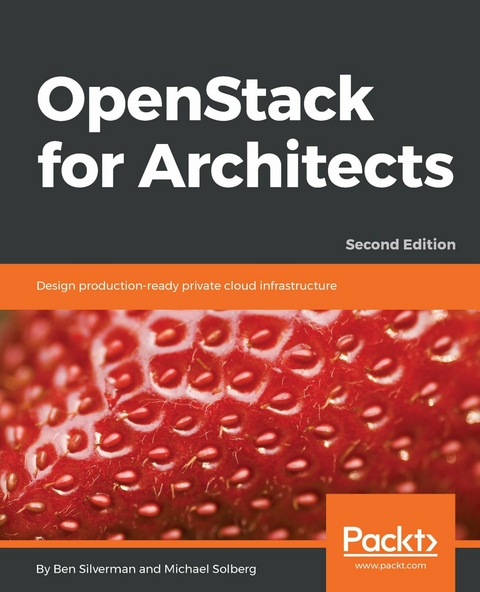
OpenStack for Architects (eBook)
256 Seiten
Packt Publishing (Verlag)
978-1-78862-815-0 (ISBN)
Over the past six years, hundreds of organizations have successfully implemented Infrastructure as a Service (IaaS) platforms based on OpenStack. The huge amount of investment from these organizations, including industry giants such as IBM and HP, as well as open source leaders, such as Red Hat, Canonical, and SUSE, has led analysts to label OpenStack as the most important open source technology since the Linux operating system. Due to its ambitious scope, OpenStack is a complex and fast-evolving open source project that requires a diverse skill set to design and implement it.
OpenStack for Architects leads you through the major decision points that you'll face while architecting an OpenStack private cloud for your organization. This book will address the recent changes made in the latest OpenStack release i.e Queens, and will also deal with advanced concepts such as containerization, NVF, and security. At each point, the authors offer you advice based on the experience they've gained from designing and leading successful OpenStack projects in a wide range of industries. Each chapter also includes lab material that gives you a chance to install and configure the technologies used to build production-quality OpenStack clouds. Most importantly, the book focuses on ensuring that your OpenStack project meets the needs of your organization, which will guarantee a successful rollout.
Implement successful private clouds with OpenStackAbout This BookGain hands-on experience in designing a private cloud for all infrastructuresCreate a robust virtual environment for your organizationDesign, implement and deploy an OpenStack-based cloud based on the Queens releaseWho This Book Is ForOpenStack for Architects is for Cloud architects who are responsible to design and implement a private cloud with OpenStack. System engineers and enterprise architects will also find this book useful. Basic understanding of core OpenStack services, as well as some working experience of concepts, is recommended.What You Will LearnLearn the overall structure of an OpenStack deploymentCraft an OpenStack deployment process which fits within your organizationApply Agile Development methodologies to engineer and operate OpenStack cloudsBuild a product roadmap for Infrastructure as a Service based on OpenStackMake use of containers to increase the manageability and resiliency of applications running in and on OpenStack.Use enterprise security guidelines for your OpenStack deploymentIn DetailOver the past six years, hundreds of organizations have successfully implemented Infrastructure as a Service (IaaS) platforms based on OpenStack. The huge amount of investment from these organizations, including industry giants such as IBM and HP, as well as open source leaders, such as Red Hat, Canonical, and SUSE, has led analysts to label OpenStack as the most important open source technology since the Linux operating system. Due to its ambitious scope, OpenStack is a complex and fast-evolving open source project that requires a diverse skill set to design and implement it.OpenStack for Architects leads you through the major decision points that you'll face while architecting an OpenStack private cloud for your organization. This book will address the recent changes made in the latest OpenStack release i.e Queens, and will also deal with advanced concepts such as containerization, NVF, and security. At each point, the authors offer you advice based on the experience they've gained from designing and leading successful OpenStack projects in a wide range of industries. Each chapter also includes lab material that gives you a chance to install and configure the technologies used to build production-quality OpenStack clouds. Most importantly, the book focuses on ensuring that your OpenStack project meets the needs of your organization, which will guarantee a successful rollout.Style and approachThis is practical, hands-on guide to implementing OpenStack clouds, where each topic is illustrated with real-world examples and then the technical points are proven in the lab. Conceptual chapters are written in discussion style to convey important concepts quickly and present decision points for choosing options.
| Erscheint lt. Verlag | 31.5.2018 |
|---|---|
| Sprache | englisch |
| Themenwelt | Mathematik / Informatik ► Informatik ► Netzwerke |
| ISBN-10 | 1-78862-815-2 / 1788628152 |
| ISBN-13 | 978-1-78862-815-0 / 9781788628150 |
| Informationen gemäß Produktsicherheitsverordnung (GPSR) | |
| Haben Sie eine Frage zum Produkt? |
 EPUB (Ohne DRM)
Digital Rights Management: ohne DRM
Dieses eBook enthält kein DRM oder Kopierschutz. Eine Weitergabe an Dritte ist jedoch rechtlich nicht zulässig, weil Sie beim Kauf nur die Rechte an der persönlichen Nutzung erwerben.
Dateiformat: EPUB (Electronic Publication)
EPUB ist ein offener Standard für eBooks und eignet sich besonders zur Darstellung von Belletristik und Sachbüchern. Der Fließtext wird dynamisch an die Display- und Schriftgröße angepasst. Auch für mobile Lesegeräte ist EPUB daher gut geeignet.
Systemvoraussetzungen:
PC/Mac: Mit einem PC oder Mac können Sie dieses eBook lesen. Sie benötigen dafür die kostenlose Software Adobe Digital Editions.
eReader: Dieses eBook kann mit (fast) allen eBook-Readern gelesen werden. Mit dem amazon-Kindle ist es aber nicht kompatibel.
Smartphone/Tablet: Egal ob Apple oder Android, dieses eBook können Sie lesen. Sie benötigen dafür eine kostenlose App.
Geräteliste und zusätzliche Hinweise
Buying eBooks from abroad
For tax law reasons we can sell eBooks just within Germany and Switzerland. Regrettably we cannot fulfill eBook-orders from other countries.
aus dem Bereich