


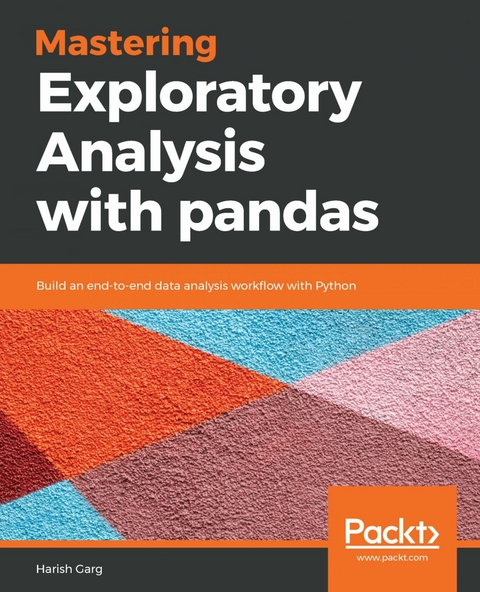
Mastering Exploratory Analysis with pandas (eBook)
140 Seiten
Packt Publishing (Verlag)
9781789615470 (ISBN)

Explore Python frameworks like pandas, Jupyter notebooks, and Matplotlib to build data pipelines and data visualization
Key Features
- Learn to set up data analysis pipelines with pandas and Jupyter notebooks
- Effective techniques for data selection, manipulation, and visualization
- Introduction to Matplotlib for interactive data visualization using charts and plots
Book Description
The pandas is a Python library that lets you manipulate, transform, and analyze data. It is a popular framework for exploratory data visualization and analyzing datasets and data pipelines based on their properties.
This book will be your practical guide to exploring datasets using pandas. You will start by setting up Python, pandas, and Jupyter Notebooks. You will learn how to use Jupyter Notebooks to run Python code. We then show you how to get data into pandas and do some exploratory analysis, before learning how to manipulate and reshape data using pandas methods. You will also learn how to deal with missing data from your datasets, how to draw charts and plots using pandas and Matplotlib, and how to create some effective visualizations for your audience. Finally, you will wrapup your newly gained pandas knowledge by learning how to import data out of pandas into some popular file formats.
By the end of this book, you will have a better understanding of exploratory analysis and how to build exploratory data pipelines with Python.
What you will learn
- Learn how to read different kinds of data into pandas DataFrames for data analysis
- Manipulate, transform, and apply formulas to data imported into pandas DataFrames
- Use pandas to analyze and visualize different kinds of data to gain real-world insights
- Extract transformed data form pandas DataFrames and convert it into the formats your application expects
- Manipulate model time-series data, perform algorithmic trading, derive results on fixed and moving windows, and more
- Effective data visualization using Matplotlib
Who this book is for
If you are a budding data scientist looking to learn the popular pandas library, or a Python developer looking to step into the world of data analysis, this book is the ideal resource you need to get started. Some programming experience in Python will be helpful to get the most out of this course
Harish Garg is a data analyst, author, and software developer who is really passionate about data science and Python. He is a graduate of Udacity's Data Analyst Nanodegree program. He has 17 years of industry experience in data analysis using Python, developing and testing enterprise and consumer software, managing projects and software teams, and creating training material and tutorials. He also worked for 11 years for Intel Security (previously McAfee, Inc.). He regularly contributes articles and tutorials on data analysis and Python. He is also active in the open data community and is a contributing member of the Data4Democracy open data initiative. He has written data analysis pieces for the Takshashila think tank.Explore Python frameworks like pandas, Jupyter notebooks, and Matplotlib to build data pipelines and data visualizationKey FeaturesLearn to set up data analysis pipelines with pandas and Jupyter notebooksEffective techniques for data selection, manipulation, and visualizationIntroduction to Matplotlib for interactive data visualization using charts and plotsBook DescriptionThe pandas is a Python library that lets you manipulate, transform, and analyze data. It is a popular framework for exploratory data visualization and analyzing datasets and data pipelines based on their properties.This book will be your practical guide to exploring datasets using pandas. You will start by setting up Python, pandas, and Jupyter Notebooks. You will learn how to use Jupyter Notebooks to run Python code. We then show you how to get data into pandas and do some exploratory analysis, before learning how to manipulate and reshape data using pandas methods. You will also learn how to deal with missing data from your datasets, how to draw charts and plots using pandas and Matplotlib, and how to create some effective visualizations for your audience. Finally, you will wrapup your newly gained pandas knowledge by learning how to import data out of pandas into some popular file formats.By the end of this book, you will have a better understanding of exploratory analysis and how to build exploratory data pipelines with Python.What you will learnLearn how to read different kinds of data into pandas DataFrames for data analysis Manipulate, transform, and apply formulas to data imported into pandas DataFramesUse pandas to analyze and visualize different kinds of data to gain real-world insights Extract transformed data form pandas DataFrames and convert it into the formats your application expectsManipulate model time-series data, perform algorithmic trading, derive results on fixed and moving windows, and more Effective data visualization using MatplotlibWho this book is forIf you are a budding data scientist looking to learn the popular pandas library, or a Python developer looking to step into the world of data analysis, this book is the ideal resource you need to get started. Some programming experience in Python will be helpful to get the most out of this course
| Erscheint lt. Verlag | 29.9.2018 |
|---|---|
| Sprache | englisch |
| Themenwelt | Mathematik / Informatik ► Informatik ► Programmiersprachen / -werkzeuge |
| Schlagworte | Anaconda Python • data aggregation • Data Analysis • Data Exploration • Data manipulation • data visualization. • NumPy • Pandas • Pandas 0.19 • Pandas data analysis • Pandas Python • SciPy |
| ISBN-13 | 9781789615470 / 9781789615470 |
| Informationen gemäß Produktsicherheitsverordnung (GPSR) | |
| Haben Sie eine Frage zum Produkt? |
 EPUB (Adobe DRM)
Kopierschutz: Adobe-DRM
Adobe-DRM ist ein Kopierschutz, der das eBook vor Mißbrauch schützen soll. Dabei wird das eBook bereits beim Download auf Ihre persönliche Adobe-ID autorisiert. Lesen können Sie das eBook dann nur auf den Geräten, welche ebenfalls auf Ihre Adobe-ID registriert sind.
Details zum Adobe-DRM
Dateiformat: EPUB (Electronic Publication)
EPUB ist ein offener Standard für eBooks und eignet sich besonders zur Darstellung von Belletristik und Sachbüchern. Der Fließtext wird dynamisch an die Display- und Schriftgröße angepasst. Auch für mobile Lesegeräte ist EPUB daher gut geeignet.
Systemvoraussetzungen:
PC/Mac: Mit einem PC oder Mac können Sie dieses eBook lesen. Sie benötigen eine
eReader: Dieses eBook kann mit (fast) allen eBook-Readern gelesen werden. Mit dem amazon-Kindle ist es aber nicht kompatibel.
Smartphone/Tablet: Egal ob Apple oder Android, dieses eBook können Sie lesen. Sie benötigen eine
Geräteliste und zusätzliche Hinweise
Buying eBooks from abroad
For tax law reasons we can sell eBooks just within Germany and Switzerland. Regrettably we cannot fulfill eBook-orders from other countries.
aus dem Bereich


