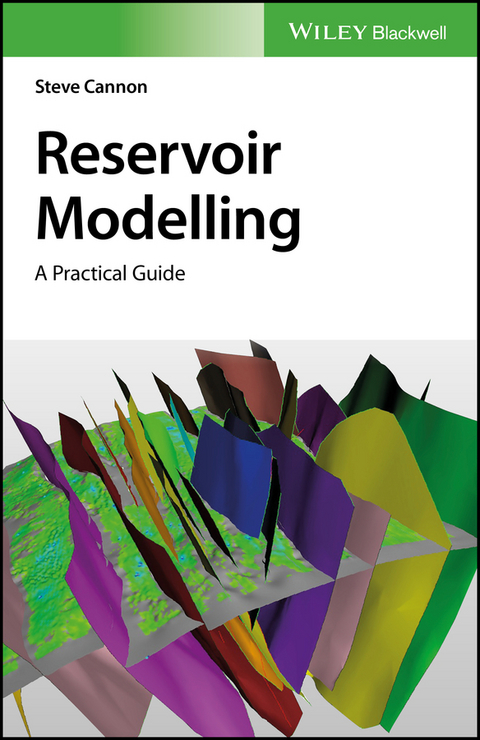

The essential resource to an integrated approach to reservoir modelling by highlighting both the input of data and the modelling results
Reservoir Modelling offers a comprehensive guide to the procedures and workflow for building a 3-D model. Designed to be practical, the principles outlined can be applied to any modelling project regardless of the software used. The author - a noted practitioner in the field - captures the heterogeneity due to structure, stratigraphy and sedimentology that has an impact on flow in the reservoir.
This essential guide follows a general workflow from data QC and project management, structural modelling, facies and property modelling to upscaling and the requirements for dynamic modelling. The author discusses structural elements of a model and reviews both seismic interpretation and depth conversion, which are known to contribute most to volumetric uncertainty and shows how large-scale stratigraphic relationships are integrated into the reservoir framework. The text puts the focus on geostatistical modelling of facies and heterogeneities that constrain the distribution of reservoir properties including porosity, permeability and water saturation. In addition, the author discusses the role of uncertainty analysis in the static model and its impact on volumetric estimation. The text also addresses some typical approaches to modelling specific reservoirs through a mix of case studies and illustrative examples and:
- Offers a practical guide to the use of data to build a successful reservoir model
- Draws on the latest advances in 3-D modelling software
- Reviews facies modelling, the different methods and the need for understanding the geological interpretation of cores and logs
- Presents information on upscaling both the structure and the properties of a fine-scale geological model for dynamic simulation
- Stresses the importance of an interdisciplinary team-based approach
Written for geophysicists, reservoir geologists and petroleum engineers, Reservoir Modelling offers the essential information needed to understand a reservoir for modelling and contains the multidisciplinary nature of a reservoir modelling project.
Steve Cannon is a geologist by profession, a petrophysicist by inclination and a reservoir modeller by design. He worked as a geologist and petrophysicist in all sectors of the oil and gas industry including government, oil companies, and the service sector. Cannon is a Past-President of the London Petrophysical Society.
The essential resource to an integrated approach to reservoir modelling by highlighting both the input of data and the modelling results Reservoir Modelling offers a comprehensive guide to the procedures and workflow for building a 3-D model. Designed to be practical, the principles outlined can be applied to any modelling project regardless of the software used. The author a noted practitioner in the field captures the heterogeneity due to structure, stratigraphy and sedimentology that has an impact on flow in the reservoir. This essential guide follows a general workflow from data QC and project management, structural modelling, facies and property modelling to upscaling and the requirements for dynamic modelling. The author discusses structural elements of a model and reviews both seismic interpretation and depth conversion, which are known to contribute most to volumetric uncertainty and shows how large-scale stratigraphic relationships are integrated into the reservoir framework. The text puts the focus on geostatistical modelling of facies and heterogeneities that constrain the distribution of reservoir properties including porosity, permeability and water saturation. In addition, the author discusses the role of uncertainty analysis in the static model and its impact on volumetric estimation. The text also addresses some typical approaches to modelling specific reservoirs through a mix of case studies and illustrative examples and: Offers a practical guide to the use of data to build a successful reservoir model Draws on the latest advances in 3-D modelling software Reviews facies modelling, the different methods and the need for understanding the geological interpretation of cores and logs Presents information on upscaling both the structure and the properties of a fine-scale geological model for dynamic simulation Stresses the importance of an interdisciplinary team-based approach Written for geophysicists, reservoir geologists and petroleum engineers, Reservoir Modelling offers the essential information needed to understand a reservoir for modelling and contains the multidisciplinary nature of a reservoir modelling project.
Steve Cannon is a geologist by profession, a petrophysicist by inclination and a reservoir modeller by design. He worked as a geologist and petrophysicist in all sectors of the oil and gas industry including government, oil companies, and the service sector. Cannon is a Past-President of the London Petrophysical Society.
Cover 1
Title Page 5
Copyright 6
Contents 9
Preface 15
Chapter 1 Introduction 17
1.1 Reservoir Modelling Challenges 19
1.2 Exploration to Production Uncertainty 20
1.3 Content and Structure 22
1.4 What is a Reservoir Model? 25
1.4.1 Reservoir Model Design 28
1.5 The Modelling Workflow 29
1.5.1 Project Planning 31
1.5.2 What Type of Model Are You Planning to Build? 32
1.5.2.1 Prototype Model 32
1.5.2.2 Full?Field or Sector Model 32
1.5.2.3 Deterministic or Stochastic 32
1.5.2.4 Uncertainty Model or Multiple Scenarios 33
1.5.2.5 Building the Simulation Grid First 33
1.6 An Integrated Team Structure for Modelling 33
1.7 Geostatistics 35
1.8 Data Sources and Scales 38
1.9 Structural and Stratigraphic Modelling 41
1.10 Facies Modelling 41
1.11 Property Modelling 42
1.12 Model Analysis and Uncertainty 43
1.13 Upscaling 45
1.14 Summary 45
Chapter 2 Data Collection and Management 47
2.1 Seismic Data 49
2.1.1 Horizons 49
2.1.2 Fault Sticks and Polygons 49
2.1.3 Surface Intersection Lines 50
2.1.4 Seismic Data Volume 50
2.1.5 Velocity Model 50
2.2 Well Data 50
2.2.1 Wellbore Path 50
2.2.1.1 Composite Log 52
2.2.2 Computer?Processed Interpretation (CPI) Logs 52
2.2.3 Core Descriptions 55
2.2.4 Core Photographs 55
2.2.5 Core Plug Data 55
2.2.6 Reservoir Zonation 57
2.2.7 Pressure Data 57
2.3 Dynamic Data 57
2.3.1 Fluid Data 57
2.3.2 Well Test Data 58
2.4 Important Specialist Data 58
2.4.1 Special Seismic Cubes and Seismic Test Lines 58
2.4.2 SCAL Data 58
2.4.3 Borehole Image Logs and Interpretations 59
2.5 Conceptual Models 59
2.6 Summary 60
Chapter 3 Structural Model 63
3.1 Seismic Interpretation 63
3.1.1 Depth Conversion 68
3.1.2 Interpretation in Time Versus Depth 71
3.2 Fault Modelling 71
3.2.1 Fault Interpretation Process 75
3.2.2 Fault Naming 75
3.3 Horizon Modelling 78
3.4 Quality Control 78
3.5 Structural Uncertainty 79
3.6 Summary 80
Chapter 4 Stratigraphic Model 81
4.1 How Many Zones? 83
4.2 Multi?Zone Grid or Single?Zone Grids? 83
4.3 Well?to?Well Correlation 85
4.4 Geocellular Model 86
4.4.1 Capturing Heterogeneity 87
4.5 Geological Grid Design 91
4.5.1 Goals of Geological Grid Design 92
4.5.1.1 Definition of Axis System 92
4.5.2 Orientation of the Geological Grid 93
4.5.2.1 Orientation from Seismic Lines 93
4.5.2.2 Orientation from Major Faults 93
4.5.2.3 Orientation from Geological Features 93
4.5.2.4 Orientation from Simulation Grid 94
4.5.2.5 Cell Sizes and Total Number of Cells 94
4.5.3 The SmartModel Concept 95
4.6 Layering 95
4.6.1 Potential Dangers Using Conformable Grids 97
4.6.2 Erosion 99
4.7 Grid Building Workflow 99
4.8 Quality Control 100
4.9 Uncertainty 101
4.10 Summary 101
Chapter 5 Facies Model 103
5.1 Facies Modelling Basics 104
5.1.1 Defining the Facies Scheme 106
5.1.2 Upscaling of Log Data (Blocking Wells) 111
5.1.2.1 Blocking Core Plug Data 112
5.1.3 Simplified Facies Description 114
5.1.4 Verification of the Zonation and the Facies Classes 114
5.1.5 Facies Proportions from Well Data 115
5.1.5.1 Trends in Facies Proportions 115
5.2 Facies Modelling Methods 115
5.2.1 Pixel?Based Methods: Indicator and Gaussian Simulation 116
5.2.1.1 Indicator Simulation (Figure 5.7) 117
5.2.1.2 Truncated Gaussian Simulation (Figure 5.8) 119
5.2.2 Object?Based Methods 120
5.2.3 Multi?Point Statistical Methods 122
5.2.4 Conditioning to a Seismic Parameter 123
5.2.5 Conditioning to Dynamic Data 123
5.3 Facies Modelling Workflows 123
5.4 Flow Zones 128
5.5 Uncertainty 128
5.6 Summary 130
Chapter 6 Property Model 131
6.1 Rock and Fluid Properties 133
6.1.1 Porosity 133
6.1.2 Water Saturation 135
6.1.3 Permeability 135
6.1.4 Poro–Perm Relationship 136
6.1.5 Capillary Pressure 137
6.1.6 Wettability 138
6.2 Property Modelling 138
6.2.1 Property Modelling Workflow 139
6.2.2 Data Preparation 140
6.2.2.1 Shoulder Effects 140
6.2.2.2 Filtering of Spikes in Log Data 140
6.2.2.3 Filtering of Carbonate Nodules 140
6.2.3 Blocking or Upscaling Well Data 142
6.3 Property Modelling Methods 143
6.3.1 Deterministic Methods 143
6.3.2 Statistical Methods 145
6.3.3 Modelling Porosity 148
6.3.3.1 Total Versus Effective Porosity 150
6.3.4 Modelling Permeability 150
6.3.5 Modelling Water Saturation 152
6.3.5.1 Single?Predictor Algorithms 156
6.3.5.2 Multi?predictor Algorithms 156
6.3.5.3 Normalized Functions 156
6.3.6 Modelling Net?to?Gross (NTG) 158
6.3.7 Incorporating Seismic Attributes 159
6.3.7.1 Preparation 159
6.3.7.2 Use in Modelling 161
6.3.8 How Many Realizations? 161
6.3.9 Quality Control 162
6.4 Rock Typing 162
6.5 Carbonate Reservoir Evaluation 165
6.5.1 Rock Fabric Classification 166
6.5.2 Petrophysical Interpretation 168
6.5.2.1 Porosity 168
6.5.2.2 Water Saturation 168
6.6 Uncertainty 172
6.7 Summary 172
Chapter 7 Volumetrics and Uncertainty 173
7.1 Work Flow Specification 177
7.1.1 Volumetrics Terminology 177
7.1.2 Products and Results 178
7.1.3 Necessary Data 178
7.2 Volumetric Model Work Flow 179
7.2.1 Volumetrics with Stochastic Models 179
7.2.2 Volumetrics and Grid Resolution 180
7.2.3 Geo?model/Simulation Model Comparison 180
7.2.4 Reporting Volumetric Results 181
7.3 Resource and Reserves Estimation 181
7.3.1 Petroleum Resources Management System (PRMS) 182
7.4 Uncertainty Modelling 187
7.4.1 Work Flow Specification 188
7.4.2 Uncertainty Model Workflow 191
7.4.2.1 The Project Plan 191
7.4.2.2 Seismic Uncertainty and Bulk Volume Uncertainty 191
7.4.2.3 Geological Uncertainty and Fluid Volume Uncertainties 192
7.4.2.4 Geological Uncertainty and Flow Simulations 193
7.4.3 Ranking Realizations 193
7.4.3.1 Ranking Methods 194
7.4.4 Other Uncertainty Methods 194
7.5 Summary 195
Chapter 8 Simulation and Upscaling 197
8.1 Simulation Grid Design 198
8.1.1 Grid Design Work Flow 198
8.1.2 What is a Corner Point Grid? 199
8.1.3 Grid Design Goals 200
8.1.4 Grid Orientation Effects 202
8.1.5 Areal Grid Construction 203
8.1.6 Areal Representation of Faults 203
8.1.7 Aquifer Modelling 204
8.1.8 Local Grid Construction 204
8.1.9 Quality Control of Grids 205
8.2 Upscaling Property Models 206
8.2.1 Statistical Averages 207
8.2.2 Renormalization 209
8.2.3 Dynamic Upscaling 209
8.2.4 Comparison of Upscaling Methods 211
8.2.5 Local, Regional and Global Upscaling 212
8.2.6 Sampling for Upscaling 213
8.2.6.1 Sampling Errors and Problems 213
8.2.7 Sampling Methods Overview 213
8.2.7.1 Selection of Sampling Method 215
8.2.8 Upscaling Porosity 215
8.2.9 Upscaling Permeability 215
8.2.10 Upscaling Net/Gross 216
8.2.11 Water Saturation Modelling 217
8.2.12 Quality Control 218
8.2.12.1 Control of Well Data 218
8.2.12.2 Use of Streamlines 218
8.3 Work Flow Specification 219
8.3.1 Upscaling Workflow 219
8.4 Summary 220
Chapter 9 Case Studies and Examples 221
9.1 Aeolian Environments (Figure 9.1) 221
9.1.1 Building the Model 224
9.1.2 Remodelling 225
9.2 Alluvial Environments (Figure 9.3) 226
9.2.1 Building the Model 234
9.3 Deltaic Environments (Figure 9.4) 235
9.3.1 Building the Model 238
9.4 Shallow Marine Environment (Figure 9.6) 242
9.4.1 Building the Model 242
9.5 Deepwater Environments (Figure 9.8) 245
9.5.1 Building the Model 250
9.6 Carbonate Reservoirs (Figure 9.10) 251
9.7 Fractured Reservoirs (Figure 9.12) 260
9.8 Uncertainty Modelling 264
9.8.1 Structural Model Uncertainty 265
9.8.2 Facies Model Uncertainty 267
9.8.3 Petrophysical Uncertainty 270
9.9 Summary 271
Afterword 275
References 283
Appendix A Introduction to Reservoir Geostatistics 289
A.1 Basic Descriptive Statistics 291
A.2 Conditional Distributions 295
A.3 Spatial Continuity 296
A.3.1 Variogram Description 298
A.3.2 Zonal and Geometric Anisotropy 299
A.3.3 Variogram Estimation 299
A.4 Transforms 302
A.5 Lag Definition 302
A.6 Variogram Interpretation 303
A.6.1 Indicator Variograms 305
A.7 Kriging 306
A.7.1 Simple and Ordinary Kriging 306
A.7.2 Kriging with a Drift 307
A.7.3 Co?kriging 307
A.7.4 Indicator Kriging 309
A.8 Simulation 309
A.8.1 Sequential Gaussian Simulation (SGS) 311
A.8.2 Sequential Gaussian Simulation with External Drift 312
A.8.3 Sequential Indicator Simulation (SIS) 313
A.8.4 Sequential Co?located Co?simulation (SGCoSim) 313
A.8.5 Sequential Indicator Co?located Co?simulation 315
A.8.6 Truncated Gaussian Simulation (TGSim) 315
A.9 Object Modelling 318
A.10 Summary 321
Index 323
EULA 329
| Erscheint lt. Verlag | 29.1.2018 |
|---|---|
| Sprache | englisch |
| Themenwelt | Informatik ► Grafik / Design ► Digitale Bildverarbeitung |
| Naturwissenschaften ► Geowissenschaften ► Geologie | |
| Naturwissenschaften ► Geowissenschaften ► Geophysik | |
| Naturwissenschaften ► Physik / Astronomie | |
| Technik ► Bauwesen | |
| Schlagworte | Angewandte u. ökonomische Geologie • Applied Mathematics in Science • Carbonate reservoir description • earth sciences • Economic & Applied Geology • facies modelling • Geophysics • Geophysik • Geowissenschaften • how the large-scale stratigraphic relationships are integrated into the reservoir framework • how to set up • internal reservoir architecture • Mathematics • Mathematik • Mathematik in den Naturwissenschaften • Modellierung • modelling the main reservoir properties • permeability and water saturation • Porosity • QC and manage the reservoir model project database • reservoir • review of the seismic interpretation and depth conversion • structural elements of a model • the data required to build a reservoir model • the role of uncertainty analysis in the static model and its impact on volumetric estimation • understanding the geological interpretation of cores and logs • upscaling both the structure and the properties of a fine-scale geological model for dynamic simulation • volumetric uncertainty |
| ISBN-10 | 1-119-31343-0 / 1119313430 |
| ISBN-13 | 978-1-119-31343-4 / 9781119313434 |
| Informationen gemäß Produktsicherheitsverordnung (GPSR) | |
| Haben Sie eine Frage zum Produkt? |
 PDF (Adobe DRM)
Kopierschutz: Adobe-DRM
Adobe-DRM ist ein Kopierschutz, der das eBook vor Mißbrauch schützen soll. Dabei wird das eBook bereits beim Download auf Ihre persönliche Adobe-ID autorisiert. Lesen können Sie das eBook dann nur auf den Geräten, welche ebenfalls auf Ihre Adobe-ID registriert sind.
Details zum Adobe-DRM
Dateiformat: PDF (Portable Document Format)
Mit einem festen Seitenlayout eignet sich die PDF besonders für Fachbücher mit Spalten, Tabellen und Abbildungen. Eine PDF kann auf fast allen Geräten angezeigt werden, ist aber für kleine Displays (Smartphone, eReader) nur eingeschränkt geeignet.
Systemvoraussetzungen:
PC/Mac: Mit einem PC oder Mac können Sie dieses eBook lesen. Sie benötigen eine
eReader: Dieses eBook kann mit (fast) allen eBook-Readern gelesen werden. Mit dem amazon-Kindle ist es aber nicht kompatibel.
Smartphone/Tablet: Egal ob Apple oder Android, dieses eBook können Sie lesen. Sie benötigen eine
Geräteliste und zusätzliche Hinweise
Buying eBooks from abroad
For tax law reasons we can sell eBooks just within Germany and Switzerland. Regrettably we cannot fulfill eBook-orders from other countries.
aus dem Bereich