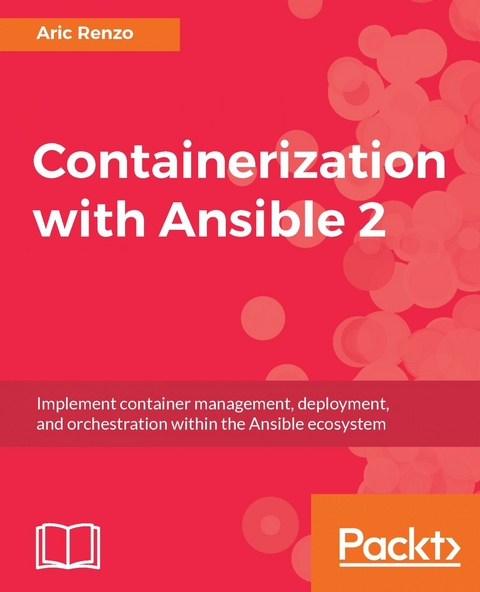
Containerization with Ansible 2 (eBook)
234 Seiten
Packt Publishing (Verlag)
9781788294515 (ISBN)
Automate the container lifecycle from image build through cloud deployment using the automation language you already know.
About This Book
- Use Ansible Container as an integral part of your workflow to increase flexibility and portability.
- Manage the container life cycle using existing Ansible roles and automate the entire container build, deployment and management process.
- A step-by-step guide that will get you up and running from building a simple container image to deploying a complex, multi-container app in the cloud.
Who This Book Is For
This book is aimed at DevOps engineers, administrators and developers who already have some familiarity with writing and running Ansible playbooks, and want to learn how to use Ansible to implement containerization.
What You Will Learn
- Increase your productivity by using Ansible roles to define and build images
- Learn how to work with Ansible Container to manage, test, and deploy your containerized applications.
- Increase the flexibility and portability of your applications by learning to use Ansible
- Discover how you can apply your existing Ansible roles to the image build process
- Get you up and running from building a simple container image to deploying a complex, multi-container app in the cloud.
- Take an indepth look at the architecture of Ansible Container, and learn how to build re-usable container images, reliably and efficiently.
In Detail
Today many organizations are adopting containerization and DevOps methodologies to improve the flexibility and reliability of deploying new applications. Building custom application containers often means leveraging brittle and oftentimes complex Dockerfiles that can lead to cumbersome, multi-layered containers. Ansible Container brings a new workflow for managing the development of containers from development all the way through to production. The goal of this book is to get you up and running with Ansible Container so that you can create container images from Ansible roles, run containers locally, and deploy them to the cloud.
We'll progress from a simple, single container application, to a complex application consisting of multiple, connected containers. You'll learn how to run the application locally, how to deploy it to an OpenShift cluster running locally, and how to deploy it to a Kubernetes cluster running in the cloud. Along the way, you'll see how to use roles to define each image or micro-service, and how to share your completed project with the Ansible community. Next, you will be able to take full advantage of Ansible Container, and use it to automate the container lifecycle in your own projects.
By the end of this book,you will gain mastery of the Ansible Container platform by building complex multi-container projects ready for deployment into production.
Style and approach
This book will walk you through Ansible Containerization from building a simple container image to deploying a complex, multi-container app in the cloud. You will get an in-depth understanding of how to effectively manage containers using Ansible 2.
Automate the container lifecycle from image build through cloud deployment using the automation language you already know.About This BookUse Ansible Container as an integral part of your workflow to increase flexibility and portability.Manage the container life cycle using existing Ansible roles and automate the entire container build, deployment and management process.A step-by-step guide that will get you up and running from building a simple container image to deploying a complex, multi-container app in the cloud.Who This Book Is ForThis book is aimed at DevOps engineers, administrators and developers who already have some familiarity with writing and running Ansible playbooks, and want to learn how to use Ansible to implement containerization.What You Will LearnIncrease your productivity by using Ansible roles to define and build imagesLearn how to work with Ansible Container to manage, test, and deploy your containerized applications.Increase the flexibility and portability of your applications by learning to use AnsibleDiscover how you can apply your existing Ansible roles to the image build processGet you up and running from building a simple container image to deploying a complex, multi-container app in the cloud.Take an indepth look at the architecture of Ansible Container, and learn how to build re-usable container images, reliably and efficiently.In DetailToday many organizations are adopting containerization and DevOps methodologies to improve the flexibility and reliability of deploying new applications. Building custom application containers often means leveraging brittle and oftentimes complex Dockerfiles that can lead to cumbersome, multi-layered containers. Ansible Container brings a new workflow for managing the development of containers from development all the way through to production. The goal of this book is to get you up and running with Ansible Container so that you can create container images from Ansible roles, run containers locally, and deploy them to the cloud.We'll progress from a simple, single container application, to a complex application consisting of multiple, connected containers. You'll learn how to run the application locally, how to deploy it to an OpenShift cluster running locally, and how to deploy it to a Kubernetes cluster running in the cloud. Along the way, you'll see how to use roles to define each image or micro-service, and how to share your completed project with the Ansible community. Next, you will be able to take full advantage of Ansible Container, and use it to automate the container lifecycle in your own projects.By the end of this book,you will gain mastery of the Ansible Container platform by building complex multi-container projects ready for deployment into production.Style and approachThis book will walk you through Ansible Containerization from building a simple container image to deploying a complex, multi-container app in the cloud. You will get an in-depth understanding of how to effectively manage containers using Ansible 2.
| Erscheint lt. Verlag | 7.12.2017 |
|---|---|
| Sprache | englisch |
| Themenwelt | Mathematik / Informatik ► Informatik |
| ISBN-13 | 9781788294515 / 9781788294515 |
| Informationen gemäß Produktsicherheitsverordnung (GPSR) | |
| Haben Sie eine Frage zum Produkt? |
 EPUB (Adobe DRM)
Kopierschutz: Adobe-DRM
Adobe-DRM ist ein Kopierschutz, der das eBook vor Mißbrauch schützen soll. Dabei wird das eBook bereits beim Download auf Ihre persönliche Adobe-ID autorisiert. Lesen können Sie das eBook dann nur auf den Geräten, welche ebenfalls auf Ihre Adobe-ID registriert sind.
Details zum Adobe-DRM
Dateiformat: EPUB (Electronic Publication)
EPUB ist ein offener Standard für eBooks und eignet sich besonders zur Darstellung von Belletristik und Sachbüchern. Der Fließtext wird dynamisch an die Display- und Schriftgröße angepasst. Auch für mobile Lesegeräte ist EPUB daher gut geeignet.
Systemvoraussetzungen:
PC/Mac: Mit einem PC oder Mac können Sie dieses eBook lesen. Sie benötigen eine
eReader: Dieses eBook kann mit (fast) allen eBook-Readern gelesen werden. Mit dem amazon-Kindle ist es aber nicht kompatibel.
Smartphone/Tablet: Egal ob Apple oder Android, dieses eBook können Sie lesen. Sie benötigen eine
Geräteliste und zusätzliche Hinweise
Buying eBooks from abroad
For tax law reasons we can sell eBooks just within Germany and Switzerland. Regrettably we cannot fulfill eBook-orders from other countries.
aus dem Bereich