


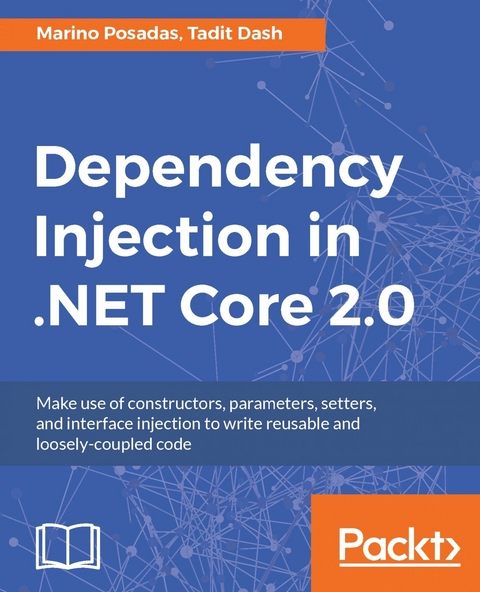
Dependency Injection in .NET Core 2.0 (eBook)
436 Seiten
Packt Publishing (Verlag)
978-1-78712-957-3 (ISBN)
Inject dependencies and write highly maintainable and flexible code using the new .NET Core DI Engine
About This Book
- Identify when to use the constructors, parameters, setters, or Interface Injection, for best results
- Build dependencies not only for MVC within .NET but also for other frontend tools such as Angular
- Create specific components or services to cover discrete and separate pieces of functionality and call them when needed.
Who This Book Is For
C# and .NET developers who have no idea what DI is and would like to understand how to implement it in their applications.
What You Will Learn
- Understand the concept of DI and its implications in modern software construction
- Learn how DI is already implemented in today's frameworks.
- Analyze how DI can be used with current software to improve maintainability and scalability.
- Learn the use of DI in .NET Core
- Get used to the possibilities that DI offers the ASP.NET Core developer in different scenarios.
- Learn about good practices and refactoring legacy code.
In Detail
.NET Core provides more control than ever over web application architectures. A key point of this software architecture is that it's based on the use of Dependency Injection as a way to properly implement the Dependency Inversion principle proposed in the SOLID principles established by Robert C. Martin.
With the advent of .NET Core, things have become much simpler with Dependency Injection built into the system. This book aims to give you a profound insight into writing loosely-coupled code using the latest features available in .NET Core. It talks about constructors, parameter, setters, and interface injection, explaining in detail, with the help of examples, which type of injection to use in which situation. It will show you how to implement a class that creates other classes with associated dependencies, also called IoC containers, and then create dependencies for each MVC component of ASP.NET Core. You'll learn to distinguish between IoC containers, the use of Inversion of Control, and DI itself, since DI is just a way of implementing IoC via these containers. You'll also learn how to build dependencies for other frontend tool such as Angular. You will get to use the in-built services offered by .NET Core to create your own custom dependencies.
Towards the end, we'll talk about some patterns and anti-patterns for Dependency Injection along with some techniques to refactor legacy applications and inject dependencies.
Style and Approach
Filled with examples, this book will take you through various techniques for injecting dependencies into your applications with or without the use of frameworks.
Inject dependencies and write highly maintainable and flexible code using the new .NET Core DI EngineAbout This BookIdentify when to use the constructors, parameters, setters, or Interface Injection, for best resultsBuild dependencies not only for MVC within .NET but also for other frontend tools such as AngularCreate specific components or services to cover discrete and separate pieces of functionality and call them when needed.Who This Book Is ForC# and .NET developers who have no idea what DI is and would like to understand how to implement it in their applications.What You Will LearnUnderstand the concept of DI and its implications in modern software constructionLearn how DI is already implemented in today's frameworks.Analyze how DI can be used with current software to improve maintainability and scalability.Learn the use of DI in .NET CoreGet used to the possibilities that DI offers the ASP.NET Core developer in different scenarios.Learn about good practices and refactoring legacy code.In Detail.NET Core provides more control than ever over web application architectures. A key point of this software architecture is that it's based on the use of Dependency Injection as a way to properly implement the Dependency Inversion principle proposed in the SOLID principles established by Robert C. Martin.With the advent of .NET Core, things have become much simpler with Dependency Injection built into the system. This book aims to give you a profound insight into writing loosely-coupled code using the latest features available in .NET Core. It talks about constructors, parameter, setters, and interface injection, explaining in detail, with the help of examples, which type of injection to use in which situation. It will show you how to implement a class that creates other classes with associated dependencies, also called IoC containers, and then create dependencies for each MVC component of ASP.NET Core. You'll learn to distinguish between IoC containers, the use of Inversion of Control, and DI itself, since DI is just a way of implementing IoC via these containers. You'll also learn how to build dependencies for other frontend tool such as Angular. You will get to use the in-built services offered by .NET Core to create your own custom dependencies.Towards the end, we'll talk about some patterns and anti-patterns for Dependency Injection along with some techniques to refactor legacy applications and inject dependencies.Style and ApproachFilled with examples, this book will take you through various techniques for injecting dependencies into your applications with or without the use of frameworks.
| Erscheint lt. Verlag | 13.11.2017 |
|---|---|
| Sprache | englisch |
| Themenwelt | Mathematik / Informatik ► Informatik ► Programmiersprachen / -werkzeuge |
| ISBN-10 | 1-78712-957-8 / 1787129578 |
| ISBN-13 | 978-1-78712-957-3 / 9781787129573 |
| Informationen gemäß Produktsicherheitsverordnung (GPSR) | |
| Haben Sie eine Frage zum Produkt? |
 EPUB (Adobe DRM)
Kopierschutz: Adobe-DRM
Adobe-DRM ist ein Kopierschutz, der das eBook vor Mißbrauch schützen soll. Dabei wird das eBook bereits beim Download auf Ihre persönliche Adobe-ID autorisiert. Lesen können Sie das eBook dann nur auf den Geräten, welche ebenfalls auf Ihre Adobe-ID registriert sind.
Details zum Adobe-DRM
Dateiformat: EPUB (Electronic Publication)
EPUB ist ein offener Standard für eBooks und eignet sich besonders zur Darstellung von Belletristik und Sachbüchern. Der Fließtext wird dynamisch an die Display- und Schriftgröße angepasst. Auch für mobile Lesegeräte ist EPUB daher gut geeignet.
Systemvoraussetzungen:
PC/Mac: Mit einem PC oder Mac können Sie dieses eBook lesen. Sie benötigen eine
eReader: Dieses eBook kann mit (fast) allen eBook-Readern gelesen werden. Mit dem amazon-Kindle ist es aber nicht kompatibel.
Smartphone/Tablet: Egal ob Apple oder Android, dieses eBook können Sie lesen. Sie benötigen eine
Geräteliste und zusätzliche Hinweise
Buying eBooks from abroad
For tax law reasons we can sell eBooks just within Germany and Switzerland. Regrettably we cannot fulfill eBook-orders from other countries.
aus dem Bereich


