


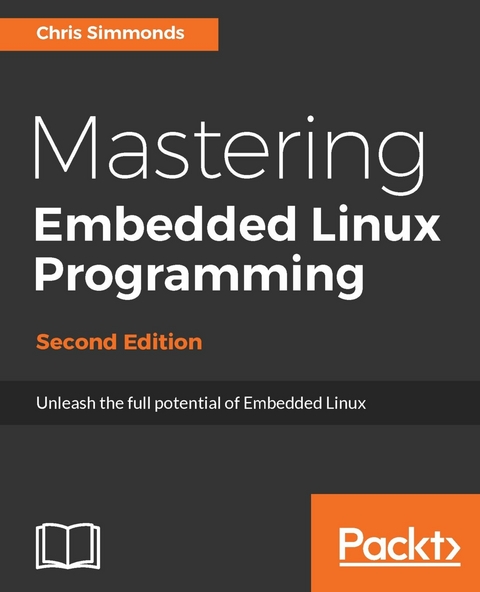
Mastering Embedded Linux Programming (eBook)
478 Seiten
Packt Publishing (Verlag)
978-1-78728-885-0 (ISBN)
Embedded Linux runs many of the devices we use every day, from smart TVs to WiFi routers, test equipment to industrial controllers - all of them have Linux at their heart. Linux is a core technology in the implementation of the inter-connected world of the Internet of Things.
You will begin by learning about the fundamental elements that underpin all embedded Linux projects: the toolchain, the bootloader, the kernel, and the root filesystem. You'll see how to create each of these elements from scratch, and how to automate the process using Buildroot and the Yocto Project.
Moving on, you'll find out how to implement an effective storage strategy for flash memory chips, and how to install updates to the device remotely once it is deployed. You'll also get to know the key aspects of writing code for embedded Linux, such as how to access hardware from applications, the implications of writing multi-threaded code, and techniques to manage memory in an efficient way. The final chapters show you how to debug your code, both in applications and in the Linux kernel, and how to profile the system so that you can look out for performance bottlenecks.
By the end of the book, you will have a complete overview of the steps required to create a successful embedded Linux system.
Learn to confidently develop, debug, and deploy robust embedded Linux systems with hands-on examples using BeagleBone and QEMUKey FeaturesStep-by-step guide from toolchain setup to real-time programming with hands-on implementationPractical insights on kernel configuration, device drivers, and memory managementCovers hardware integration using BeagleBone Black and virtual environments via QEMUBook DescriptionEmbedded Linux runs many of the devices we use every day, from smart TVs to WiFi routers, test equipment to industrial controllers - all of them have Linux at their heart. Linux is a core technology in the implementation of the inter-connected world of the Internet of Things. You will begin by learning about the fundamental elements that underpin all embedded Linux projects: the toolchain, the bootloader, the kernel, and the root filesystem. You ll see how to create each of these elements from scratch, and how to automate the process using Buildroot and the Yocto Project. Moving on, you ll find out how to implement an effective storage strategy for flash memory chips, and how to install updates to the device remotely once it is deployed. You ll also get to know the key aspects of writing code for embedded Linux, such as how to access hardware from applications, the implications of writing multi-threaded code, and techniques to manage memory in an efficient way. The final chapters show you how to debug your code, both in applications and in the Linux kernel, and how to profile the system so that you can look out for performance bottlenecks. By the end of the book, you will have a complete overview of the steps required to create a successful embedded Linux system.What you will learnEvaluate the Board Support Packages offered by most manufacturers of a system on chip or embedded moduleUse Buildroot and the Yocto Project to create embedded Linux systems quickly and efficientlyUpdate IoT devices in the field without compromising securityReduce the power budget of devices to make batteries last longerInteract with the hardware without having to write kernel device driversDebug devices remotely using GDB, and see how to measure the performance of the systems using powerful tools such as perk, ftrace, and valgrindWho this book is forThis book is for embedded engineers, Linux developers, and computer science students looking to build real-world embedded systems. It suits readers who are familiar with basic Linux use and want to deepen their skills in kernel configuration, debugging, and device integration.]]>
| Erscheint lt. Verlag | 30.6.2017 |
|---|---|
| Sprache | englisch |
| Themenwelt | Mathematik / Informatik ► Informatik ► Betriebssysteme / Server |
| ISBN-10 | 1-78728-885-4 / 1787288854 |
| ISBN-13 | 978-1-78728-885-0 / 9781787288850 |
| Informationen gemäß Produktsicherheitsverordnung (GPSR) | |
| Haben Sie eine Frage zum Produkt? |
 EPUB (Ohne DRM)
Digital Rights Management: ohne DRM
Dieses eBook enthält kein DRM oder Kopierschutz. Eine Weitergabe an Dritte ist jedoch rechtlich nicht zulässig, weil Sie beim Kauf nur die Rechte an der persönlichen Nutzung erwerben.
Dateiformat: EPUB (Electronic Publication)
EPUB ist ein offener Standard für eBooks und eignet sich besonders zur Darstellung von Belletristik und Sachbüchern. Der Fließtext wird dynamisch an die Display- und Schriftgröße angepasst. Auch für mobile Lesegeräte ist EPUB daher gut geeignet.
Systemvoraussetzungen:
PC/Mac: Mit einem PC oder Mac können Sie dieses eBook lesen. Sie benötigen dafür die kostenlose Software Adobe Digital Editions.
eReader: Dieses eBook kann mit (fast) allen eBook-Readern gelesen werden. Mit dem amazon-Kindle ist es aber nicht kompatibel.
Smartphone/Tablet: Egal ob Apple oder Android, dieses eBook können Sie lesen. Sie benötigen dafür eine kostenlose App.
Geräteliste und zusätzliche Hinweise
Buying eBooks from abroad
For tax law reasons we can sell eBooks just within Germany and Switzerland. Regrettably we cannot fulfill eBook-orders from other countries.
aus dem Bereich


