


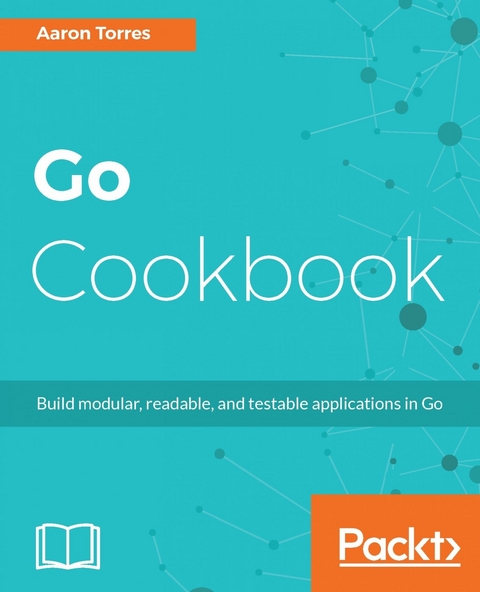
Go Cookbook (eBook)
400 Seiten
Packt Publishing (Verlag)
978-1-78328-684-3 (ISBN)
Bridge the gap between basic understanding of Go and use of its advanced features
About This Book
- Discover a number of recipes and approaches to develop modern back-end applications
- Put to use the best practices to combine the recipes for sophisticated parallel tools
- This book is based on Go 1.8, which is the latest version
Who This Book Is For
This book is for web developers, programmers, and enterprise developers. Basic knowledge of the Go language is assumed. Experience with back-end application development is not necessary, but may help understand the motivation behind some of the recipes.
What You Will Learn
- Test your application using advanced testing methodologies
- Develop an awareness of application structures, interface design, and tooling
- Create strategies for third-party packages, dependencies, and vendoring
- Get to know tricks on treating data such as collections
- Handle errors and cleanly pass them along to calling functions
- Wrap dependencies in interfaces for ease of portability and testing
- Explore reactive programming design patterns in Go
In Detail
Go (a.k.a. Golang) is a statically-typed programming language first developed at Google. It is derived from C with additional features such as garbage collection, type safety, dynamic-typing capabilities, additional built-in types, and a large standard library.
This book takes off where basic tutorials on the language leave off. You can immediately put into practice some of the more advanced concepts and libraries offered by the language while avoiding some of the common mistakes for new Go developers.
The book covers basic type and error handling. It explores applications that interact with users, such as websites, command-line tools, or via the file system. It demonstrates how to handle advanced topics such as parallelism, distributed systems, and performance tuning. Lastly, it finishes with reactive and serverless programming in Go.
Style and approach
This guide is a handy reference for developers to quickly look up Go development patterns. It is a companion to other resources and a reference that will be useful long after reading it through the first time. Each recipe includes working, simple, and tested code that can be used as a reference or foundation for your own applications.
Bridge the gap between basic understanding of Go and use of its advanced featuresAbout This BookDiscover a number of recipes and approaches to develop modern back-end applicationsPut to use the best practices to combine the recipes for sophisticated parallel toolsThis book is based on Go 1.8, which is the latest versionWho This Book Is ForThis book is for web developers, programmers, and enterprise developers. Basic knowledge of the Go language is assumed. Experience with back-end application development is not necessary, but may help understand the motivation behind some of the recipes.What You Will LearnTest your application using advanced testing methodologiesDevelop an awareness of application structures, interface design, and toolingCreate strategies for third-party packages, dependencies, and vendoringGet to know tricks on treating data such as collectionsHandle errors and cleanly pass them along to calling functionsWrap dependencies in interfaces for ease of portability and testingExplore reactive programming design patterns in GoIn DetailGo (a.k.a. Golang) is a statically-typed programming language first developed at Google. It is derived from C with additional features such as garbage collection, type safety, dynamic-typing capabilities, additional built-in types, and a large standard library.This book takes off where basic tutorials on the language leave off. You can immediately put into practice some of the more advanced concepts and libraries offered by the language while avoiding some of the common mistakes for new Go developers.The book covers basic type and error handling. It explores applications that interact with users, such as websites, command-line tools, or via the file system. It demonstrates how to handle advanced topics such as parallelism, distributed systems, and performance tuning. Lastly, it finishes with reactive and serverless programming in Go.Style and approachThis guide is a handy reference for developers to quickly look up Go development patterns. It is a companion to other resources and a reference that will be useful long after reading it through the first time. Each recipe includes working, simple, and tested code that can be used as a reference or foundation for your own applications.
| Erscheint lt. Verlag | 28.6.2017 |
|---|---|
| Sprache | englisch |
| Themenwelt | Mathematik / Informatik ► Informatik ► Programmiersprachen / -werkzeuge |
| ISBN-10 | 1-78328-684-9 / 1783286849 |
| ISBN-13 | 978-1-78328-684-3 / 9781783286843 |
| Informationen gemäß Produktsicherheitsverordnung (GPSR) | |
| Haben Sie eine Frage zum Produkt? |
 EPUB (Adobe DRM)
Kopierschutz: Adobe-DRM
Adobe-DRM ist ein Kopierschutz, der das eBook vor Mißbrauch schützen soll. Dabei wird das eBook bereits beim Download auf Ihre persönliche Adobe-ID autorisiert. Lesen können Sie das eBook dann nur auf den Geräten, welche ebenfalls auf Ihre Adobe-ID registriert sind.
Details zum Adobe-DRM
Dateiformat: EPUB (Electronic Publication)
EPUB ist ein offener Standard für eBooks und eignet sich besonders zur Darstellung von Belletristik und Sachbüchern. Der Fließtext wird dynamisch an die Display- und Schriftgröße angepasst. Auch für mobile Lesegeräte ist EPUB daher gut geeignet.
Systemvoraussetzungen:
PC/Mac: Mit einem PC oder Mac können Sie dieses eBook lesen. Sie benötigen eine
eReader: Dieses eBook kann mit (fast) allen eBook-Readern gelesen werden. Mit dem amazon-Kindle ist es aber nicht kompatibel.
Smartphone/Tablet: Egal ob Apple oder Android, dieses eBook können Sie lesen. Sie benötigen eine
Geräteliste und zusätzliche Hinweise
Buying eBooks from abroad
For tax law reasons we can sell eBooks just within Germany and Switzerland. Regrettably we cannot fulfill eBook-orders from other countries.
aus dem Bereich


