Insider Threats (eBook)
216 Seiten
Cornell University Press (Verlag)
978-1-5017-0649-3 (ISBN)
"This compendium of research on insider threats is essential reading for all personnel with accountabilities for security; it shows graphically the extent and persistence of the threat that all organizations face and against which they must take preventive measures."
— Roger Howsley, Executive Director, World Institute for Nuclear Security
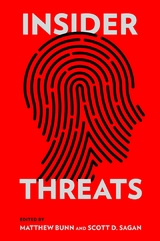
High-security organizations around the world face devastating threats from insiders—trusted employees with access to sensitive information, facilities, and materials. From Edward Snowden to the Fort Hood shooter to the theft of nuclear materials, the threat from insiders is on the front page and at the top of the policy agenda. Insider Threats offers detailed case studies of insider disasters across a range of different types of institutions, from biological research laboratories, to nuclear power plants, to the U.S. Army. Matthew Bunn and Scott D. Sagan outline cognitive and organizational biases that lead organizations to downplay the insider threat, and they synthesize "worst practices" from these past mistakes, offering lessons that will be valuable for any organization with high security and a lot to lose.
Insider threats pose dangers to anyone who handles information that is secret or proprietary, material that is highly valuable or hazardous, people who must be protected, or facilities that might be sabotaged. This is the first book to offer in-depth case studies across a range of industries and contexts, allowing entities such as nuclear facilities and casinos to learn from each other. It also offers an unprecedented analysis of terrorist thinking about using insiders to get fissile material or sabotage nuclear facilities.
Contributors: Matthew Bunn, Harvard University; Andreas Hoelstad Dæhli, Oslo; Kathryn M. Glynn, IBM Global Business Services;
Thomas Hegghammer, Norwegian Defence Research Establishment, Oslo; Austin Long, Columbia University; Scott D. Sagan, Stanford University; Ronald Schouten, Massachusetts General Hospital and Harvard Medical School; Jessica Stern, Harvard University; Amy B. Zegart, Stanford University
Matthew Bunn is Professor of Practice at the Harvard Kennedy School. He is coeditor of Transforming U.S. Energy Innovation. Scott D. Sagan is Caroline S. G. Munro Professor of Political Science, Mimi and Peter Haas University Fellow in Undergraduate Education, and Senior Fellow at the Center for International Security and Cooperation, Freeman Spogli Institute for International Studies at Stanford University. He is coeditor of Planning the Unthinkable and the author of The Limits of Safety, among other books.
| Erscheint lt. Verlag | 24.1.2017 |
|---|---|
| Reihe/Serie | Cornell Studies in Security Affairs | Cornell Studies in Security Affairs |
| Zusatzinfo | 1 halftone, 3 tables, 6 charts |
| Verlagsort | Ithaca |
| Sprache | englisch |
| Maße | 150 x 150 mm |
| Themenwelt | Informatik ► Netzwerke ► Sicherheit / Firewall |
| Sozialwissenschaften ► Politik / Verwaltung ► Europäische / Internationale Politik | |
| Sozialwissenschaften ► Politik / Verwaltung ► Politische Systeme | |
| Sozialwissenschaften ► Politik / Verwaltung ► Staat / Verwaltung | |
| Wirtschaft ► Betriebswirtschaft / Management ► Unternehmensführung / Management | |
| Schlagworte | anthrax letters • antiterrorism • assessing insider threats • books for security professionals • common failures in security • corporate threats • Espionage • fort hood terrorist attack • guide to insider threats • history of terrorism • how to prevent attacks by employees • how to prevent information crimes • how to prevent insider attacks • how to prevent insider sabotage • how to prevent insider theft • how to prevent insider threats • importance of the insider threat • insider attacks • insider sabotage • Insider Threats • insider threats in cyber security • International Security • leaked documents • national security • nuclear weapons policy • organizational security • organizational threats • Political Intelligence • preventing nuclear terrorism • preventing terrorism • security affairs • security professionals • security program operating manuals • security studies • stealing CIA secrets • Surveillance • terrorism case studies • Terrorism Policy • Terrorism Prevention • terrorism prevention, preventing terrorism, preventing nuclear terrorism, terrorist threats to nuclear facilities, fort hood terrorist attack, anthrax letters, what was the threat in afghanistan, insider threats, what is an insider threat, international security, national security • terrorist threats to national security • terrorist threats to nuclear facilities • threats to national security • what is an insider threat • what was the threat in afghanistan |
| ISBN-10 | 1-5017-0649-7 / 1501706497 |
| ISBN-13 | 978-1-5017-0649-3 / 9781501706493 |
| Informationen gemäß Produktsicherheitsverordnung (GPSR) | |
| Haben Sie eine Frage zum Produkt? |
 EPUB (Adobe DRM)
Kopierschutz: Adobe-DRM
Adobe-DRM ist ein Kopierschutz, der das eBook vor Mißbrauch schützen soll. Dabei wird das eBook bereits beim Download auf Ihre persönliche Adobe-ID autorisiert. Lesen können Sie das eBook dann nur auf den Geräten, welche ebenfalls auf Ihre Adobe-ID registriert sind.
Details zum Adobe-DRM
Dateiformat: EPUB (Electronic Publication)
EPUB ist ein offener Standard für eBooks und eignet sich besonders zur Darstellung von Belletristik und Sachbüchern. Der Fließtext wird dynamisch an die Display- und Schriftgröße angepasst. Auch für mobile Lesegeräte ist EPUB daher gut geeignet.
Systemvoraussetzungen:
PC/Mac: Mit einem PC oder Mac können Sie dieses eBook lesen. Sie benötigen eine
eReader: Dieses eBook kann mit (fast) allen eBook-Readern gelesen werden. Mit dem amazon-Kindle ist es aber nicht kompatibel.
Smartphone/Tablet: Egal ob Apple oder Android, dieses eBook können Sie lesen. Sie benötigen eine
Geräteliste und zusätzliche Hinweise
Buying eBooks from abroad
For tax law reasons we can sell eBooks just within Germany and Switzerland. Regrettably we cannot fulfill eBook-orders from other countries.
aus dem Bereich