


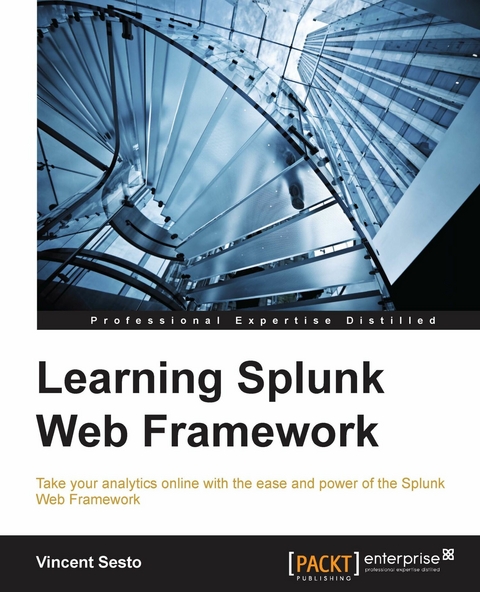
Learning Splunk Web Framework (eBook)
262 Seiten
Packt Publishing (Verlag)
978-1-78646-145-2 (ISBN)
Take your analytics online with the ease and power of the Splunk Web Framework
About This Book
- Want to build rich applications on the Web using Splunk? This book will be your ultimate guide!
- Learn to use web framework components with the help of this highly practical, example-rich guide
- Perform excellent Splunk analytics on the Web and bring that knowledge to your own projects
Who This Book Is For
This book will cater to Splunk developers and administrators who now wish to further their knowledge with Splunk Web Framework and learn to improve the way they present and visualize data in Splunk. A basic knowledge of JavaScript will be beneficial but is not a prerequisite.
What You Will Learn
- Master the fundamentals of Splunk Web Framework
- Start thinking of Splunk as a complete development platform to build user-friendly apps
- Extend the functionality of your apps using SimpleXML techniques
- Set up dashboard layouts, navigation, and menus in your apps
- Create simple dashboard elements including charts and tables
- Master the art of interacting with searches and dashboards
- Integrate SplunkJS to add visual appeal to your website
In Detail
Building rich applications on the Web using Splunk is now simpler than ever before with the Splunk Web Framework. It empowers developers to build their own web applications with custom dashboards, tables, charts, form searches, and other functionalities in the datasets at their disposal.
The book will start with the fundamentals of the Splunk Web Framework, teaching you the secrets of building interesting and user-friendly applications. In the first application, you will learn to analyze and monitor traffic hitting the NASA website and learn to create dashboards for it. You will then learn additional, and more detailed, techniques to enhance the functionalities of the app such as dashboards and forms, editing simple XML, using simple XML extensions, tokens, post-process searches, dynamic drill-downs, the Splunk Web Framework and REST API, and much more. The second app will use historical stock market data and will create custom dashboards using Splunk Web Framework; the book will now cover important topics such as creating HTML dashboards, enhancing the visual appeal of the app using CSS, and moving your app with SplunkJS.
The book will provide different and interesting examples instead of the usual 'Log, Index, Search, and Graph' so that Splunk will be the first tool readers think of to resolve a problem.
Style and approach
This book will follow a step-by-step approach whereby every new concept is built on top of the previous chapter, and will be highly practical in nature; the reader will learn to build apps while reading about the Splunk Web framework.
Take your analytics online with the ease and power of the Splunk Web FrameworkAbout This BookWant to build rich applications on the Web using Splunk? This book will be your ultimate guide!Learn to use web framework components with the help of this highly practical, example-rich guidePerform excellent Splunk analytics on the Web and bring that knowledge to your own projectsWho This Book Is ForThis book will cater to Splunk developers and administrators who now wish to further their knowledge with Splunk Web Framework and learn to improve the way they present and visualize data in Splunk. A basic knowledge of JavaScript will be beneficial but is not a prerequisite.What You Will LearnMaster the fundamentals of Splunk Web FrameworkStart thinking of Splunk as a complete development platform to build user-friendly appsExtend the functionality of your apps using SimpleXML techniquesSet up dashboard layouts, navigation, and menus in your appsCreate simple dashboard elements including charts and tablesMaster the art of interacting with searches and dashboardsIntegrate SplunkJS to add visual appeal to your websiteIn DetailBuilding rich applications on the Web using Splunk is now simpler than ever before with the Splunk Web Framework. It empowers developers to build their own web applications with custom dashboards, tables, charts, form searches, and other functionalities in the datasets at their disposal.The book will start with the fundamentals of the Splunk Web Framework, teaching you the secrets of building interesting and user-friendly applications. In the first application, you will learn to analyze and monitor traffic hitting the NASA website and learn to create dashboards for it. You will then learn additional, and more detailed, techniques to enhance the functionalities of the app such as dashboards and forms, editing simple XML, using simple XML extensions, tokens, post-process searches, dynamic drill-downs, the Splunk Web Framework and REST API, and much more. The second app will use historical stock market data and will create custom dashboards using Splunk Web Framework; the book will now cover important topics such as creating HTML dashboards, enhancing the visual appeal of the app using CSS, and moving your app with SplunkJS.The book will provide different and interesting examples instead of the usual "e;Log, Index, Search, and Graph"e; so that Splunk will be the first tool readers think of to resolve a problem.Style and approachThis book will follow a step-by-step approach whereby every new concept is built on top of the previous chapter, and will be highly practical in nature; the reader will learn to build apps while reading about the Splunk Web framework.
| Erscheint lt. Verlag | 31.8.2016 |
|---|---|
| Sprache | englisch |
| Themenwelt | Mathematik / Informatik ► Informatik ► Programmiersprachen / -werkzeuge |
| ISBN-10 | 1-78646-145-5 / 1786461455 |
| ISBN-13 | 978-1-78646-145-2 / 9781786461452 |
| Informationen gemäß Produktsicherheitsverordnung (GPSR) | |
| Haben Sie eine Frage zum Produkt? |
 EPUB (Adobe DRM)
Kopierschutz: Adobe-DRM
Adobe-DRM ist ein Kopierschutz, der das eBook vor Mißbrauch schützen soll. Dabei wird das eBook bereits beim Download auf Ihre persönliche Adobe-ID autorisiert. Lesen können Sie das eBook dann nur auf den Geräten, welche ebenfalls auf Ihre Adobe-ID registriert sind.
Details zum Adobe-DRM
Dateiformat: EPUB (Electronic Publication)
EPUB ist ein offener Standard für eBooks und eignet sich besonders zur Darstellung von Belletristik und Sachbüchern. Der Fließtext wird dynamisch an die Display- und Schriftgröße angepasst. Auch für mobile Lesegeräte ist EPUB daher gut geeignet.
Systemvoraussetzungen:
PC/Mac: Mit einem PC oder Mac können Sie dieses eBook lesen. Sie benötigen eine
eReader: Dieses eBook kann mit (fast) allen eBook-Readern gelesen werden. Mit dem amazon-Kindle ist es aber nicht kompatibel.
Smartphone/Tablet: Egal ob Apple oder Android, dieses eBook können Sie lesen. Sie benötigen eine
Geräteliste und zusätzliche Hinweise
Buying eBooks from abroad
For tax law reasons we can sell eBooks just within Germany and Switzerland. Regrettably we cannot fulfill eBook-orders from other countries.
aus dem Bereich


