


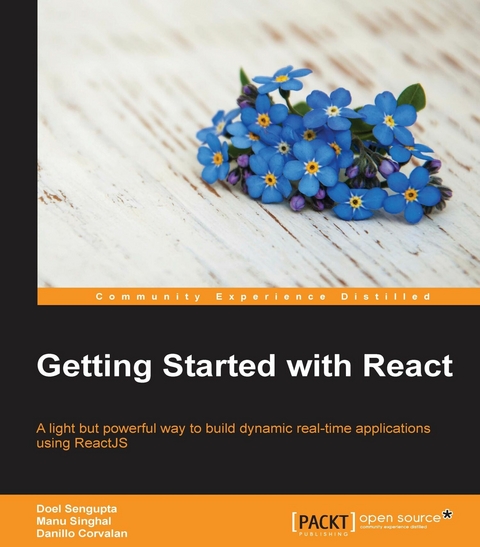
Getting Started with React (eBook)
212 Seiten
Packt Publishing (Verlag)
978-1-78528-410-6 (ISBN)
A light but powerful way to build dynamic real-time applications using ReactJS
About This Book
- Learn how to develop powerful JavaScript applications using ReactJS
- Integrate a React-based app with an external API (Facebook login) while using React components, with the Facebook developer app
- Implement the Reactive paradigm to build stateless and asynchronous apps with React
Who This Book Is For
This book is for any front-end web or mobile-app developer who wants to learn ReactJS. Knowledge of basic JavaScript will give you a good head start with the book.
What You Will Learn
- Understand the ReactJS basics through an overview
- Install and create your first React component
- Refactor the ReactJS component using JSX
- Integrate your React application with the Facebook login and Graph API, then fetch data from your liked pages in Facebook and display them in a browser
- Handle UI elements events with React, respond to users input, and create stateful components
- Use some core lifecycle events for integration and find out about ES6 syntaxes in the React world
- Understand the FLUX architecture and create an application using FLUX with React
- Make a component more reusable with mixins and validation helpers and structure your components properly
- Explore techniques to test your ReactJS code
- Deploy your code using webpack and Gulp
In Detail
ReactJS, popularly known as the V (view) of the MVC architecture, was developed by the Facebook and Instagram developers. It follows a unidirectional data flow, virtual DOM, and DOM difference that are generously leveraged in order to increase the performance of the UI.
Getting Started with React will help you implement the Reactive paradigm to build stateless and asynchronous apps with React. We will begin with an overview of ReactJS and its evolution over the years, followed by building a simple React component. We will then build the same react component with JSX syntax to demystify its usage. You will see how to configure the Facebook Graph API, get your likes list, and render it using React.
Following this, we will break the UI into components and you'll learn how to establish communication between them and respond to users input/events in order to have the UI reflect their state. You'll also get to grips with the ES6 syntaxes.
Moving ahead, we will delve into the FLUX and its architecture, which is used to build client-side web applications and complements React's composable view components by utilizing a unidirectional data flow. Towards the end, you'll find out how to make your components reusable, and test and deploy them into a production environment. Finally, we'll briefly touch on other topics such as React on the server side, Redux and some advanced concepts.
Style and approach
The book follows a step-by-step, practical, tutorial approach with examples that explain the key concepts of ReactJS. Each topic is sequentially explained and contextually placed to give sufficient details of ReactJS.
A light but powerful way to build dynamic real-time applications using ReactJSAbout This BookLearn how to develop powerful JavaScript applications using ReactJSIntegrate a React-based app with an external API (Facebook login) while using React components, with the Facebook developer appImplement the Reactive paradigm to build stateless and asynchronous apps with ReactWho This Book Is ForThis book is for any front-end web or mobile-app developer who wants to learn ReactJS. Knowledge of basic JavaScript will give you a good head start with the book.What You Will LearnUnderstand the ReactJS basics through an overviewInstall and create your first React componentRefactor the ReactJS component using JSXIntegrate your React application with the Facebook login and Graph API, then fetch data from your liked pages in Facebook and display them in a browserHandle UI elements events with React, respond to users input, and create stateful componentsUse some core lifecycle events for integration and find out about ES6 syntaxes in the React worldUnderstand the FLUX architecture and create an application using FLUX with ReactMake a component more reusable with mixins and validation helpers and structure your components properlyExplore techniques to test your ReactJS codeDeploy your code using webpack and GulpIn DetailReactJS, popularly known as the V (view) of the MVC architecture, was developed by the Facebook and Instagram developers. It follows a unidirectional data flow, virtual DOM, and DOM difference that are generously leveraged in order to increase the performance of the UI.Getting Started with React will help you implement the Reactive paradigm to build stateless and asynchronous apps with React. We will begin with an overview of ReactJS and its evolution over the years, followed by building a simple React component. We will then build the same react component with JSX syntax to demystify its usage. You will see how to configure the Facebook Graph API, get your likes list, and render it using React.Following this, we will break the UI into components and you'll learn how to establish communication between them and respond to users input/events in order to have the UI reflect their state. You'll also get to grips with the ES6 syntaxes.Moving ahead, we will delve into the FLUX and its architecture, which is used to build client-side web applications and complements React's composable view components by utilizing a unidirectional data flow. Towards the end, you'll find out how to make your components reusable, and test and deploy them into a production environment. Finally, we'll briefly touch on other topics such as React on the server side, Redux and some advanced concepts.Style and approachThe book follows a step-by-step, practical, tutorial approach with examples that explain the key concepts of ReactJS. Each topic is sequentially explained and contextually placed to give sufficient details of ReactJS.
| Erscheint lt. Verlag | 29.4.2016 |
|---|---|
| Sprache | englisch |
| Themenwelt | Mathematik / Informatik ► Informatik ► Programmiersprachen / -werkzeuge |
| ISBN-10 | 1-78528-410-X / 178528410X |
| ISBN-13 | 978-1-78528-410-6 / 9781785284106 |
| Informationen gemäß Produktsicherheitsverordnung (GPSR) | |
| Haben Sie eine Frage zum Produkt? |
 EPUB (Adobe DRM)
Kopierschutz: Adobe-DRM
Adobe-DRM ist ein Kopierschutz, der das eBook vor Mißbrauch schützen soll. Dabei wird das eBook bereits beim Download auf Ihre persönliche Adobe-ID autorisiert. Lesen können Sie das eBook dann nur auf den Geräten, welche ebenfalls auf Ihre Adobe-ID registriert sind.
Details zum Adobe-DRM
Dateiformat: EPUB (Electronic Publication)
EPUB ist ein offener Standard für eBooks und eignet sich besonders zur Darstellung von Belletristik und Sachbüchern. Der Fließtext wird dynamisch an die Display- und Schriftgröße angepasst. Auch für mobile Lesegeräte ist EPUB daher gut geeignet.
Systemvoraussetzungen:
PC/Mac: Mit einem PC oder Mac können Sie dieses eBook lesen. Sie benötigen eine
eReader: Dieses eBook kann mit (fast) allen eBook-Readern gelesen werden. Mit dem amazon-Kindle ist es aber nicht kompatibel.
Smartphone/Tablet: Egal ob Apple oder Android, dieses eBook können Sie lesen. Sie benötigen eine
Geräteliste und zusätzliche Hinweise
Buying eBooks from abroad
For tax law reasons we can sell eBooks just within Germany and Switzerland. Regrettably we cannot fulfill eBook-orders from other countries.
aus dem Bereich


