


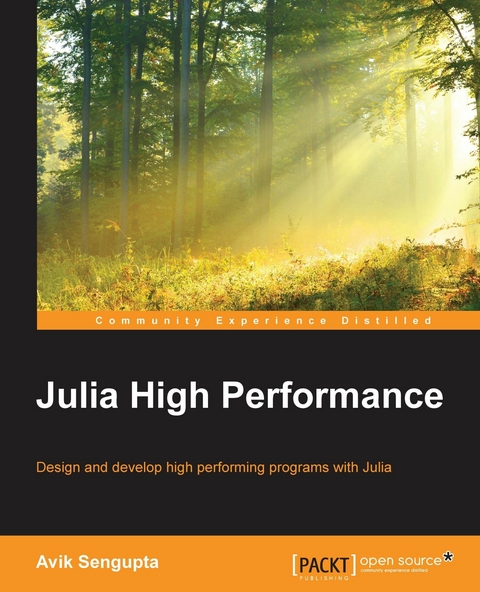
Julia High Performance (eBook)
132 Seiten
Packt Publishing (Verlag)
978-1-78588-782-6 (ISBN)
Design and develop high performing programs with Julia
About This Book
- Learn to code high reliability and high performance programs
- Stand out from the crowd by developing code that runs faster than your peers' codes
- This book is intended for developers who are interested in high performance technical programming.
Who This Book Is For
This book is for beginner and intermediate Julia programmers who are interested in high performance technical computing. You will have a basic familiarity with Julia syntax, and have written some small programs in the language.
What You Will Learn
- Discover the secrets behind Julia's speed
- Get a sense of the possibilities and limitations of Julia's performance
- Analyze the performance of Julia programs
- Measure the time and memory taken by Julia programs
- Create fast machine code using Julia's type information
- Define and call functions without compromising Julia's performance
- Understand number types in Julia
- Use Julia arrays to write high performance code
- Get an overview of Julia's distributed computing capabilities
In Detail
Julia is a high performance, high-level dynamic language designed to address the requirements of high-level numerical and scientific computing. Julia brings solutions to the complexities faced by developers while developing elegant and high performing code.
Julia High Performance will take you on a journey to understand the performance characteristics of your Julia programs, and enables you to utilize the promise of near C levels of performance in Julia.
You will learn to analyze and measure the performance of Julia code, understand how to avoid bottlenecks, and design your program for the highest possible performance. In this book, you will also see how Julia uses type information to achieve its performance goals, and how to use multuple dispatch to help the compiler to emit high performance machine code. Numbers and their arrays are obviously the key structures in scientific computing - you will see how Julia's design makes them fast. The last chapter will give you a taste of Julia's distributed computing capabilities.
Style and approach
This is a hands-on manual that will give you good explanations about the important concepts related to Julia programming.
Design and develop high performing programs with JuliaAbout This BookLearn to code high reliability and high performance programsStand out from the crowd by developing code that runs faster than your peers' codesThis book is intended for developers who are interested in high performance technical programming.Who This Book Is ForThis book is for beginner and intermediate Julia programmers who are interested in high performance technical computing. You will have a basic familiarity with Julia syntax, and have written some small programs in the language.What You Will LearnDiscover the secrets behind Julia's speedGet a sense of the possibilities and limitations of Julia's performanceAnalyze the performance of Julia programsMeasure the time and memory taken by Julia programsCreate fast machine code using Julia's type informationDefine and call functions without compromising Julia's performanceUnderstand number types in JuliaUse Julia arrays to write high performance codeGet an overview of Julia's distributed computing capabilitiesIn DetailJulia is a high performance, high-level dynamic language designed to address the requirements of high-level numerical and scientific computing. Julia brings solutions to the complexities faced by developers while developing elegant and high performing code.Julia High Performance will take you on a journey to understand the performance characteristics of your Julia programs, and enables you to utilize the promise of near C levels of performance in Julia.You will learn to analyze and measure the performance of Julia code, understand how to avoid bottlenecks, and design your program for the highest possible performance. In this book, you will also see how Julia uses type information to achieve its performance goals, and how to use multuple dispatch to help the compiler to emit high performance machine code. Numbers and their arrays are obviously the key structures in scientific computing - you will see how Julia's design makes them fast. The last chapter will give you a taste of Julia's distributed computing capabilities.Style and approachThis is a hands-on manual that will give you good explanations about the important concepts related to Julia programming.
| Erscheint lt. Verlag | 26.4.2016 |
|---|---|
| Sprache | englisch |
| Themenwelt | Mathematik / Informatik ► Informatik ► Programmiersprachen / -werkzeuge |
| ISBN-10 | 1-78588-782-3 / 1785887823 |
| ISBN-13 | 978-1-78588-782-6 / 9781785887826 |
| Informationen gemäß Produktsicherheitsverordnung (GPSR) | |
| Haben Sie eine Frage zum Produkt? |
 EPUB (Adobe DRM)
Kopierschutz: Adobe-DRM
Adobe-DRM ist ein Kopierschutz, der das eBook vor Mißbrauch schützen soll. Dabei wird das eBook bereits beim Download auf Ihre persönliche Adobe-ID autorisiert. Lesen können Sie das eBook dann nur auf den Geräten, welche ebenfalls auf Ihre Adobe-ID registriert sind.
Details zum Adobe-DRM
Dateiformat: EPUB (Electronic Publication)
EPUB ist ein offener Standard für eBooks und eignet sich besonders zur Darstellung von Belletristik und Sachbüchern. Der Fließtext wird dynamisch an die Display- und Schriftgröße angepasst. Auch für mobile Lesegeräte ist EPUB daher gut geeignet.
Systemvoraussetzungen:
PC/Mac: Mit einem PC oder Mac können Sie dieses eBook lesen. Sie benötigen eine
eReader: Dieses eBook kann mit (fast) allen eBook-Readern gelesen werden. Mit dem amazon-Kindle ist es aber nicht kompatibel.
Smartphone/Tablet: Egal ob Apple oder Android, dieses eBook können Sie lesen. Sie benötigen eine
Geräteliste und zusätzliche Hinweise
Buying eBooks from abroad
For tax law reasons we can sell eBooks just within Germany and Switzerland. Regrettably we cannot fulfill eBook-orders from other countries.
aus dem Bereich


