


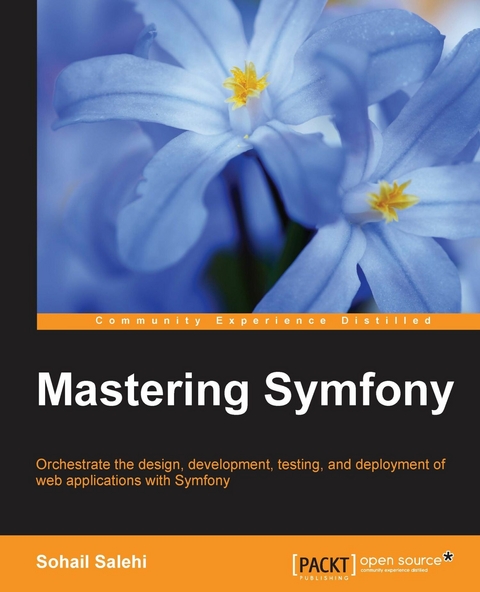
Mastering Symfony (eBook)
290 Seiten
Packt Publishing (Verlag)
978-1-78439-426-4 (ISBN)
Orchestrate the designing, development, testing, and deployment of web applications with Symfony
About This Book
- Create a robust and reliable Symfony development pipeline using Amazon's cloud platform
- Cut development and maintenance costs by defining crystal clear features and possible scenarios for each feature before implementation
- Follow detailed examples provided in each chapter to create a task management application
Who This Book Is For
If you are a PHP developer with some experience in Symfony and are looking to master the framework and use it to its full potential, then this book is for you. Though experience with PHP, object-oriented techniques, and Symfony basics is assumed, this book will give you a crash course on the basics and then proceed to more advanced topics.
What You Will Learn
- Install and configure Symfony and required third-party bundles to develop a task management application
- Set up a continuous integration server to orchestrate automatic builds every time you add a new feature to your project
- Reduce maintenance costs dramatically using Behaviour Driven Development (BDD)
- Create a slick user interface using the Bootstrap framework
- Design robust business logic using Doctrine
- Build a comprehensive dashboard and secure your project using the Sonata project
- Improve performance using Redis, Memcache, and Varnish
- Create customized Symfony commands and add them to your console
In Detail
In this book, you will learn some lesser known aspects of development with Symfony, and you will see how to use Symfony as a framework to create reliable and effective applications. You might have developed some impressive PHP libraries in other projects, but what is the point when your library is tied to one particular project? With Symfony, you can turn your code into a service and reuse it in other projects.
This book starts with Symfony concepts such as bundles, routing, twig, doctrine, and more, taking you through the request/response life cycle. You will then proceed to set up development, test, and deployment environments in AWS. Then you will create reliable projects using Behat and Mink, and design business logic, cover authentication, and authorization steps in a security checking process. You will be walked through concepts such as DependencyInjection, service containers, and services, and go through steps to create customized commands for Symfony's console. Finally, the book covers performance optimization and the use of Varnish and Memcached in our project, and you are treated with the creation of database agnostic bundles and best practices.
Style and approach
A step-by-step guide to mastering Symfony while developing a task management application. Each chapter comes with detailed examples.
Orchestrate the designing, development, testing, and deployment of web applications with SymfonyAbout This BookCreate a robust and reliable Symfony development pipeline using Amazon's cloud platformCut development and maintenance costs by defining crystal clear features and possible scenarios for each feature before implementationFollow detailed examples provided in each chapter to create a task management applicationWho This Book Is ForIf you are a PHP developer with some experience in Symfony and are looking to master the framework and use it to its full potential, then this book is for you. Though experience with PHP, object-oriented techniques, and Symfony basics is assumed, this book will give you a crash course on the basics and then proceed to more advanced topics.What You Will LearnInstall and configure Symfony and required third-party bundles to develop a task management applicationSet up a continuous integration server to orchestrate automatic builds every time you add a new feature to your projectReduce maintenance costs dramatically using Behaviour Driven Development (BDD)Create a slick user interface using the Bootstrap frameworkDesign robust business logic using DoctrineBuild a comprehensive dashboard and secure your project using the Sonata projectImprove performance using Redis, Memcache, and VarnishCreate customized Symfony commands and add them to your consoleIn DetailIn this book, you will learn some lesser known aspects of development with Symfony, and you will see how to use Symfony as a framework to create reliable and effective applications. You might have developed some impressive PHP libraries in other projects, but what is the point when your library is tied to one particular project? With Symfony, you can turn your code into a service and reuse it in other projects.This book starts with Symfony concepts such as bundles, routing, twig, doctrine, and more, taking you through the request/response life cycle. You will then proceed to set up development, test, and deployment environments in AWS. Then you will create reliable projects using Behat and Mink, and design business logic, cover authentication, and authorization steps in a security checking process. You will be walked through concepts such as DependencyInjection, service containers, and services, and go through steps to create customized commands for Symfony's console. Finally, the book covers performance optimization and the use of Varnish and Memcached in our project, and you are treated with the creation of database agnostic bundles and best practices.Style and approachA step-by-step guide to mastering Symfony while developing a task management application. Each chapter comes with detailed examples.
| Erscheint lt. Verlag | 26.4.2016 |
|---|---|
| Sprache | englisch |
| Themenwelt | Mathematik / Informatik ► Informatik ► Programmiersprachen / -werkzeuge |
| ISBN-10 | 1-78439-426-2 / 1784394262 |
| ISBN-13 | 978-1-78439-426-4 / 9781784394264 |
| Informationen gemäß Produktsicherheitsverordnung (GPSR) | |
| Haben Sie eine Frage zum Produkt? |
 EPUB (Adobe DRM)
Kopierschutz: Adobe-DRM
Adobe-DRM ist ein Kopierschutz, der das eBook vor Mißbrauch schützen soll. Dabei wird das eBook bereits beim Download auf Ihre persönliche Adobe-ID autorisiert. Lesen können Sie das eBook dann nur auf den Geräten, welche ebenfalls auf Ihre Adobe-ID registriert sind.
Details zum Adobe-DRM
Dateiformat: EPUB (Electronic Publication)
EPUB ist ein offener Standard für eBooks und eignet sich besonders zur Darstellung von Belletristik und Sachbüchern. Der Fließtext wird dynamisch an die Display- und Schriftgröße angepasst. Auch für mobile Lesegeräte ist EPUB daher gut geeignet.
Systemvoraussetzungen:
PC/Mac: Mit einem PC oder Mac können Sie dieses eBook lesen. Sie benötigen eine
eReader: Dieses eBook kann mit (fast) allen eBook-Readern gelesen werden. Mit dem amazon-Kindle ist es aber nicht kompatibel.
Smartphone/Tablet: Egal ob Apple oder Android, dieses eBook können Sie lesen. Sie benötigen eine
Geräteliste und zusätzliche Hinweise
Buying eBooks from abroad
For tax law reasons we can sell eBooks just within Germany and Switzerland. Regrettably we cannot fulfill eBook-orders from other countries.
aus dem Bereich


