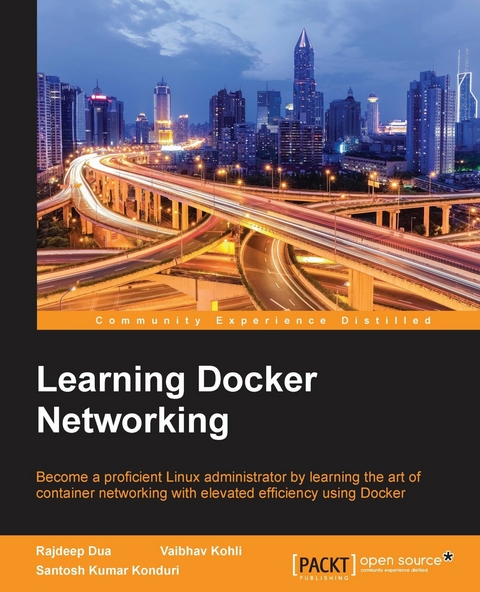
Learning Docker Networking (eBook)
176 Seiten
Packt Publishing (Verlag)
978-1-78528-831-9 (ISBN)
Become a proficient Linux administrator by learning the art of container networking with elevated efficiency using Docker
About This Book
- Set up, configure, and monitor a virtual network of containers using a bridge network and virtual switches
- Master the skill of networking Docker Containers using frameworks such as Kubernetes, Docker Swarm, and Mesosphere
- Acquire hands-on experience through practical examples of Docker networking spanning multiple containers, over multiple hosts, clubbed with various frameworks
Who This Book Is For
If you are a Linux administrator who wants to learn networking using Docker to ensure the efficient administration of core elements and applications, then this book is for you. Basic knowledge of LXC/Docker is assumed.
What You Will Learn
- Get to know the basics of networking and see how Docker networking works
- Expose the strengths and weaknesses of the current Docker network implementation and third party landscape
- Understand Docker networking spanning multiple containers over multiple hosts through practical examples
- Observe the pitfalls of Docker networking and how to overcome them
- Learn how Docker networking works for Docker Swarm and Kubernetes
- Configure Networking using Docker's container network model (CNM)
- Explore OpenvSwitch to connect contain
In Detail
Docker is a Linux container implementation that enables the creation of light weight portable development and production environments. These environments can be updated incrementally. Docker achieves this by leveraging containment principles like cgroups and Linux namespaces along with Overlay filesystem based portable images. Docker provides the networking primitives that allow administrators to specify how different containers network with each application and connect each of its components, then distribute them across a large number of servers and ensure coordination between them irrespective of the host or VM they are running in.
This book will show you how to create, deploy, and manage a virtual network for connecting containers spanning single or multiple hosts.
Style and approach
This step-by-step guide covers the fundamentals relating to typical applications with a practical approach. There is a focus on providing the practical skills required to develop applications, with a summary of the key concepts where necessary.
Become a proficient Linux administrator by learning the art of container networking with elevated efficiency using DockerAbout This BookSet up, configure, and monitor a virtual network of containers using a bridge network and virtual switchesMaster the skill of networking Docker Containers using frameworks such as Kubernetes, Docker Swarm, and MesosphereAcquire hands-on experience through practical examples of Docker networking spanning multiple containers, over multiple hosts, clubbed with various frameworksWho This Book Is ForIf you are a Linux administrator who wants to learn networking using Docker to ensure the efficient administration of core elements and applications, then this book is for you. Basic knowledge of LXC/Docker is assumed.What You Will LearnGet to know the basics of networking and see how Docker networking worksExpose the strengths and weaknesses of the current Docker network implementation and third party landscapeUnderstand Docker networking spanning multiple containers over multiple hosts through practical examplesObserve the pitfalls of Docker networking and how to overcome themLearn how Docker networking works for Docker Swarm and KubernetesConfigure Networking using Docker's container network model (CNM)Explore OpenvSwitch to connect containIn DetailDocker is a Linux container implementation that enables the creation of light weight portable development and production environments. These environments can be updated incrementally. Docker achieves this by leveraging containment principles like cgroups and Linux namespaces along with Overlay filesystem based portable images. Docker provides the networking primitives that allow administrators to specify how different containers network with each application and connect each of its components, then distribute them across a large number of servers and ensure coordination between them irrespective of the host or VM they are running in.This book will show you how to create, deploy, and manage a virtual network for connecting containers spanning single or multiple hosts.Style and approachThis step-by-step guide covers the fundamentals relating to typical applications with a practical approach. There is a focus on providing the practical skills required to develop applications, with a summary of the key concepts where necessary.
| Erscheint lt. Verlag | 23.2.2016 |
|---|---|
| Sprache | englisch |
| Themenwelt | Mathematik / Informatik ► Informatik ► Netzwerke |
| ISBN-10 | 1-78528-831-8 / 1785288318 |
| ISBN-13 | 978-1-78528-831-9 / 9781785288319 |
| Informationen gemäß Produktsicherheitsverordnung (GPSR) | |
| Haben Sie eine Frage zum Produkt? |
 EPUB (Adobe DRM)
Kopierschutz: Adobe-DRM
Adobe-DRM ist ein Kopierschutz, der das eBook vor Mißbrauch schützen soll. Dabei wird das eBook bereits beim Download auf Ihre persönliche Adobe-ID autorisiert. Lesen können Sie das eBook dann nur auf den Geräten, welche ebenfalls auf Ihre Adobe-ID registriert sind.
Details zum Adobe-DRM
Dateiformat: EPUB (Electronic Publication)
EPUB ist ein offener Standard für eBooks und eignet sich besonders zur Darstellung von Belletristik und Sachbüchern. Der Fließtext wird dynamisch an die Display- und Schriftgröße angepasst. Auch für mobile Lesegeräte ist EPUB daher gut geeignet.
Systemvoraussetzungen:
PC/Mac: Mit einem PC oder Mac können Sie dieses eBook lesen. Sie benötigen eine
eReader: Dieses eBook kann mit (fast) allen eBook-Readern gelesen werden. Mit dem amazon-Kindle ist es aber nicht kompatibel.
Smartphone/Tablet: Egal ob Apple oder Android, dieses eBook können Sie lesen. Sie benötigen eine
Geräteliste und zusätzliche Hinweise
Buying eBooks from abroad
For tax law reasons we can sell eBooks just within Germany and Switzerland. Regrettably we cannot fulfill eBook-orders from other countries.
aus dem Bereich