Zum Hauptinhalt springen
Nicht aus der Schweiz? Besuchen Sie lehmanns.de
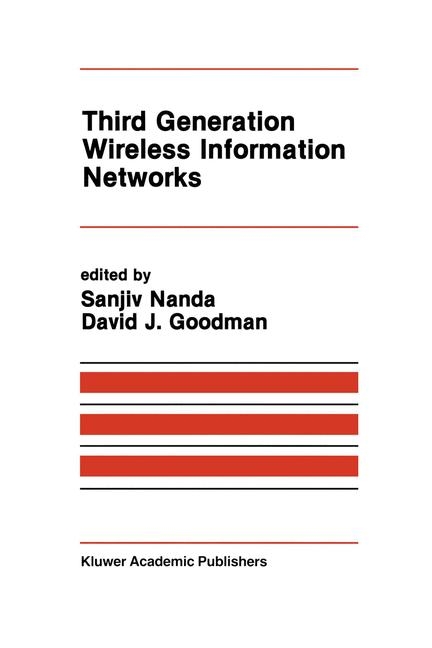
Third Generation Wireless Information Networks -

Third Generation Wireless Information Networks (eBook)

eBook Download: PDF
2012
Springer US (Verlag)
978-1-4615-4012-0 (ISBN)
Systemvoraussetzungen
157,87 inkl. MwSt
(CHF 154,20)
Der eBook-Verkauf erfolgt durch die Lehmanns Media GmbH (Berlin) zum Preis in Euro inkl. MwSt.
  • Download sofort lieferbar
  • Zahlungsarten anzeigen
Rutgers University launched WINLAB in 1989, just as the communications industry, the Federal government, and the financial community in the United States, were waking up to the growing public appetite for wireless communications and to the shortage of technology to feed it. The secret was already out in Europe, where no fewer than three new cordless and cellular systems were progressing from drawing board to laboratory to factory to consumers. In July 1989, the FCC held a well-attended tutorial that turned into a debate over whether second generation British or Swedish technology held the key to mass-market personal communications. Many in the audience wondered whether United States technology was out of the picture. Technology uncertainties are more acute in wireless communications than in any other information service. For example multi-gigabit optical fiber communications have followed an orderly progression from basic science leading to technology, which in turn stimulated standards, and then commercial products. Eventually applications will be found and industry and society at large will reap the benefits. By contrast, the applications of wireless communications are apparent to an eager public. A large market exists but is held in check by a shortage of capacity. The demand has led the cellular industry to formulate standards for advanced systems before the technology is in place to implement them. Everyone holds their breath waiting to observe performance of the first products. Gaps in basic science add to the uncertainty and forestall the resolution of technological debates.
Erscheint lt. Verlag 6.12.2012
Sprache englisch
Themenwelt Mathematik / Informatik Informatik Netzwerke
Technik Elektrotechnik / Energietechnik
Technik Nachrichtentechnik
ISBN-10 1-4615-4012-7 / 1461540127
ISBN-13 978-1-4615-4012-0 / 9781461540120
Informationen gemäß Produktsicherheitsverordnung (GPSR)
Haben Sie eine Frage zum Produkt?
PDFPDF (Adobe DRM)

Kopierschutz: Adobe-DRM
Adobe-DRM ist ein Kopierschutz, der das eBook vor Mißbrauch schützen soll. Dabei wird das eBook bereits beim Download auf Ihre persönliche Adobe-ID autorisiert. Lesen können Sie das eBook dann nur auf den Geräten, welche ebenfalls auf Ihre Adobe-ID registriert sind.
Details zum Adobe-DRM

Dateiformat: PDF (Portable Document Format)
Mit einem festen Seiten­layout eignet sich die PDF besonders für Fach­bücher mit Spalten, Tabellen und Abbild­ungen. Eine PDF kann auf fast allen Geräten ange­zeigt werden, ist aber für kleine Displays (Smart­phone, eReader) nur einge­schränkt geeignet.

Systemvoraussetzungen:
PC/Mac: Mit einem PC oder Mac können Sie dieses eBook lesen. Sie benötigen eine Adobe-ID und die Software Adobe Digital Editions (kostenlos). Von der Benutzung der OverDrive Media Console raten wir Ihnen ab. Erfahrungsgemäß treten hier gehäuft Probleme mit dem Adobe DRM auf.
eReader: Dieses eBook kann mit (fast) allen eBook-Readern gelesen werden. Mit dem amazon-Kindle ist es aber nicht kompatibel.
Smartphone/Tablet: Egal ob Apple oder Android, dieses eBook können Sie lesen. Sie benötigen eine Adobe-ID sowie eine kostenlose App.
Geräteliste und zusätzliche Hinweise

Buying eBooks from abroad
For tax law reasons we can sell eBooks just within Germany and Switzerland. Regrettably we cannot fulfill eBook-orders from other countries.

Mehr entdecken
aus dem Bereich
Das Auto der Zukunft – Vernetzt und autonom fahren

von Roman Mildner; Thomas Ziller; Franco Baiocchi

eBook Download (2024)
Springer Fachmedien Wiesbaden (Verlag)
CHF 37,10