Zum Hauptinhalt springen
Nicht aus der Schweiz? Besuchen Sie lehmanns.de
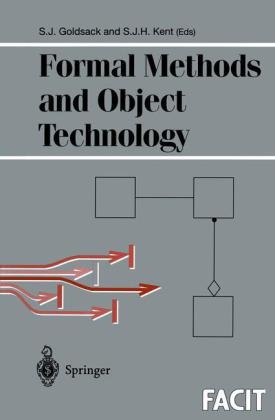
Formal Methods and Object Technology -

Formal Methods and Object Technology (eBook)

eBook Download: PDF
2012
Springer London (Verlag)
9781447130710 (ISBN)
Systemvoraussetzungen
108,50 inkl. MwSt
(CHF 105,95)
Der eBook-Verkauf erfolgt durch die Lehmanns Media GmbH (Berlin) zum Preis in Euro inkl. MwSt.
  • Download sofort lieferbar
  • Zahlungsarten anzeigen
Rationale Software engineering aims to develop software by using approaches which en- able large and complex program suites to be developed in a systematic way. However, it is well known that it is difficult to obtain the level of assurance of correctness required for safety critical software using old fashioned program- ming techniques. The level of safety required becomes particularly high in software which is to function without a break for long periods of time, since the software cannot be restarted and errors can accumulate. Consequently programming for mission critical systems, for example, needs to address the requirements of correctness with particular care. In the search for techniques for making software cheaper and more reliable, two important but largely independent influences have been visible in recent years. These are: * Object Technology * Formal Methods First, it has become evident that objects are, and will remain an important concept in software. Experimental languages of the 1970's introduced various concepts of package, cluster, module, etc. giving concrete expression to the importance of modularity and encapsulation, the construction of software com- ponents hiding their state representations and algorithmic mechanisms from users, exporting only those features (mainly the procedure calling mechanisms) which were needed in order to use the objects. This gives the software com- ponents a level of abstraction, separating the view of what a module does for the system from the details of how it does them.
PDFPDF (Adobe DRM)

Kopierschutz: Adobe-DRM
Adobe-DRM ist ein Kopierschutz, der das eBook vor Mißbrauch schützen soll. Dabei wird das eBook bereits beim Download auf Ihre persönliche Adobe-ID autorisiert. Lesen können Sie das eBook dann nur auf den Geräten, welche ebenfalls auf Ihre Adobe-ID registriert sind.
Details zum Adobe-DRM

Dateiformat: PDF (Portable Document Format)
Mit einem festen Seiten­layout eignet sich die PDF besonders für Fach­bücher mit Spalten, Tabellen und Abbild­ungen. Eine PDF kann auf fast allen Geräten ange­zeigt werden, ist aber für kleine Displays (Smart­phone, eReader) nur einge­schränkt geeignet.

Systemvoraussetzungen:
PC/Mac: Mit einem PC oder Mac können Sie dieses eBook lesen. Sie benötigen eine Adobe-ID und die Software Adobe Digital Editions (kostenlos). Von der Benutzung der OverDrive Media Console raten wir Ihnen ab. Erfahrungsgemäß treten hier gehäuft Probleme mit dem Adobe DRM auf.
eReader: Dieses eBook kann mit (fast) allen eBook-Readern gelesen werden. Mit dem amazon-Kindle ist es aber nicht kompatibel.
Smartphone/Tablet: Egal ob Apple oder Android, dieses eBook können Sie lesen. Sie benötigen eine Adobe-ID sowie eine kostenlose App.
Geräteliste und zusätzliche Hinweise

Buying eBooks from abroad
For tax law reasons we can sell eBooks just within Germany and Switzerland. Regrettably we cannot fulfill eBook-orders from other countries.

Mehr entdecken
aus dem Bereich
Grundlagen, Objektorientierung und fortgeschrittene Konzepte

von Christian Kohls; Alexander Dobrynin

eBook Download (2023)
Carl Hanser Verlag GmbH & Co. KG
CHF 38,95
Entwicklung von GUIs für verschiedene Betriebssysteme

von Achim Lingott

eBook Download (2023)
Carl Hanser Fachbuchverlag
CHF 38,95