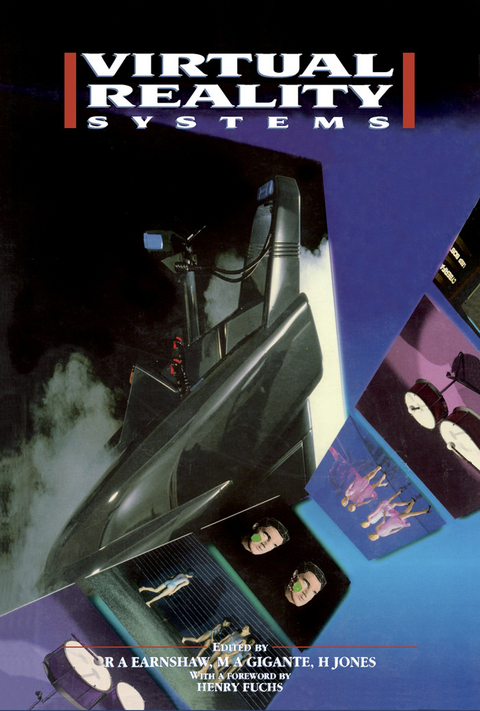
Virtual Reality Systems (eBook)
327 Seiten
Elsevier Science (Verlag)
978-1-4832-9657-9 (ISBN)
This volume brings together a number of the leading practitioners and exponents in the field of virtual reality (VR), and explores some of the main issues in the area and its associated hardware and software technology. The main components of the current generation of virtual reality systems are outlined, and major developments of VR systems are discussed.* SPECIAL FEATURES* This volume brings together some of the leading practitioners and exponents in the field of VR, and explores some of the main issues in the area and its associated hardware and software technology.* The main components of the current generation of cirtual reality systems are outlined, and major developments of Vr systems are discussed, focussing of key areas such as hardware, software, techniques, application interfaces and ethical issues.* The book contains a comprehensive bibliography enabling the reader to follow up particular areas of specialism. It contains 16 pages of colour plates.
Front Cover 1
Virtual Reality Systems 4
Copyright Page 5
Table of Contents 6
Foreword 10
About the Editors 12
Michael Gigante, Royal Melbourne Institute of Technology, Australia 12
Huw Jones, Middlesex University, UK 13
Addresses of Editors 13
Contributors 14
Acknowledgements 17
Disclaimer 17
Copyright Material 17
Cover Illustrations 17
Preface 18
Introduction 20
References 23
Part 1: Introduction 24
Chapter 1. Virtual Reality: Definitions, History and Applications 26
1 Introduction 26
2 VR Applications 31
3 Social Impact 36
4 Conclusion 37
Acknowledgements 37
References 37
Chapter 2. Virtual Reality: Enabling Technologies 38
1 Introduction 38
2 Real-Time 3D Computer Graphics 38
3 Wide-Angle Stereoscopic Displays 39
4 Head and Eye Tracking 40
5 Hand and Gesture Tracking 41
6 Binaural Sound 46
7 Haptic Feedback 46
8 Voice Input/Output 47
9 Future Trends 48
Acknowledgements 48
References 48
Part 2: SYSTEMS 50
Chapter 3. SuperVision – A Parallel Architecture for Virtual Reality 52
Chapter 5. A Computational Model for the Stereoscopic Optics of aHead-Mounted Display 74
Abstract 52
1 A Parallel Approach 52
2 dVS Overview 54
3 The Vision Range of Parallel Accelerators 56
4 The PAZ Renderer 59
5 Conclusions 60
References 60
Chapter 4. Virtual Reality Products 62
Abstract 62
1 Introduction 62
2 Virtual Reality 63
3 VR Hardware Requirements 64
4 Example VR System 64
5 Software Structure 67
6 Software Tools 67
7 Modelling Virtual Worlds 68
8 Applications of VR 68
9 Future Developments 72
Chapter 5. A Computational Model forthe Stereoscopic Optics of aHead-Mounted Display 74
Abstract 74
1 Introduction 74
2 Sources of Error 77
3 Optics Model for a Head-Mounted Display 82
4 Calculating the Model Parameters for the VPL EyePhone 87
5 Summary and Conclusions 96
Acknowledgements 96
References 97
Biography 98
Chapter 6. A Comprehensive Virtual Environment Laboratory Facility 100
Abstract 100
1 What is a Virtual Environment System? 100
2 Justifications for a Virtual Environment Laboratory Facility 101
3 Requirements of a Virtual Environment Laboratory 103
4 Systems Integration Issues 107
5 Concluding Remarks 110
Acknowledgements 111
References 111
Biography 112
Part 3:
114
Chapter 7. Gesture Driven Interaction as a Human Factor in Virtual Environments – An Approach with Neural Networks 116
Abstract 116
1 Gesture Interaction in Virtual Environments 116
2 A Testbed for Gesture Driven Interactions in Virtual Environment:GIVEN 118
3 Gestures and Gesture Architecture 120
4 Neural Networks in Gesture Recognition 123
5 Discussion and Future Work 127
Acknowledgements 128
References 128
Biographies 129
Chapter 8. Using Physical Constraints in a Virtual Environment 146
Abstract 146
1 Introduction 146
2 Overview of the System and the Problem 147
3 Constraints 148
4 Description of our System 149
5 Observations of Constraint Use during Manipulation 151
6 Discussion of Experimental Results 153
7 Implementation and Speed of Constraint Satisfaction 155
8 Futures 156
References 156
Biography 157
Chapter 9. Device Synchronization Using an Optimal Linear Filter 158
Abstract 158
1 Introduction 158
2 Optimal Estimation of Position and Velocity 159
3 Rotations 163
4 Unpredictable Events 165
5 MusicWorld 167
6 Summary 169
Acknowledgements 169
References 170
Biographies 170
Part 4:
172
Chapter 10. Virtual Reality Techniques in Flight Simulation 174
Abstract 174
1 Introduction 174
2 Flight Simulation 174
2 Immersion 176
3 Real-Time Computer Generated Images 177
4 Real-Time Interaction 178
5 Force Feedback 179
6 Motion Sickness 179
7 Modelling Virtual Worlds 179
8 The Future 180
Biography 180
Chapter 11. Using Virtual Reality Techniques in the Animation Process 182
Abstract 182
1 Introduction 182
2 Survey of VR Devices 183
3 The Animation Process 185
4 Classification of VR-based Methods for Animation 186
5 3D Shape Creation 188
6 3D Paths for Camera Motion 189
7 Skeleton Animation 190
8 Hand Motion 191
9 Facial Animation 192
10 Physics-Based Animation and Force-Feedback Devices 193
11 A VR-Based Animation System 194
12 Conclusion 196
Acknowledgements 196
References 196
Biography 198
Chapter 12. Dynamic Fish Eye Information Visualizations 200
Abstract 200
1 Introduction 200
2 Requirements 201
3 Specifications 202
4 Combining the Theoretical Solutions 209
5 VizNet Implementation 212
6 Summary 214
References 215
Biographies 216
Part 5: Human–Computer Interface 218
Chapter
220
Abstract 220
1 Introduction: Human Factors and Telerobotics 220
2 The UK VERDEX Project 224
3 Multi-Person Interaction 236
4 Computing Developments: From Vision to Supervision and Desktop Systems 237
5 Standards for VR? 238
6 The Future: Nanopresence? 239
7 Conclusions 240
References 241
Biography 241
Chapter 14. Critical Aspects of Visually Coupled Systems 242
Abstract 242
1 Visually Coupled Systems 242
2 Head Tracker Issues 243
3 Helmet-Mounted Display Issues 246
4 Image/Graphic Generator Issues 247
5 Concluding Remarks 249
Acknowledgements 250
References 251
Chapter 15. AVIARY – A Generic Virtual Reality Interface for Real Applications 252
Abstract 252
1 Introduction 252
2 Work on VR at Manchester 253
3 The Generic World Model 257
4 Software Implementation 263
5 A Hardware Platform for the AVIARY Model 268
6 Summary 272
Acknowledgements 272
References 272
Biographies 274
Chapter 16. Using Gestures to Control a Virtual Arm 276
Abstract 276
1 Introduction 276
2 Overview of the System 278
3 Controlling the Simulated Arm 279
4 Gestures 280
5 Limiters 283
6 Arm Editor 283
7 The System in Use 284
8 Conclusions 285
Acknowledgements 285
References 285
Part 6:
286
Chapter 17. Toward Three-Dimensiona lModels of Reality 288
Abstract 288
1 Motivation 288
2 Current Solutions 289
3 Objectives 292
4 Proposed Model 293
5 Display 295
6 Building Models 295
7 Results 296
8 Conclusions 298
References 299
Biography 300
Part 7:
302
Chapter 18. Back to the Cave – Cultura lPerspectives on Virtua lReality 304
Abstract 304
1 Image and Reality 304
2 Two Paradigms for Knowing 305
3 Two Kinds of Computer Graphics 307
4 An Hypothesis 309
5 Conclusions 310
References 311
Suggested Reading 311
Biography 311
Chapter 19. Ethical Issues in the Application of Virtual Reality to the Treatment of Mental Disorders 312
Abstract 312
1 Introduction 312
2 The Ethical Problem of Electrical Treatments in Psychiatry 313
3 Medical Ethics 316
4 Fears, Phobias and Stress 319
5 Innovative Psychotherapies 321
6 Rehabilitation after Brain Injury 323
7 Conclusions 323
References 325
Further Reading 326
Biography 326
Bibliography 328
Acknowledgements 328
Appendix: Overview of Virtual Reality Software Suppliers 352
Abstract 352
1 Introduction 352
2 Reviews 352
3 Software Suppliers 355
Index 358
| Erscheint lt. Verlag | 28.6.2014 |
|---|---|
| Sprache | englisch |
| Themenwelt | Mathematik / Informatik ► Informatik ► Grafik / Design |
| Informatik ► Software Entwicklung ► User Interfaces (HCI) | |
| Informatik ► Theorie / Studium ► Künstliche Intelligenz / Robotik | |
| ISBN-10 | 1-4832-9657-1 / 1483296571 |
| ISBN-13 | 978-1-4832-9657-9 / 9781483296579 |
| Informationen gemäß Produktsicherheitsverordnung (GPSR) | |
| Haben Sie eine Frage zum Produkt? |
 PDF (Adobe DRM)
Kopierschutz: Adobe-DRM
Adobe-DRM ist ein Kopierschutz, der das eBook vor Mißbrauch schützen soll. Dabei wird das eBook bereits beim Download auf Ihre persönliche Adobe-ID autorisiert. Lesen können Sie das eBook dann nur auf den Geräten, welche ebenfalls auf Ihre Adobe-ID registriert sind.
Details zum Adobe-DRM
Dateiformat: PDF (Portable Document Format)
Mit einem festen Seitenlayout eignet sich die PDF besonders für Fachbücher mit Spalten, Tabellen und Abbildungen. Eine PDF kann auf fast allen Geräten angezeigt werden, ist aber für kleine Displays (Smartphone, eReader) nur eingeschränkt geeignet.
Systemvoraussetzungen:
PC/Mac: Mit einem PC oder Mac können Sie dieses eBook lesen. Sie benötigen eine
eReader: Dieses eBook kann mit (fast) allen eBook-Readern gelesen werden. Mit dem amazon-Kindle ist es aber nicht kompatibel.
Smartphone/Tablet: Egal ob Apple oder Android, dieses eBook können Sie lesen. Sie benötigen eine
Geräteliste und zusätzliche Hinweise
Buying eBooks from abroad
For tax law reasons we can sell eBooks just within Germany and Switzerland. Regrettably we cannot fulfill eBook-orders from other countries.
aus dem Bereich