Introduction to Data Base Design (eBook)
294 Seiten
Elsevier Science (Verlag)
978-1-4832-7048-7 (ISBN)
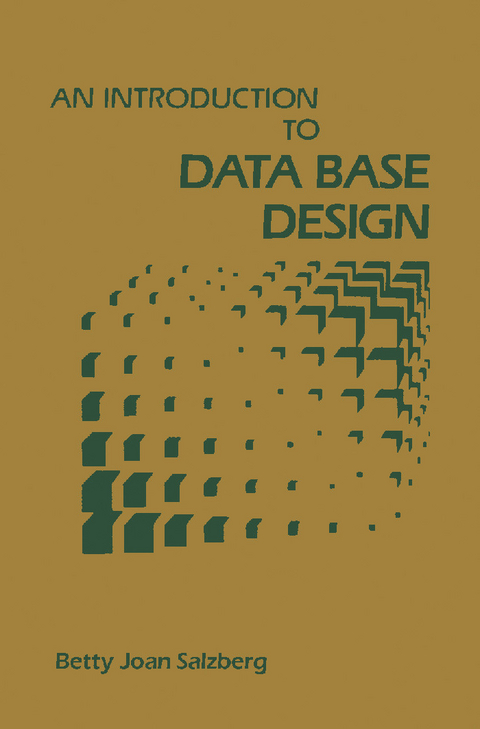
An Introduction to Data Base Design provides an understanding of how data base management systems (DBMS) work to be able to use any available commercial DBMS intelligently. This book presents the principle of independence of physical and local organization. Organized into seven chapters, this book begins with an overview of normal form theory. This text then describes the three types of DBMS. Other chapters consider the difficulties in processing queries where the names of the files are not mentioned. This book discusses as well how to group data hierarchically, how to use a preorder tree traversal to represent the data, and how to convert a network organization to a hierarchical one. The final chapter deals with four essential issues in data base theory, namely, recovery, security, integrity, and concurrency. This book is a valuable resource for computer science students in the junior or senior year, and people in industry who are doing technical work using data bases.
Front Cover 1
An Introduction to Data Base Design 3
Copyright
5
Table of Contents 12
Preface 6
Acknowledgments 10
Dedication 18
Chapter 1. Introduction 20
1-1. HISTORY 20
1-2. WHAT A DBMS PROVIDES 24
1-3. VIEWS, SUBSCHEMA, AND DATA INDEPENDENCE 26
1-4. HOW TO BEGIN 28
Chapter 2. Normal Form Design Theory 32
2-1. INTRODUCTION 32
2-2. FIRST NORMAL FORM 34
2-3. FUNCTIONAL DEPENDENCE 37
2-4. CLOSURE 40
2-5. KEYS 45
2-6. HIGHER NORMAL FORMS AND PROJECTIONS 51
2-7. BOYCE CODD NORMAL FORM 54
2-8. LOSSLESS JOIN AND PRESERVATION OF DEPENDENCIES 58
2-9. THIRD NORMAL FORM 62
2-10. MULTIDEPENDENCE 73
2-11. FOURTH NORMAL FORM 78
Chapter 3. Relational Data Bases 82
3-1. INTRODUCTION 82
3-2. COMPLETE RELATIONAL DATA BASES 84
3-3. SQL AND QUEL 93
3-4. QBE 98
3-5. MICROCOMPUTER DBMSs 105
3-6. SOME EFFICIENCY CONSIDERATIONS 108
3-7. QUERY OPTIMIZATION 111
3-8. QUERIES WITHOUT FILE NAMES 121
Chapter 4. Network Data Bases (CODASYL) 126
4-1. INTRODUCTION 126
4-2. THE CODASYL DATA DEFINITION LANGUAGE 128
4-3. THE CODASYL DATA MANIPULATION LANGUAGE 141
4-4. USING A CODASYL DBMS INTERACTIVELY 151
4-5. CODASYL DML HOST LANGUAGE PROCEDURES 156
Chapter 5. Hierarchical Data Bases (IMS) 164
5-1. INTRODUCTION 164
5-2. THE IMS DATA DEFINITION LANGUAGE 170
5-3. STORAGE OPTIONS IN IMS 183
5-4. IMS DATA MANIPULATION LANGUAGE, DL/1 187
5-5. HOST LANGUAGE PROCEDURES FOR
192
Chapter 6.
198
6-1. INTRODUCTION 198
6-2. B-TREES 201
6-3. HASHING ALGORITHMS 208
Chapter 7. Integrity, Concurrency,
218
7-1. INTEGRITY 218
7-2. CONCURRENCY 221
7-3. RECOVERY 226
7-4. SECURITY 229
Appendix 1:
232
Appendix 2: CONSTRUCT YOUR OWN RELATIONAL DATA BASE 240
Appendix 3: CREATE A CODASYL DATA DEFINITION LANGUAGE COMPILER 250
Appendix 4: RELATIONAL ALGEBRA AND RELATIONAL CALCULUS NOTATION 256
Answers to Selected Exercises 258
BIBLIOGRAPHY 290
Index 292
| Erscheint lt. Verlag | 10.5.2014 |
|---|---|
| Sprache | englisch |
| Themenwelt | Mathematik / Informatik ► Informatik ► Theorie / Studium |
| ISBN-10 | 1-4832-7048-3 / 1483270483 |
| ISBN-13 | 978-1-4832-7048-7 / 9781483270487 |
| Informationen gemäß Produktsicherheitsverordnung (GPSR) | |
| Haben Sie eine Frage zum Produkt? |
 PDF (Adobe DRM)
Kopierschutz: Adobe-DRM
Adobe-DRM ist ein Kopierschutz, der das eBook vor Mißbrauch schützen soll. Dabei wird das eBook bereits beim Download auf Ihre persönliche Adobe-ID autorisiert. Lesen können Sie das eBook dann nur auf den Geräten, welche ebenfalls auf Ihre Adobe-ID registriert sind.
Details zum Adobe-DRM
Dateiformat: PDF (Portable Document Format)
Mit einem festen Seitenlayout eignet sich die PDF besonders für Fachbücher mit Spalten, Tabellen und Abbildungen. Eine PDF kann auf fast allen Geräten angezeigt werden, ist aber für kleine Displays (Smartphone, eReader) nur eingeschränkt geeignet.
Systemvoraussetzungen:
PC/Mac: Mit einem PC oder Mac können Sie dieses eBook lesen. Sie benötigen eine
eReader: Dieses eBook kann mit (fast) allen eBook-Readern gelesen werden. Mit dem amazon-Kindle ist es aber nicht kompatibel.
Smartphone/Tablet: Egal ob Apple oder Android, dieses eBook können Sie lesen. Sie benötigen eine
Geräteliste und zusätzliche Hinweise
Buying eBooks from abroad
For tax law reasons we can sell eBooks just within Germany and Switzerland. Regrettably we cannot fulfill eBook-orders from other countries.
aus dem Bereich