Distributed Computer Systems (eBook)
320 Seiten
Elsevier Science (Verlag)
978-1-4831-9232-1 (ISBN)
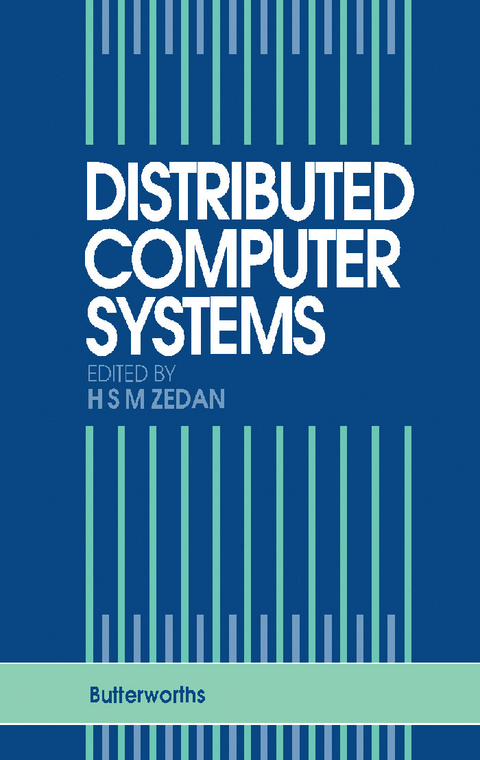
Distributed Computer Systems: Theory and Practice is a collection of papers dealing with the design and implementation of operating systems, including distributed systems, such as the amoeba system, argus, Andrew, and grapevine. One paper discusses the concepts and notations for concurrent programming, particularly language notation used in computer programming, synchronization methods, and also compares three classes of languages. Another paper explains load balancing or load redistribution to improve system performance, namely, static balancing and adaptive load balancing. For program efficiency, the user can choose from various debugging approaches to locate or fix errors without significantly disturbing the program behavior. Examples of debuggers pertain to the ada language and the occam programming language. Another paper describes the architecture of a real-time distributed database system used for computer network management, monitoring integration, as well as administration and control of both local area or wide area communications networks. The book can prove helpful to programmers, computer engineers, computer technicians, and computer instructors dealing with many aspects of computers, such as programming, hardware interface, networking, engineering or design.
Front Cover 1
Distributed Computer Systems: Theory and Practice 4
Copyright Page 5
Table of Contents 14
Preface 6
Acknowledgements 10
Contributors 12
Part 1: Surveys 16
Chapter 1. Distributed operating systems 18
Reasons for distribution 18
Design issues in distributed systems 19
Review of some current systems 25
Other systems 33
Current practice and future trends 37
Other work 38
References 38
Chapter 2. Concepts and notations for concurrentprogramming 44
Introduction 44
1. Concurrent programs: processes and process interaction 45
2. Specifying concurrent execution 49
3 . Synchronization primitives based on shared variables 52
4. Synchronization primitives based on message passing 74
5. Models of concurrent programming languages 90
6. Conclusion 92
References 94
Chapter 3. Load balancing algorithms inloosely-coupled distributed systems:a survey 100
Introduction 100
Static load balancing 101
Adaptive load balancing 107
Conclusion 121
References 122
Part 2: Special topics 124
Chapter 4. Debugging distributed real-timeapplications: a case study in ada 126
Introduction 126
Using ada in a distributed environment 126
Debugging distributed ada programs 128
Primary requirements of the trace-replay mechanism 129
Monitoring considerations 130
Trace-based tools 133
Debugging approaches 137
Related work 138
Summary 143
Appendix: ada inter-task events 145
References 145
Chapter 5. Reliable systems in occam 147
Introduction 147
Actions in occam 148
Error recovery in the layer structure 156
Linguistic support for error recovery in occam 158
Conclusion 162
References 163
Chapter 6. The architecture of real-time distributed databases for computer network monitoring 164
Introduction 164
The distributed database architecture in the network monitoring environment 165
The distributed database model 167
Real-time approach to concurrency control and recoveryprotocols 170
Summary and conclusions 174
References 175
Chapter 7. A distributed model of computation forcombinatory code 176
Introduction 176
Combinators 177
An abstract model of computation 178
Improving the model of computation 183
The model of computation as a means to a distributed computing environment 184
Conclusions 185
Acknowledgments 186
References 186
Chapter 8. isaac: a high-level distributed language 187
Introduction 187
The PI model 188
isaac language features 190
Implementation 195
Conclusions 196
References 196
Appendix 197
Part 3: Annotated bibliography and key references 198
Concurrent programming:an annotated bibliography 200
Introduction 200
Key references in distributed computersystems 1959–1989 208
Index 312
| Erscheint lt. Verlag | 12.5.2014 |
|---|---|
| Sprache | englisch |
| Themenwelt | Mathematik / Informatik ► Informatik ► Theorie / Studium |
| ISBN-10 | 1-4831-9232-6 / 1483192326 |
| ISBN-13 | 978-1-4831-9232-1 / 9781483192321 |
| Informationen gemäß Produktsicherheitsverordnung (GPSR) | |
| Haben Sie eine Frage zum Produkt? |
 PDF (Adobe DRM)
Kopierschutz: Adobe-DRM
Adobe-DRM ist ein Kopierschutz, der das eBook vor Mißbrauch schützen soll. Dabei wird das eBook bereits beim Download auf Ihre persönliche Adobe-ID autorisiert. Lesen können Sie das eBook dann nur auf den Geräten, welche ebenfalls auf Ihre Adobe-ID registriert sind.
Details zum Adobe-DRM
Dateiformat: PDF (Portable Document Format)
Mit einem festen Seitenlayout eignet sich die PDF besonders für Fachbücher mit Spalten, Tabellen und Abbildungen. Eine PDF kann auf fast allen Geräten angezeigt werden, ist aber für kleine Displays (Smartphone, eReader) nur eingeschränkt geeignet.
Systemvoraussetzungen:
PC/Mac: Mit einem PC oder Mac können Sie dieses eBook lesen. Sie benötigen eine
eReader: Dieses eBook kann mit (fast) allen eBook-Readern gelesen werden. Mit dem amazon-Kindle ist es aber nicht kompatibel.
Smartphone/Tablet: Egal ob Apple oder Android, dieses eBook können Sie lesen. Sie benötigen eine
Geräteliste und zusätzliche Hinweise
Buying eBooks from abroad
For tax law reasons we can sell eBooks just within Germany and Switzerland. Regrettably we cannot fulfill eBook-orders from other countries.
aus dem Bereich