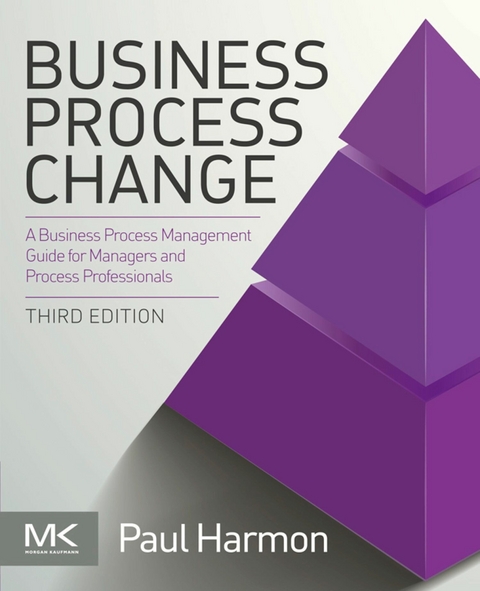
Business Process Change (eBook)
520 Seiten
Elsevier Science (Verlag)
978-0-12-800522-4 (ISBN)
Paul Harmon is a cofounder and executive editor at Business Process Trends, an internationally popular website that provides a variety of free articles, columns, surveys and book reviews each month on trends, directions, and best practices in business process management. He is also a cofounder, chief methodologist, and principal consultant of BPTrends Associates, a professional services company providing executive education, training, and consulting services for organizations interested in understanding and implementing business process management. At the same time Mr. Harmon serves as a Senior Consultant for AI with Cutter Consortium.
Business Process Change, 3rd Edition provides a balanced view of the field of business process change. Bestselling author Paul Harmon offers concepts, methods, cases for all aspects and phases of successful business process improvement. Updated and added for this edition is new material on the development of business models and business process architecture development, on integrating decision management models and business rules, on service processes and on dynamic case management, and on integrating various approaches in a broad business process management approach. New to this edition:- How to develop business models and business process architecture- How to integrate decision management models and business rules- New material on service processes and on dynamic case management- Learn to integrate various approaches in a broad business process management approach- Extensive revision and update addresses Business Process Management Systems, and the integration of process redesign and Six Sigma- Learn how all the different process elements fit together in this best first book on business process, now completely updated- Tailor the presented methodology, which is based on best practices, to your organization's specific needs- Understand the human aspects of process redesign- Benefit from all new detailed case studies showing how these methods are implemented
BUSINESS PROCESS CHANGE 2
FEATURES 2
ABOUT THE AUTHOR 2
PRAISE FOR BUSINESS PROCESS CHANGE 3
Business Process Change: A BUSINESS PROCESS MANAGEMENT GUIDE FOR MANAGERS AND PROCESS PROFESSIONALS 8
Copyright 9
Dedication 10
CONTENTS 12
FOREWORD 18
PREFACE TO THE THIRD EDITION 20
Introduction 24
LEVELS OF CONCERNS 24
BUSINESS PROCESS CHANGE AND MANAGEMENT 28
THE EVOLUTION OF AN ORGANIZATION’S UNDERSTANDING OF PROCESS 30
THE VARIETY OF OPTIONS 32
THE VARIETY OF SOLUTIONS 33
HOW THIS BOOK IS ORGANIZED 34
NOTES AND REFERENCES 37
Chapter One - Business Process Change 38
ORGANIZATIONS AS SYSTEMS 39
SYSTEMS AND VALUE CHAINS 39
THE SIX SIGMA MOVEMENT 44
BUSINESS PROCESS CHANGE IN THE 1990S 45
LEAN AND THE TOYOTA PRODUCTION SYSTEM 48
OTHER PROCESS CHANGE WORK IN THE 1990S 49
A QUICK SUMMARY 52
BUSINESS PROCESS CHANGE IN THE NEW MILLENNIUM 53
WHAT DRIVES BUSINESS PROCESS CHANGE? 54
NOTES AND REFERENCES 56
Part I - Organization-Wide Concerns 60
Chapter Two - Strategy, Value Chains, Business Initiatives, and Competitive Advantage 64
DEFINING A STRATEGY 65
PORTER’S MODEL OF COMPETITION 67
INDUSTRIES, PRODUCTS, AND VALUE PROPOSITIONS 70
STRATEGIES FOR COMPETING 71
PORTER’S THEORY OF COMPETITIVE ADVANTAGE 73
PORTER’S STRATEGIC THEMES 77
TREACY AND WIERSEMA’S POSITIONING STRATEGIES 79
THE BALANCED SCORECARD APPROACH TO STRATEGY 80
BUSINESS MODELS 84
BUSINESS INITIATIVES 84
SUMMARY 85
NOTES AND REFERENCES 87
Chapter Three - Understanding Your Organization 90
A COMPREHENSIVE BUSINESS PROCESS METHOD 90
STRATEGY AND ENTERPRISE BPM 93
UNDERSTAND THE ENTERPRISE 94
THE TRADITIONAL VIEW OF AN ORGANIZATION’S STRUCTURE 94
A CASE STUDY OF ORGANIZATION TRANSFORMATION 96
THE SYSTEMS VIEW OF AN ORGANIZATION 99
MODELS AND DIAGRAMS 100
ORGANIZATION DIAGRAMS 101
ORGANIZATIONS AND VALUE CHAINS 103
SYSTEMS AND PROCESSES 106
NOTES AND REFERENCES 108
Chapter Four - Business Architecture 110
THE SUPPLY CHAIN COUNCIL’S SCOR FRAMEWORK 113
BUSINESS ARCHITECTURE: THE IT APPROACH 116
BUSINESS PROCESS ARCHITECTURE 121
DEFINING AN ARCHITECTURE USING A FRAMEWORK 132
THE SUPPLY CHAIN COUNCIL’S SCOR FRAMEWORK 132
DEVELOPING A SUPPLY CHAIN ARCHITECTURE WITH SCOR 133
THE EXTENSION OF SCOR 137
ANOTHER APPROACH 140
SUMMARY 143
NOTES AND REFERENCES 144
Chapter Five - Measuring Process Performance 146
KEY MEASUREMENT TERMS 146
DEVELOPING A COMPREHENSIVE MEASUREMENT SYSTEM 151
BALANCED SCORECARD AND PROCESS MEASURES 152
ALIGNING PROCESS MEASURES 157
DERIVING MEASURES FROM BUSINESS PROCESS FRAMEWORKS 159
PUTTING IT ALL TOGETHER 162
COMPLETING THE BUSINESS PROCESS ARCHITECTURE WORKSHEET 164
NOTES AND REFERENCES 164
Chapter Six - Process Management 168
THE PROCESS PERSPECTIVE 168
WHAT IS MANAGEMENT? 170
MATRIX MANAGEMENT 177
THE MANAGEMENT OF OUTSOURCED PROCESSES 180
VALUE CHAINS AND PROCESS STANDARDIZATION 180
MANAGEMENT PROCESSES 183
DOCUMENTING MANAGEMENT PROCESSES IN AN ARCHITECTURE 190
COMPLETING THE BUSINESS PROCESS ARCHITECTURE WORKSHEET 191
NOTES AND REFERENCES 192
Chapter Seven - An Executive Level BPM Group 194
WHAT DOES A BPM GROUP DO? 194
CREATE AND MAINTAIN THE ENTERPRISE BUSINESS PROCESS ARCHITECTURE 195
IDENTIFY, PRIORITIZE, AND SCOPE BUSINESS PROCESS CHANGE PROJECTS 196
HELP CREATE, MAINTAIN, AND MANAGE THE PROCESS PERFORMANCE SYSTEM 203
HELP CREATE AND SUPPORT THE PROCESS MANAGER SYSTEM 204
RECRUIT, TRAIN AND MANAGE BUSINESS PROCESS CHANGE PROFESSIONALS 205
MANAGE RISK/COMPLIANCE REPORTING AND DOCUMENTATION 205
A CASE STUDY: BOEING’S GMS DIVISION 206
SUMMARY 217
THE BPM GROUP 218
NOTES AND REFERENCES 218
Part II - Process Level Concerns 220
Chapter Eight - Understanding and Scoping Process Problems 222
WHAT IS A PROCESS? 222
PROCESS LEVELS AND LEVELS OF ANALYSIS 223
SIMPLE AND COMPLEX PROCESSES 225
BUSINESS PROCESS PROBLEMS 228
THE INITIAL CUT: WHAT IS THE PROCESS? 230
REFINING AN INITIAL PROCESS DESCRIPTION 232
CREATING A BUSINESS CASE FOR A PROCESS CHANGE PROJECT 243
NOTES AND REFERENCES 246
Chapter Nine - Modeling Business Processes 248
PROCESS FLOW PROBLEMS 248
DAY-TO-DAY MANAGEMENT PROBLEMS 250
PROCESS FLOW DIAGRAMS 251
FLOW DIAGRAMMING BASICS 253
MORE PROCESS NOTATION 258
AS-IS, COULD-BE, AND TO-BE PROCESS DIAGRAMS 265
CASE MANAGEMENT 271
NOTES AND REFERENCES 275
Chapter Ten - Human Performance Analysis, Automation, and Decision Management 278
ANALYZING A SPECIFIC ACTIVITY 279
ANALYZING HUMAN PERFORMANCE 283
MANAGING THE PERFORMANCE OF ACTIVITIES 288
AUTOMATING THE ENTER EXPENSE REPORTS ACTIVITY 289
EMPOWERING EMPLOYEES 292
ANALYZING A COMPLETELY AUTOMATED ACTIVITY 295
DECISION MANAGEMENT 297
KNOWLEDGE WORKERS, COGNITIVE MAPS, AND DECISION MANAGEMENT 301
NOTES AND REFERENCES 311
Chapter Eleven - Managing and Measuring a Specific Business Process 314
REPRESENTING MANAGEMENT PROCESSES 315
THE MANAGEMENT PROCESS 317
PLAN WORK 318
ORGANIZE WORK 321
COMMUNICATE 321
CONTROL WORK 322
EVALUATING THE PERFORMANCE OF THE PROCESS MANAGER 325
CONTINUOUS MEASUREMENT AND IMPROVEMENT 325
MANAGEMENT REDESIGN AT CHEVRON 327
NOTES AND REFERENCES 328
Chapter Twelve - Incremental Improvement with Lean and Six Sigma 330
SIX SIGMA 330
THE SIX SIGMA CONCEPT 333
THE SIX SIGMA APPROACH TO PROCESS IMPROVEMENT 336
PHASES IN A SIX SIGMA IMPROVEMENT PROJECT 337
LEAN 352
SUMMARY 359
NOTES AND REFERENCES 360
Chapter Thirteen - The BPTrends Process: Redesign Methodology 364
WHY HAVE A METHODOLOGY? 368
HOW DOES IT ALL BEGIN? 368
WHAT HAPPENS? 369
WHO MAKES IT ALL HAPPEN? 369
PHASE 1: UNDERSTANDING THE PROJECT 371
PHASE 2: ANALYZE BUSINESS PROCESS 374
PHASE 3: REDESIGN BUSINESS PROCESS 379
PHASE 4: IMPLEMENT REDESIGNED PROCESS 382
PHASE 5: ROLL OUT THE REDESIGNED PROCESS 384
SUMMARY 388
NOTES AND REFERENCES 388
Chapter Fourteen - The Rental Cars-R-Us Case Study 390
RENTAL CARS-R-US 390
PHASE 1: UNDERSTAND THE PROJECT 391
PHASE 2: ANALYZE THE BUSINESS PROCESS 398
PHASE 3: REDESIGNING THE RENTAL PROCESS 408
PHASE 4: IMPLEMENT THE REDESIGNED BUSINESS PROCESS 411
PHASE 5: ROLL OUT THE NEW RENTAL PROCESS 411
NOTES AND REFERENCES 412
Part III - Implementation Level Concerns 414
Chapter Fifteen - Software Tools for Business Process Analysis and Design 416
WHY USE BUSINESS PROCESS SOFTWARE? 416
THE VARIETY OF BUSINESS PROCESS TOOLS 417
A PROFESSIONAL BP MODELING TOOL 422
NOTES AND REFERENCES 430
Chapter Sixteen - Business Process Management Suites 432
PROCESS DIAGRAMS AND BPMS ENGINES 434
WHAT FEATURES MIGHT A BPM SUITE INCLUDE? 437
BPMS AND BAM 439
BPMS, SOA, AND THE CLOUD 442
CHOOSING A BPMS PRODUCT 443
THE CURRENT BPMS MARKET 444
SOME LEADING BPMS VENDORS 445
MARKET TRENDS 446
PROCESS MODELING TOOLS VS BPMS SUITES 450
CREATING A BPMS APPLICATION 450
NOTES AND REFERENCES 451
Chapter Seventeen - ERP-Driven Redesign 454
PROCESSES, PACKAGES, AND BEST PRACTICES 455
A CLOSER LOOK AT SAP 456
IMPLEMENTING AN ERP-DRIVEN DESIGN 464
CASE STUDY: NESTLÉ USA INSTALLS SAP 467
USING BPMS TO IMPROVE ERP INSTALLATIONS 469
ENTERPRISE RESOURCE PLANNING AND BUSINESS PROCESS MANAGEMENT SUITE 473
ERP VS BPMS APPLICATIONS 475
NOTES AND REFERENCES 480
Chapter Eighteen - The Future of Business Process Management 482
Appendix 1 - Business Problem Analysis Checklist 492
OUTPUT PROBLEMS 493
INPUT PROBLEMS 493
GUIDE PROBLEMS 494
ENABLER PROBLEMS 495
PROCESS ACTIVITY AND FLOW PROBLEMS 497
PROBLEMS WITH THE MANAGEMENT OF A PROCESS 498
Appendix 2 - Core Business Process Modeling Notation 502
AN OVERVIEW OF A BPMN DIAGRAM USED FOR BUSINESS PROCESS ANALYSIS AND REDESIGN 503
AN ACTIVITY 504
AN EVENT 504
A GATEWAY 505
A SEQUENCE FLOW 505
A MESSAGE FLOW 505
A DATA OBJECT 505
AN ASSOCIATION 505
A POOL WITH SWIMLANES 506
A FEW EXTENSIONS OF THE ACTIVITY RECTANGLE 506
A FEW EXTENSIONS OF THE EVENT CIRCLE 507
INITIAL OR START EVENT 507
INTERMEDIATE EVENT 507
TERMINAL OR END EVENT 507
A FEW EXTENSIONS OF THE GATEWAY DIAMOND 508
SOME OTHER NOTATIONS THAT WE OCCASIONALLY USE 508
BPTRENDS SPECIAL NOTATION 509
Appendix 3 - Business Process Standards 510
ORGANIZATION LEVEL BUSINESS PROCESS STANDARDS 512
PROCESS LEVEL BUSINESS PROCESS STANDARDS 514
BUSINESS PROCESS STANDARDS FOR IMPLEMENTATION 515
THE FUTURE OF STANDARDS 516
INDEX 518
Preface to the Third Edition
| Erscheint lt. Verlag | 26.4.2014 |
|---|---|
| Sprache | englisch |
| Themenwelt | Mathematik / Informatik ► Informatik ► Software Entwicklung |
| Wirtschaft ► Betriebswirtschaft / Management ► Unternehmensführung / Management | |
| ISBN-10 | 0-12-800522-X / 012800522X |
| ISBN-13 | 978-0-12-800522-4 / 9780128005224 |
| Informationen gemäß Produktsicherheitsverordnung (GPSR) | |
| Haben Sie eine Frage zum Produkt? |
 EPUB (Adobe DRM)
Kopierschutz: Adobe-DRM
Adobe-DRM ist ein Kopierschutz, der das eBook vor Mißbrauch schützen soll. Dabei wird das eBook bereits beim Download auf Ihre persönliche Adobe-ID autorisiert. Lesen können Sie das eBook dann nur auf den Geräten, welche ebenfalls auf Ihre Adobe-ID registriert sind.
Details zum Adobe-DRM
Dateiformat: EPUB (Electronic Publication)
EPUB ist ein offener Standard für eBooks und eignet sich besonders zur Darstellung von Belletristik und Sachbüchern. Der Fließtext wird dynamisch an die Display- und Schriftgröße angepasst. Auch für mobile Lesegeräte ist EPUB daher gut geeignet.
Systemvoraussetzungen:
PC/Mac: Mit einem PC oder Mac können Sie dieses eBook lesen. Sie benötigen eine
eReader: Dieses eBook kann mit (fast) allen eBook-Readern gelesen werden. Mit dem amazon-Kindle ist es aber nicht kompatibel.
Smartphone/Tablet: Egal ob Apple oder Android, dieses eBook können Sie lesen. Sie benötigen eine
Geräteliste und zusätzliche Hinweise
Buying eBooks from abroad
For tax law reasons we can sell eBooks just within Germany and Switzerland. Regrettably we cannot fulfill eBook-orders from other countries.
aus dem Bereich