Introduction to Information Processing (eBook)
478 Seiten
Elsevier Science (Verlag)
978-1-4832-1401-6 (ISBN)
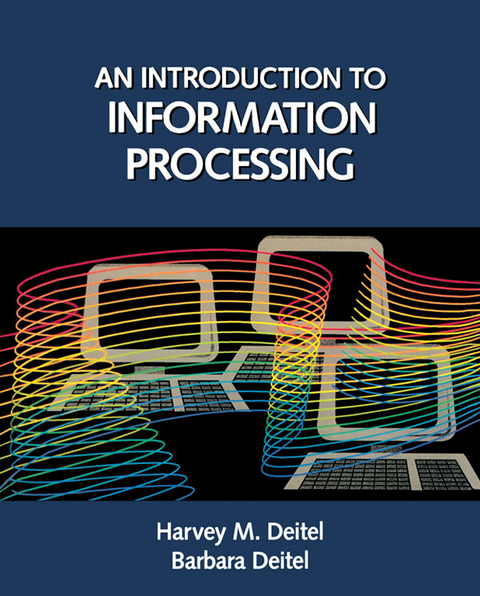
An Introduction to Information Processing provides an informal introduction to the computer field. This book introduces computer hardware, which is the actual computing equipment. Organized into three parts encompassing 12 chapters, this book begins with an overview of the evolution of personal computing and includes detailed case studies on two of the most essential personal computers for the 1980s, namely, the IBM Personal Computer and Apple's Macintosh. This text then traces the evolution of modern computing systems from the earliest mechanical calculating devices to microchips. Other chapters consider the components and operation of typical data communications systems. This book discusses as well the various types of communications networks and communications via space satellites. The final chapter deals with software or computer programs, the sets of instructions that programmers write to inform the computer how to solve particular problems. This book is a valuable resource for computer specialists, mathematicians, and computer programmers.
Preface
An Introduction to Information Processing is the product of one of the most ambitious research, writing, and production efforts ever undertaken in computer science publishing. Our goals were clear: make the book exciting, complete, up-to-the-minute, innovative, and visually smashing; deal with controversial issues head on, and include humor and anecdotal asides for the reader’s enjoyment. The book contains one of the most dramatic and comprehensive graphics packages that has appeared in an introductory computer text.
The average person who reads this text is already well aware of the enormous impact computers are having on our personal lives and business enterprises. A familiarity with computers, how they work, and the kinds of applications they are used for is essential for living in today’s increasingly complex world. This text is designed for use in a one-semester college course that introduces the basic principles of computers; it meets or exceeds the guidelines of the major professional organizations for computer literacy courses taught by departments of computer science, management, data processing, information sciences, and others.
We enjoyed writing the book; it gave us an opportunity to immerse ourselves in the most current information available in the computer field. We have read thousands of articles and communicated with hundreds of companies, organizations, and government agencies. We have met hundreds of interesting people at computer trade shows and professional conferences throughout the country, and we have had the opportunity to work with some of the leading professionals in the publishing industry. We sincerely hope you’ll enjoy reading the book as well.
Features of the Text
We have loaded An Introduction to Information Processing with innovative materials in addition to presenting traditional basic computing concepts. We probe the reader’s mind with challenging questions. We attack controversial issues directly.
The pictures in the text were acquired from hundreds of companies, publishers, and photographers who gave us their enthusiastic cooperation. These photographs and illustrations bring the reader right into the environments where computers are being used; the vast majority of these pictures are supplied as transparencies and color slides for projection in the classroom.
We have included a number of carefully chosen cartoons and anecdotes; our goal is not so much to get fast laughs as to draw the reader’s attention to important issues these pieces raise. Consider them carefully; there is much food for thought here.
We have included numerous enrichment pieces that are highlighted against color backdrops. They supplement the text, but we strongly recommend their inclusion in the required readings for the course. Material in these pieces is included in the exercises.
A Tour of the Text
An Introduction to Information Processing is divided into three major sections and three appendices. Each section consists of several related chapters. Part One provides an informal introduction to the computer field. Chapter 1 presents some basic computing concepts and introduces personal computing.
The personal computer, made possible by the tiny and economical microprocessor, is reshaping the computer industry and our society as well. Now small businesses and individuals may have their own computers at their disposal 24 hours a day. Chapter 1 traces the evolution of personal computing and includes detailed case studies on two of the most important personal computers for the 1980s—the IBM Personal Computer and Apples Macintosh. The use of home computers in our daily lives is discussed: how they can help to save energy, plan nutritious meals, balance checkbooks, and maintain home budgets.
Chapter 2 traces the evolution of modern computing systems from the earliest mechanical calculating devices to today’s microchips. The history of the field is divided into four distinct “generations,” each defined by major innovations in electronics technology. The fifth generation, expected to appear about 1990, is discussed.
Part Two introduces computer hardware, the actual computing equipment. Chapter 3, “The Processor,” discusses the so-called brain of the computer. The chapter contains two special sections, one describing the manufacture of microprocessor computers and the other the logical operation of computers. It concludes with a discussion of biochips and how they make “living computers” possible.
The many ways in which data may be entered into computers is considered in Chapter 4, “Input: Gateway to the Computer.” Today we enter most information into computers on typewriterlike keyboards, but more user-friendly input methods are becoming popular, including touch sensing, in which the user simply touches a symbol on a display screen, and speech recognition, in which the computer recognizes spoken commands. Various input devices that automatically read markings on paper are also discussed.
Chapter 5, “Output: Getting Results from the Computer” examines how computers present their results, or outputs. The chapter considers the more popular types of printers that produce output on paper and focuses on laser printing, the printing technology of the future, in which intense beams of light are used to draw letters, digits, and even pictures. The operation of display screen terminals is discussed. Computerized speech generation, called speech synthesis, is explained in detail. The operation of computer output microfilm devices is considered, as is computer graphics, the computerized preparation and processing of pictures. The use of computers in the Shroud of Turin controversy is examined—bringing together the ancient and the modern.
Chapter 6, “Secondary Storage,” considers the storage and retrieval of massive amounts of computer-accessible information from secondary storage devices such as magnetic tape and magnetic disks. The operation of floppy disks and large-capacity Winchester disks, now so popular on personal computers, is discussed, and the relative speeds and capacities of these devices are compared. The chapter concludes with a discussion of the use of lasers with optical disks, one of the newer secondary storage technologies.
The movement of data between computer systems is examined in Chapter 7, “Data Communications.” The chapter covers the components and operation of typical data communications systems, the various types of communications networks, and communications via space satellites. It examines issues of security and privacy and discusses problems raised by the transmission of information across international borders. Once again the focus is on lasers in an in-depth discussion of fiber optics, the communications cable technology of the future in which beams of laser light are transmitted over glass “wires.”
Part Three deals with software, or computer programs, the sets of instructions that programmers write to inform the computer how to solve particular problems. Chapter 8, “Structured Programming,” presents a general discussion of program design principles. The discussion is independent of any particular programming language. Structured flowcharting and pseudocode, state-of-the-practice techniques that foster the development of high-quality computer programs, are explored. The chapter presents a detailed discussion of the chief programmer team concept that has proved so successful in the development of small- and medium-sized software systems. Nine case studies are included to illustrate the use of structured flowcharting and pseudocode in structured program development.
Chapter 9, “Programming Languages,” considers the various important programming languages that are commonly used. The chapter traces the evolution of programming languages from the tedious machine languages of the 1940s to the convenient English-like query languages of the 1980s. A survey of the most important and popular programming languages is presented, including BASIC (discussed in detail in Appendix A), FORTRAN, COBOL, PL/1, RPG, APL, Pascal, C, Ada, Forth, LISP, and LOGO.
Chapter 10, “Structured Systems Analysis and Design” discusses the development, installation, evaluation, and control of computer systems. The chapter is particularly relevant for people who are likely to develop their own computer-based systems or who work in organizations in which computer systems development is an ongoing activity. For others, several popular means of acquiring systems from various types of systems suppliers are discussed. The chapter ends with a detailed case study using the state-of-the-practice techniques of structured systems analysis and structured systems design to develop a computerized reservations system for a car rental agency.
Certain computer applications systems are particularly useful to businesses and organizations. Chapter 11,...
| Erscheint lt. Verlag | 28.6.2014 |
|---|---|
| Sprache | englisch |
| Themenwelt | Mathematik / Informatik ► Informatik ► Theorie / Studium |
| Technik ► Bauwesen | |
| ISBN-10 | 1-4832-1401-X / 148321401X |
| ISBN-13 | 978-1-4832-1401-6 / 9781483214016 |
| Informationen gemäß Produktsicherheitsverordnung (GPSR) | |
| Haben Sie eine Frage zum Produkt? |
 EPUB (Adobe DRM)
Kopierschutz: Adobe-DRM
Adobe-DRM ist ein Kopierschutz, der das eBook vor Mißbrauch schützen soll. Dabei wird das eBook bereits beim Download auf Ihre persönliche Adobe-ID autorisiert. Lesen können Sie das eBook dann nur auf den Geräten, welche ebenfalls auf Ihre Adobe-ID registriert sind.
Details zum Adobe-DRM
Dateiformat: EPUB (Electronic Publication)
EPUB ist ein offener Standard für eBooks und eignet sich besonders zur Darstellung von Belletristik und Sachbüchern. Der Fließtext wird dynamisch an die Display- und Schriftgröße angepasst. Auch für mobile Lesegeräte ist EPUB daher gut geeignet.
Systemvoraussetzungen:
PC/Mac: Mit einem PC oder Mac können Sie dieses eBook lesen. Sie benötigen eine
eReader: Dieses eBook kann mit (fast) allen eBook-Readern gelesen werden. Mit dem amazon-Kindle ist es aber nicht kompatibel.
Smartphone/Tablet: Egal ob Apple oder Android, dieses eBook können Sie lesen. Sie benötigen eine
Geräteliste und zusätzliche Hinweise
Buying eBooks from abroad
For tax law reasons we can sell eBooks just within Germany and Switzerland. Regrettably we cannot fulfill eBook-orders from other countries.
aus dem Bereich