Cloud Standards (eBook)
XVIII, 360 Seiten
Apress (Verlag)
9781430241119 (ISBN)
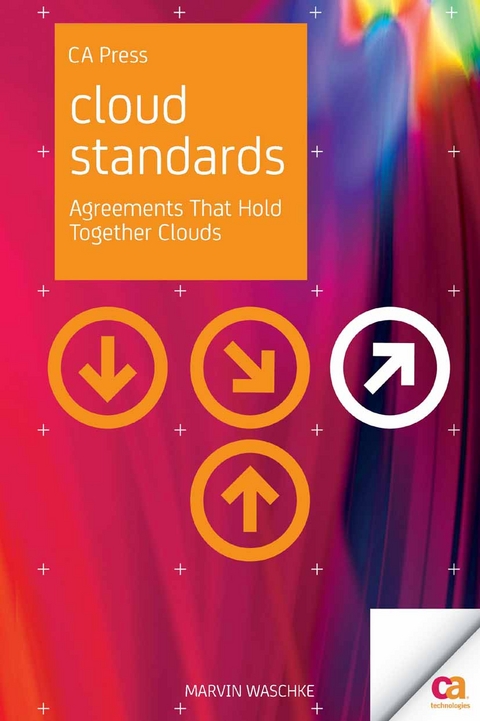
Cloud Standards is a broad discussion of important existing and future standards. For existing standards, the discussion focuses on how they are used, providing practical advice to engineers constructing clouds and services to be deployed on clouds. For future standards, the discussion is on why a standard is needed, what the benefits will be, and what is being done now to fill the gap. No current book provides this information in the depth and detail necessary for an engineer in his work, an architect in designing cloud systems, a product manager collecting and evaluating products, or an executive evaluating the feasibility of a project. A second benefit from this book is that it provides insight into cloud implementations. Cloud implementations can be seen as the culmination of many trends in software and hardware engineering. Much of the foundation for these developments have been crystallized in the form of standards like TCP/IP (Transmission Control Protocol/Internet Protocol) and HTTP (Hypertext Transmission Protocol). The book leads readers to understand how these contribute to and affect cloud implementations.
Unfortunately, emerging standards are often messy. Cloud implementers may need to choose between competing proposed standards. Sometimes it is better to reject the standard entirely and 'roll your own.' This book provides background for intelligent decisions.
Keeping a cloud, or an application implemented on a cloud, running well requires careful tuning of the implementation. Tuning often involves adjusting controls that are in the standard or applying the standard in less well-known ways. This book is an aid in tuning cloud systems for maximum benefits.
Marvin Waschke is a senior principal software architect at CA Technologies. His career has spanned the mainframe to the cloud. He has coded, designed, and managed the development of many systems, ranging through accounting, cell tower management, enterprise service desks, configuration management, and network management. He represents CA Technologies on the the DMTF Cloud Management Working Group, DMTF Open Virtualization Format Working Group, DMTF Common Information Model REST Interface Working Group, OASIS Topology and Orchestration Specification for Cloud Applications (TOSCA) Technical Committee, DMTF Cloud Auditing Data Federation Working Group (observer), DMTF Configuration Database Federation Working Group, W3C Service Modeling Language Working Group, and OASIS OData Technical Committee (observer). He is the editor-in-chief of the CA Technology Exchange (an online technical journal) and the author of Cloud Standards: Agreements That Hold Together Clouds.
Cloud computing is often described as providing computing resources the way electric utilities provide energy. In theory, anyone with an adequate connection to the Internet should be able to tap into a cloud provider and get exactly the computing resources they want when they want it, just like plugging into the electricity grid and getting exactly the energy you want when you want it. But to get that electricity, there are many standards: voltage, frequency, phase, motors constructed in standard ways-there is a long list; there is an equally long list for cloud computing. Many of the standards are already in place. Others are being developed; some in contention. Cloud Standards is a broad discussion of important existing and future standards. For existing standards, the discussionfocuses on how they are used, providing practical advice to engineers constructing clouds and services to be deployed on clouds. For future standards, the discussion is on why a standard is needed, what the benefits will be, and what is being done now to fill the gap. No current book provides this information in the depth and detail necessary for an engineer in his work, an architect in designing cloud systems, a product manager collecting and evaluating products, or an executive evaluating the feasibility of a project.A second benefit from this book is that itprovides insight into cloud implementations. Cloud implementations can be seen as the culmination of many trends in software and hardware engineering. Much of the foundation for these developments have been crystallized in the form of standards like TCP/IP (Transmission Control Protocol/Internet Protocol) and HTTP (Hypertext Transmission Protocol). The book leads readers to understand how these contribute to and affect cloud implementations. Unfortunately, emerging standards are often messy. Cloud implementers may need to choose between competing proposed standards. Sometimes it is better to reject the standard entirely and "e;roll your own."e;This book provides background for intelligent decisions. Keeping a cloud, or an application implemented on a cloud, running well requires careful tuning of the implementation. Tuning often involves adjusting controls that are in the standard or applying the standard in less well-known ways. This book is an aid in tuning cloud systems for maximum benefits.
Marvin Waschke is a senior principal software architect at CA Technologies. His career has spanned the mainframe to the cloud. He has coded, designed, and managed the development of many systems, ranging through accounting, cell tower management, enterprise service desks, configuration management, and network management. He represents CA Technologies on the the DMTF Cloud Management Working Group, DMTF Open Virtualization Format Working Group, DMTF Common Information Model REST Interface Working Group, OASIS Topology and Orchestration Specification for Cloud Applications (TOSCA) Technical Committee, DMTF Cloud Auditing Data Federation Working Group (observer), DMTF Configuration Database Federation Working Group, W3C Service Modeling Language Working Group, and OASIS OData Technical Committee (observer). He is the editor-in-chief of the CA Technology Exchange (an online technical journal) and the author of Cloud Standards: Agreements That Hold Together Clouds.
Setting the Scene, Some Cloud Scenarios
What are Standards? Why do they exist?
What is cloud?
Cloud Related Technologies and Services
Types of standards that go into the cloud and how they interact
Network Standards
Internet Standards
Web Services Standards
Security Standards
Cloud Specific Standards (This chapter will be long. Break it up?-marv)
Management Standards and Best Practices
Summing Up
| Erscheint lt. Verlag | 5.12.2012 |
|---|---|
| Zusatzinfo | XVIII, 380 p. |
| Verlagsort | Berkeley |
| Sprache | englisch |
| Themenwelt | Mathematik / Informatik ► Informatik ► Netzwerke |
| Informatik ► Weitere Themen ► Hardware | |
| ISBN-13 | 9781430241119 / 9781430241119 |
| Informationen gemäß Produktsicherheitsverordnung (GPSR) | |
| Haben Sie eine Frage zum Produkt? |
 PDF (Wasserzeichen)
DRM: Digitales Wasserzeichen
Dieses eBook enthält ein digitales Wasserzeichen und ist damit für Sie personalisiert. Bei einer missbräuchlichen Weitergabe des eBooks an Dritte ist eine Rückverfolgung an die Quelle möglich.
Dateiformat: PDF (Portable Document Format)
Mit einem festen Seitenlayout eignet sich die PDF besonders für Fachbücher mit Spalten, Tabellen und Abbildungen. Eine PDF kann auf fast allen Geräten angezeigt werden, ist aber für kleine Displays (Smartphone, eReader) nur eingeschränkt geeignet.
Systemvoraussetzungen:
PC/Mac: Mit einem PC oder Mac können Sie dieses eBook lesen. Sie benötigen dafür einen PDF-Viewer - z.B. den Adobe Reader oder Adobe Digital Editions.
eReader: Dieses eBook kann mit (fast) allen eBook-Readern gelesen werden. Mit dem amazon-Kindle ist es aber nicht kompatibel.
Smartphone/Tablet: Egal ob Apple oder Android, dieses eBook können Sie lesen. Sie benötigen dafür einen PDF-Viewer - z.B. die kostenlose Adobe Digital Editions-App.
Buying eBooks from abroad
For tax law reasons we can sell eBooks just within Germany and Switzerland. Regrettably we cannot fulfill eBook-orders from other countries.
aus dem Bereich