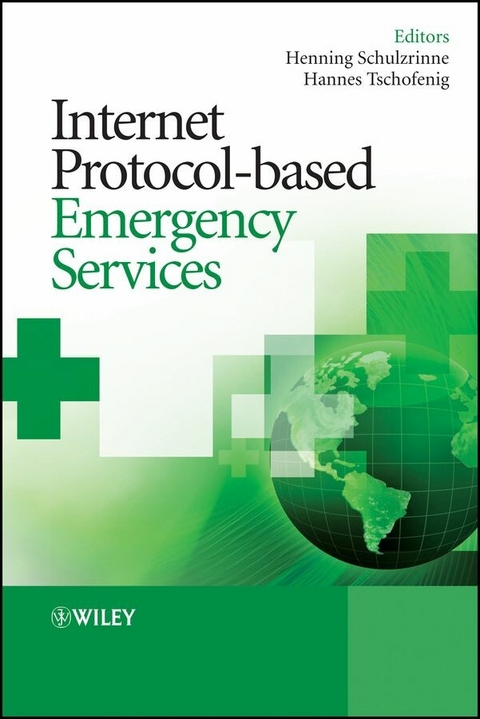
Internet Protocol-based Emergency Services (eBook)
Written by international experts in the field, this book covers the standards, architecture and deployment issues related to IP-based emergency services
This book brings together contributions from experts on technical and operational aspects within the international standardisation and regulatory processes relating to routing and handling of IP-based emergency calls. Readers will learn how these standards work, how various standardization organizations contributed to them and about pilot projects, early deployment and current regulatory situation.
Key Features:
- Provides an overview of how the standards related to IP-based emergency services work, and how various organizations contributed to them
- Focuses on SIP and IMS-based communication systems for the Internet
- Covers standards, architecture and deployment issues
- International focus, with coverage of the major national efforts in this area
- Written by the experts who were/are involved in the development of the standards (NENA, EENA, 3GPP, IETF, ETSI, etc.)
- Accompanying website provides updates on standards and deployment (http://ip-emergency.net)
This book is an excellent resource for vendors building software and equipment for emergency services, engineers/researchers engaged in development of networks and network elements and standardization, emergency services providers, standardization experts, product persons, those within the regulatory environment. Students and lecturers, infrastructure and application service providers will also find this book of interest.
Written by international experts in the field, this book covers the standards, architecture and deployment issues related to IP-based emergency services This book brings together contributions from experts on technical and operational aspects within the international standardisation and regulatory processes relating to routing and handling of IP-based emergency calls. Readers will learn how these standards work, how various standardization organizations contributed to them and about pilot projects, early deployment and current regulatory situation. Key Features: Provides an overview of how the standards related to IP-based emergency services work, and how various organizations contributed to them Focuses on SIP and IMS-based communication systems for the Internet Covers standards, architecture and deployment issues International focus, with coverage of the major national efforts in this area Written by the experts who were/are involved in the development of the standards (NENA, EENA, 3GPP, IETF, ETSI, etc.) Accompanying website provides updates on standards and deployment (http://ip-emergency.net) This book is an excellent resource for vendors building software and equipment for emergency services, engineers/researchers engaged in development of networks and network elements and standardization, emergency services providers, standardization experts, product persons, those within the regulatory environment. Students and lecturers, infrastructure and application service providers will also find this book of interest.
Professor Henning Schulzrinne, Columbia University, USA Henning Schulzrinne has worked on Internet-based emergency calling since 2001, and has helped design the overall emergency calling architecture, the service URN mechanism and the PSAP mapping protocol (LoST). Prior to that, he was a long-term participant in the IETF VoIP-related standardization process, starting with RTP and continuing with VoIP signaling (SIP). Henning currently teaches networking and related subjects at Columbia University. He has published numerous journal and conference articles, as well as two books. Henning is a Fellow of the IEEE. Hannes Tschofenig, Nokia Siemens Networks, Finland Hannes Tschofenig has worked on the topic of emergency services for the past 5 years in the area of standardization. He is Chair of the IETF Emergency Context Resolution with Internet Technology (ECRIT) working group with Marc Linsner, and Chair of the European Emergency Number Association (EENA) Next Generation 112 Technical Committee with Roger Hixson (NENA management person). Hannes and Henning have organized the SDO emergency services workshops with a small group of people, where they have contributed to a number of specifications in this field. Tschofenig has taught courses, and given presentations and tutorials about emergency services to other professionals.
"In addition, practitioners, product architects, and developers will find interesting and useful ideas. Many parts of the book can be recommended to experts working on standards and regulations." (IEEE Communications Magazine, 1 February 2015)
| Erscheint lt. Verlag | 28.5.2013 |
|---|---|
| Sprache | englisch |
| Themenwelt | Mathematik / Informatik ► Informatik ► Netzwerke |
| Sozialwissenschaften ► Soziologie | |
| Technik ► Elektrotechnik / Energietechnik | |
| Technik ► Nachrichtentechnik | |
| Schlagworte | Communication Technology - Networks • Computer Science • Drahtlose Kommunikation • Electrical & Electronics Engineering • Elektrotechnik u. Elektronik • Informatik • IP based emergency services, SIP, IMS, emergency services infrastructure, voice over IP, voip, GML, LLDP-MED, DHCP geo civic, IEEE protocols, New 3GPP location work, HELD, OMA SUPL, WiMAX, IETF, NENA i3, 3GPP IMS, WiMAX, Broadband Forum, WiFi Alliance, CableLabs, 3GPP2, NENA i2 Transition Architecture,US DoT NG-9-1-1 project, US DOT NG 9-1-1 Pilot Project, ETSI EMTEL, COMCARE, NENA, ATIS ESIF, EENA, E911 • Kommunikationsnetze • Mobile & Wireless Communications • Networking • Netzwerke |
| ISBN-13 | 9781118652473 / 9781118652473 |
| Informationen gemäß Produktsicherheitsverordnung (GPSR) | |
| Haben Sie eine Frage zum Produkt? |
 EPUB (Adobe DRM)
Größe: 3,0 MB
Kopierschutz: Adobe-DRM
Adobe-DRM ist ein Kopierschutz, der das eBook vor Mißbrauch schützen soll. Dabei wird das eBook bereits beim Download auf Ihre persönliche Adobe-ID autorisiert. Lesen können Sie das eBook dann nur auf den Geräten, welche ebenfalls auf Ihre Adobe-ID registriert sind.
Details zum Adobe-DRM
Dateiformat: EPUB (Electronic Publication)
EPUB ist ein offener Standard für eBooks und eignet sich besonders zur Darstellung von Belletristik und Sachbüchern. Der Fließtext wird dynamisch an die Display- und Schriftgröße angepasst. Auch für mobile Lesegeräte ist EPUB daher gut geeignet.
Systemvoraussetzungen:
PC/Mac: Mit einem PC oder Mac können Sie dieses eBook lesen. Sie benötigen eine
eReader: Dieses eBook kann mit (fast) allen eBook-Readern gelesen werden. Mit dem amazon-Kindle ist es aber nicht kompatibel.
Smartphone/Tablet: Egal ob Apple oder Android, dieses eBook können Sie lesen. Sie benötigen eine
Geräteliste und zusätzliche Hinweise
Buying eBooks from abroad
For tax law reasons we can sell eBooks just within Germany and Switzerland. Regrettably we cannot fulfill eBook-orders from other countries.
 PDF (Adobe DRM)
Kopierschutz: Adobe-DRM
Adobe-DRM ist ein Kopierschutz, der das eBook vor Mißbrauch schützen soll. Dabei wird das eBook bereits beim Download auf Ihre persönliche Adobe-ID autorisiert. Lesen können Sie das eBook dann nur auf den Geräten, welche ebenfalls auf Ihre Adobe-ID registriert sind.
Details zum Adobe-DRM
Dateiformat: PDF (Portable Document Format)
Mit einem festen Seitenlayout eignet sich die PDF besonders für Fachbücher mit Spalten, Tabellen und Abbildungen. Eine PDF kann auf fast allen Geräten angezeigt werden, ist aber für kleine Displays (Smartphone, eReader) nur eingeschränkt geeignet.
Systemvoraussetzungen:
PC/Mac: Mit einem PC oder Mac können Sie dieses eBook lesen. Sie benötigen eine
eReader: Dieses eBook kann mit (fast) allen eBook-Readern gelesen werden. Mit dem amazon-Kindle ist es aber nicht kompatibel.
Smartphone/Tablet: Egal ob Apple oder Android, dieses eBook können Sie lesen. Sie benötigen eine
Geräteliste und zusätzliche Hinweise
Buying eBooks from abroad
For tax law reasons we can sell eBooks just within Germany and Switzerland. Regrettably we cannot fulfill eBook-orders from other countries.
aus dem Bereich