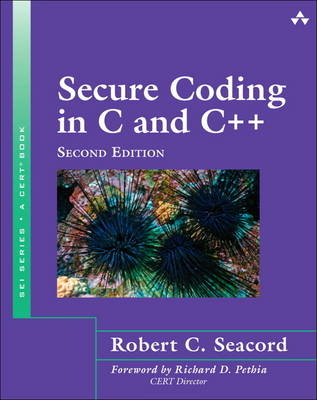
Secure Coding in C and C++ (eBook)
608 Seiten
Pearson Education (Verlag)
9780132981972 (ISBN)
Learn the Root Causes of Software Vulnerabilities and How to Avoid Them
Commonly exploited software vulnerabilities are usually caused by avoidable software defects. Having analyzed tens of thousands of vulnerability reports since 1988, CERT has determined that a relatively small number of root causes account for most of the vulnerabilities.
Secure Coding in C and C++, Second Edition, identifies and explains these root causes and shows the steps that can be taken to prevent exploitation. Moreover, this book encourages programmers to adopt security best practices and to develop a security mindset that can help protect software from tomorrow's attacks, not just today's. Drawing on the CERT's reports and conclusions, Robert C. Seacord systematically identifies the program errors most likely to lead to security breaches, shows how they can be exploited, reviews the potential consequences, and presents secure alternatives.
Coverage includes technical detail on how toImprove the overall security of any C or C++ applicationThwart buffer overflows, stack-smashing, and return-oriented programming attacks that exploit insecure string manipulation logicAvoid vulnerabilities and security flaws resulting from the incorrect use of dynamic memory management functionsEliminate integer-related problems resulting from signed integer overflows, unsigned integer wrapping, and truncation errorsPerform secure I/O, avoiding file system vulnerabilitiesCorrectly use formatted output functions without introducing format-string vulnerabilitiesAvoid race conditions and other exploitable vulnerabilities while developing concurrent code
The second edition features Updates for C11 and C++11Significant revisions to chapters on strings, dynamic memory management, and integer securityA new chapter on concurrencyAccess to the online secure coding course offered through Carnegie Mellon's Open Learning Initiative (OLI)
Secure Coding in C and C++, Second Edition, presents hundreds of examples of secure code, insecure code, and exploits, implemented for Windows and Linux. If you're responsible for creating secure C or C++ software–or for keeping it safe–no other book offers you this much detailed, expert assistance.
Learn the Root Causes of Software Vulnerabilities and How to Avoid Them Commonly exploited software vulnerabilities are usually caused by avoidable software defects. Having analyzed tens of thousands of vulnerability reports since 1988, CERT has determined that a relatively small number of root causes account for most of the vulnerabilities. Secure Coding in C and C++, Second Edition, identifies and explains these root causes and shows the steps that can be taken to prevent exploitation. Moreover, this book encourages programmers to adopt security best practices and to develop a security mindset that can help protect software from tomorrow's attacks, not just today's. Drawing on the CERT's reports and conclusions, Robert C. Seacord systematically identifies the program errors most likely to lead to security breaches, shows how they can be exploited, reviews the potential consequences, and presents secure alternatives. Coverage includes technical detail on how to Improve the overall security of any C or C++ application Thwart buffer overflows, stack-smashing, and return-oriented programming attacks that exploit insecure string manipulation logic Avoid vulnerabilities and security flaws resulting from the incorrect use of dynamic memory management functions Eliminate integer-related problems resulting from signed integer overflows, unsigned integer wrapping, and truncation errors Perform secure I/O, avoiding file system vulnerabilities Correctly use formatted output functions without introducing format-string vulnerabilities Avoid race conditions and other exploitable vulnerabilities while developing concurrent code The second edition features Updates for C11 and C++11 Significant revisions to chapters on strings, dynamic memory management, and integer security A new chapter on concurrency Access to the online secure coding course offered through Carnegie Mellon's Open Learning Initiative (OLI) Secure Coding in C and C++, Second Edition, presents hundreds of examples of secure code, insecure code, and exploits, implemented for Windows and Linux. If you're responsible for creating secure C or C++ software-or for keeping it safe-no other book offers you this much detailed, expert assistance.
| Erscheint lt. Verlag | 23.3.2013 |
|---|---|
| Sprache | englisch |
| Themenwelt | Informatik ► Netzwerke ► Sicherheit / Firewall |
| Mathematik / Informatik ► Informatik ► Programmiersprachen / -werkzeuge | |
| ISBN-13 | 9780132981972 / 9780132981972 |
| Informationen gemäß Produktsicherheitsverordnung (GPSR) | |
| Haben Sie eine Frage zum Produkt? |
 EPUB (Adobe DRM)
Kopierschutz: Adobe-DRM
Adobe-DRM ist ein Kopierschutz, der das eBook vor Mißbrauch schützen soll. Dabei wird das eBook bereits beim Download auf Ihre persönliche Adobe-ID autorisiert. Lesen können Sie das eBook dann nur auf den Geräten, welche ebenfalls auf Ihre Adobe-ID registriert sind.
Details zum Adobe-DRM
Dateiformat: EPUB (Electronic Publication)
EPUB ist ein offener Standard für eBooks und eignet sich besonders zur Darstellung von Belletristik und Sachbüchern. Der Fließtext wird dynamisch an die Display- und Schriftgröße angepasst. Auch für mobile Lesegeräte ist EPUB daher gut geeignet.
Systemvoraussetzungen:
PC/Mac: Mit einem PC oder Mac können Sie dieses eBook lesen. Sie benötigen eine
eReader: Dieses eBook kann mit (fast) allen eBook-Readern gelesen werden. Mit dem amazon-Kindle ist es aber nicht kompatibel.
Smartphone/Tablet: Egal ob Apple oder Android, dieses eBook können Sie lesen. Sie benötigen eine
Geräteliste und zusätzliche Hinweise
Buying eBooks from abroad
For tax law reasons we can sell eBooks just within Germany and Switzerland. Regrettably we cannot fulfill eBook-orders from other countries.
aus dem Bereich