


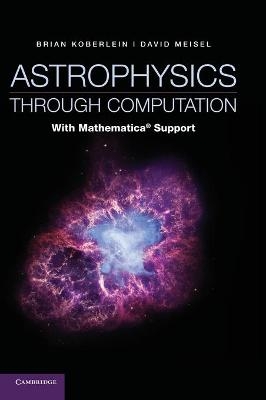
Astrophysics through Computation
With Mathematica® Support
Seiten
2013
Cambridge University Press (Verlag)
978-1-107-01074-1 (ISBN)
Cambridge University Press (Verlag)
978-1-107-01074-1 (ISBN)
Beginning with first principles and using simplifying approximations, this new astrophysics text integrates analytical and computational methods to explore a broad range of topics in the field. The book uses the advanced computational tools to develop a deeper understanding both of the subject and modern analysis methods.
This new text surveys a series of fundamental problems in astrophysics, both analytically and computationally, for advanced students in physics and astrophysics. The contents are supported by more than 110 class-tested Mathematica® notebooks, allowing rigorous solutions to be explored in a visually engaging way. Topics covered include many classical and historically interesting problems, enabling students to appreciate the mathematical and scientific challenges that have been overcome in the subject's development. The text also shows the advantages and disadvantages of using analytical and computational methods. It will serve students, professionals and capable amateurs to master the quantitative details of modern astrophysics and the computational aspects of their research projects. Downloadable Mathematica® resources available at www.cambridge.org/koberlein.
This new text surveys a series of fundamental problems in astrophysics, both analytically and computationally, for advanced students in physics and astrophysics. The contents are supported by more than 110 class-tested Mathematica® notebooks, allowing rigorous solutions to be explored in a visually engaging way. Topics covered include many classical and historically interesting problems, enabling students to appreciate the mathematical and scientific challenges that have been overcome in the subject's development. The text also shows the advantages and disadvantages of using analytical and computational methods. It will serve students, professionals and capable amateurs to master the quantitative details of modern astrophysics and the computational aspects of their research projects. Downloadable Mathematica® resources available at www.cambridge.org/koberlein.
Brian Koberlein is Senior Lecturer in Physics and Astronomy at the Rochester Institute of Technology. David Meisel is Distinguished Professor of Physics and Astronomy at the State University of New York, Geneseo.
Preface; 1. Introduction; 2. Stellar atmospheres; 3. Stellar interiors; 4. Extreme classical stars; 5. General relativity and applications; 6. Binaries and clusters; 7. Astrophysical plasmas; 8. Galaxies; 9. Cosmic structures; References; Index.
| Zusatzinfo | Worked examples or Exercises; 12 Tables, unspecified; 98 Halftones, unspecified |
|---|---|
| Verlagsort | Cambridge |
| Sprache | englisch |
| Maße | 208 x 254 mm |
| Gewicht | 1270 g |
| Themenwelt | Mathematik / Informatik ► Mathematik ► Angewandte Mathematik |
| Naturwissenschaften ► Physik / Astronomie ► Astronomie / Astrophysik | |
| ISBN-10 | 1-107-01074-8 / 1107010748 |
| ISBN-13 | 978-1-107-01074-1 / 9781107010741 |
| Zustand | Neuware |
| Informationen gemäß Produktsicherheitsverordnung (GPSR) | |
| Haben Sie eine Frage zum Produkt? |
Mehr entdecken
aus dem Bereich

aus dem Bereich
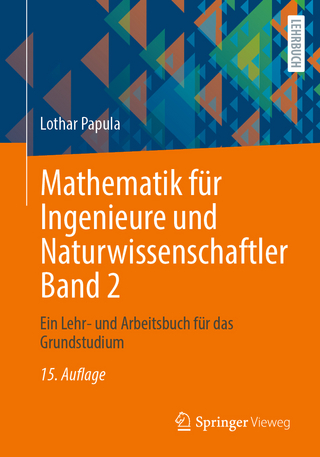
für Ingenieure und Naturwissenschaftler
Buch | Softcover (2024)
Springer Vieweg (Verlag)
CHF 48,95
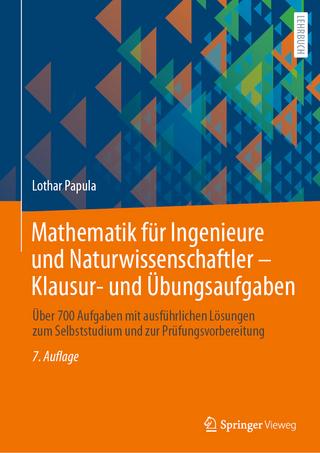
Buch | Softcover (2025)
Springer Vieweg (Verlag)
CHF 62,95
Buch | Softcover (2025)
Springer Fachmedien Wiesbaden (Verlag)
CHF 69,95


