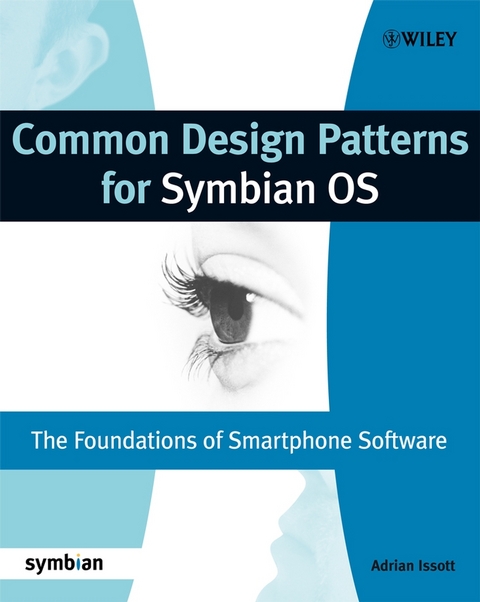
Common Design Patterns for Symbian OS (eBook)
- Provides patterns based on the Symbian OS architectural elements
- Describes how patterns suited for non-mobile software should be adapted or even avoided for Symbian OS
- Provides Symbian OS based examples and code illustrations
Each chapter covers patterns that address specific key concern experienced by developers: memory performance, time performance, power performance, security and responsiveness.
This book is not specific to any particular version of Symbian OS. While individual examples may come from one version or another the patterns outlined in this book are intended to be more generic and based on the common functionality available in all releases. Where possible the examples given for the design patterns will directly reflect the software in Symbian OS.
Common Design Patterns for Symbian OS is intended to be used in conjunction with one or more SDKs for specific Symbian OS phones and with the resources available at the Symbian DevNet web site. This facility will provide the background material needed to help understand the patterns and the examples accompanying them.
Adrian Issott works as a System Architect, in the System Characteristics team for Symbian and is currently on secondment to the Location Based Services team leading the technical support team to ensure that the Japanese MOAP platform successfully integrates both Symbian's existing and currently being developed LBS functionality into devices being created this year. Previously Adrian worked as Software Developer for the Shortlink (Bluetooth, IR and USB) team, and qualified as an Accredited Symbian Developer in February 2006.
Common Design Patterns for Symbian OS is the first design patterns book that addresses Symbian OS specifically. It introduces programmers to the common design patterns that help implement a large variety of applications and services on Symbian OS. The goal of the book is to provide the experience of Symbian's developers to a wider audience and enable sophisticated programs to be quickly written and to a high standard. In order to do this, it: Provides patterns based on the Symbian OS architectural elements Describes how patterns suited for non-mobile software should be adapted or even avoided for Symbian OS Provides Symbian OS based examples and code illustrations Each chapter covers patterns that address specific key concern experienced by developers: memory performance, time performance, power performance, security and responsiveness. This book is not specific to any particular version of Symbian OS. While individual examples may come from one version or another the patterns outlined in this book are intended to be more generic and based on the common functionality available in all releases. Where possible the examples given for the design patterns will directly reflect the software in Symbian OS. Common Design Patterns for Symbian OS is intended to be used in conjunction with one or more SDKs for specific Symbian OS phones and with the resources available at the Symbian DevNet web site. This facility will provide the background material needed to help understand the patterns and the examples accompanying them.
Adrian Issott works as a System Architect, in the System Characteristics team for Symbian and is currently on secondment to the Location Based Services team leading the technical support team to ensure that the Japanese MOAP platform successfully integrates both Symbian's existing and currently being developed LBS functionality into devices being created this year. Previously Adrian worked as Software Developer for the Shortlink (Bluetooth, IR and USB) team, and qualified as an Accredited Symbian Developer in February 2006.
Author Biographies.
Authors' Acknowledgments.
Foreword.
Glossary.
1 Introduction.
1.1 About this Book.
1.2 Who this Book Is For.
1.3 Which Version of Symbian OS this Book Is For.
1.4 General Design Patterns.
1.5 Symbian OS Patterns.
1.6 Design Pattern Template.
1.7 Structure of this Book.
1.8 Conventions.
1.9 Other Sources of Information.
2 Error-Handling Strategies.
Fail Fast.
Escalate Errors.
3 Resource Lifetimes.
Immortal.
Lazy Allocation.
Lazy De-allocation.
4 Event-Driven Programming.
Event Mixin.
Request Completion.
Publish and Subscribe.
5 Cooperative Multitasking.
Active Objects.
Asynchronous Controller.
6 Providing Services.
Client-Thread Service.
Client-Server.
Coordinator.
7 Security.
Secure Agent.
Buckle.
Quarantine.
Cradle.
8 Optimizing Execution Time.
Episodes.
Data Press.
9 Mapping Well-Known Patterns onto Symbian OS.
Model-View-Controller.
Singleton.
Adapter.
Handle-Body.
Appendix: Impact Analysis of Recurring Consequences.
References.
Index.
| Erscheint lt. Verlag | 13.10.2008 |
|---|---|
| Reihe/Serie | Symbian Press |
| Symbian Press | Symbian Press |
| Sprache | englisch |
| Themenwelt | Mathematik / Informatik ► Informatik ► Betriebssysteme / Server |
| Informatik ► Weitere Themen ► Hardware | |
| Schlagworte | Allg. Betriebssysteme • Computer-Ratgeber • End-User Computing • mobile phones, enterprise applications, Symbian OS, Symbian OS phones, phones, design patterns, design patterns for Symbian OS • Operating Systems (General) • Symbian OS |
| ISBN-10 | 0-470-75896-1 / 0470758961 |
| ISBN-13 | 978-0-470-75896-0 / 9780470758960 |
| Informationen gemäß Produktsicherheitsverordnung (GPSR) | |
| Haben Sie eine Frage zum Produkt? |
 PDF (Adobe DRM)
Kopierschutz: Adobe-DRM
Adobe-DRM ist ein Kopierschutz, der das eBook vor Mißbrauch schützen soll. Dabei wird das eBook bereits beim Download auf Ihre persönliche Adobe-ID autorisiert. Lesen können Sie das eBook dann nur auf den Geräten, welche ebenfalls auf Ihre Adobe-ID registriert sind.
Details zum Adobe-DRM
Dateiformat: PDF (Portable Document Format)
Mit einem festen Seitenlayout eignet sich die PDF besonders für Fachbücher mit Spalten, Tabellen und Abbildungen. Eine PDF kann auf fast allen Geräten angezeigt werden, ist aber für kleine Displays (Smartphone, eReader) nur eingeschränkt geeignet.
Systemvoraussetzungen:
PC/Mac: Mit einem PC oder Mac können Sie dieses eBook lesen. Sie benötigen eine
eReader: Dieses eBook kann mit (fast) allen eBook-Readern gelesen werden. Mit dem amazon-Kindle ist es aber nicht kompatibel.
Smartphone/Tablet: Egal ob Apple oder Android, dieses eBook können Sie lesen. Sie benötigen eine
Geräteliste und zusätzliche Hinweise
Buying eBooks from abroad
For tax law reasons we can sell eBooks just within Germany and Switzerland. Regrettably we cannot fulfill eBook-orders from other countries.
aus dem Bereich