Digital Forensics (eBook)
John Wiley & Sons (Verlag)
978-0-470-71442-3 (ISBN)
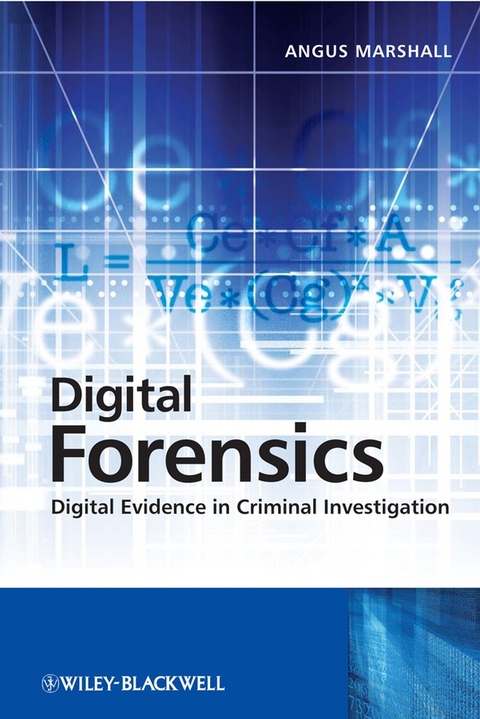
Taking a new approach to the topic, this book presents digital evidence as an adjunct to other types of evidence and discusses how it can be deployed effectively in support of investigations. The book provides investigators/SSMs/other managers with sufficient contextual and technical information to be able to make more effective use of digital evidence sources in support of a range of investigations. In particular, it considers the roles played by digital devices in society and hence in criminal activities. From this, it examines the role and nature of evidential data which may be recoverable from a range of devices, considering issues relating to reliability and usefulness of those data.
- Includes worked case examples, test questions and review quizzes to enhance student understanding
- Solutions provided in an accompanying website
- Includes numerous case studies throughout to highlight how digital evidence is handled at the crime scene and what can happen when procedures are carried out incorrectly
- Considers digital evidence in a broader context alongside other scientific evidence
- Discusses the role of digital devices in criminal activities and provides methods for the evaluation and prioritizing of evidence sources
- Includes discussion of the issues surrounding modern digital evidence examinations, for example; volume of material and its complexity
- Clear overview of all types of digital evidence
Digital Forensics: Digital Evidence in Criminal Investigations is an invaluable text for undergraduate students taking either general forensic science courses where digital forensics may be a module or a dedicated computer/digital forensics degree course. The book is also a useful overview of the subject for postgraduate students and forensic practitioners.
Angus McKenzie Marshall, Senior Lecturer in Forensic Science, School of Science & Technology, University of Teesside, Middlesbrough, UK.
The vast majority of modern criminal investigations involve some element of digital evidence, from mobile phones, computers, CCTV and other devices. Digital Forensics: Digital Evidence in Criminal Investigations provides the reader with a better understanding of how digital evidence complements traditional scientific evidence and examines how it can be used more effectively and efficiently in a range of investigations. Taking a new approach to the topic, this book presents digital evidence as an adjunct to other types of evidence and discusses how it can be deployed effectively in support of investigations. The book provides investigators/SSMs/other managers with sufficient contextual and technical information to be able to make more effective use of digital evidence sources in support of a range of investigations. In particular, it considers the roles played by digital devices in society and hence in criminal activities. From this, it examines the role and nature of evidential data which may be recoverable from a range of devices, considering issues relating to reliability and usefulness of those data. Includes worked case examples, test questions and review quizzes to enhance student understanding Solutions provided in an accompanying website Includes numerous case studies throughout to highlight how digital evidence is handled at the crime scene and what can happen when procedures are carried out incorrectly Considers digital evidence in a broader context alongside other scientific evidence Discusses the role of digital devices in criminal activities and provides methods for the evaluation and prioritizing of evidence sources Includes discussion of the issues surrounding modern digital evidence examinations, for example; volume of material and its complexity Clear overview of all types of digital evidence Digital Forensics: Digital Evidence in Criminal Investigations is an invaluable text for undergraduate students taking either general forensic science courses where digital forensics may be a module or a dedicated computer/digital forensics degree course. The book is also a useful overview of the subject for postgraduate students and forensic practitioners.
Angus McKenzie Marshall, Senior Lecturer in Forensic Science, School of Science & Technology, University of Teesside, Middlesbrough, UK.
Digital Forensics Digital Evidence in Criminal Investigation 1
Contents 7
Preface 9
Acknowledgments 13
List of Tables 14
List of Figures 15
1 Introduction 17
1.1 Key developments 17
1.2 Digital devices in society 21
1.3 Technology and culture 22
1.4 Comment 23
2 Evidential Potential of Digital Devices 25
2.1 Closed vs. open systems 26
2.2 Evaluating digital evidence potential 33
3 Device Handling 35
3.1 Seizure issues 37
3.2 Device identification 47
3.3 Networked devices 52
3.4 Contamination 56
4 Examination Principles 59
4.1 Previewing 59
4.2 Imaging 63
4.3 Continuity and hashing 64
4.4 Evidence locations 65
5 Evidence Creation 71
5.1 A seven-element security model 72
5.2 A developmental model of digital systems 76
5.3 Knowing 77
5.4 Unknowing 79
5.5 Audit and logs 84
6 Evidence Interpretation 85
6.1 Data content 85
6.2 Data context 99
7 Internet Activity 101
7.1 A little bit of history 101
7.2 The ISO/OSI model 102
7.3 The Internet Protocol suite 106
7.4 DNS 110
7.5 Internet applications 112
8 Mobile Devices 125
8.1 Mobile phones and PDAs 125
8.2 GPS 132
8.3 Other personal technology 134
9 Intelligence 135
9.1 Device usage 135
9.2 Profiling and cyberprofiling 137
9.3 Evaluating online crime: automating the model 140
9.4 Application of the formula to case studies 142
9.5 From success estimates to profiling 145
9.6 Comments 145
10 Case Studies and Examples 147
10.1 Introduction 147
10.2 Copyright violation 147
10.3 Missing person and murder 149
10.4 The view of a defence witness 153
Appendix A The “Aircraft Carrier” PC 157
Appendix B Additional Resources 161
B.1 Hard disc and storage laboratory tools 161
B.2 Mobile phone/PDA tools 162
B.3 Live CDs 162
B.4 Recommended reading 162
Appendix C SIM Card Data Report 165
References 173
Index 177
?This book presents digital evidence as an adjunct to other types
of evidence and discusses how it can be deployed effectively in
support of investigations.? (Reviews, May 2009)
| Erscheint lt. Verlag | 15.7.2009 |
|---|---|
| Sprache | englisch |
| Themenwelt | Mathematik / Informatik ► Informatik ► Netzwerke |
| Studium ► Querschnittsbereiche ► Infektiologie / Immunologie | |
| Naturwissenschaften ► Biologie | |
| Naturwissenschaften ► Chemie ► Analytische Chemie | |
| Recht / Steuern ► Strafrecht ► Kriminologie | |
| Sozialwissenschaften | |
| Schlagworte | application • Bioinformatics & Computational Biology • Bioinformatik • Bioinformatik u. Computersimulationen in der Biowissenschaften • Biowissenschaften • Bit • Computer Science • Copyright • Crime • Defence • Developmental • devices • Element • Estimates • Evidence • evidential • Forensic Psychology • Forensische Psychologie • Forensische Wissenschaft • formula • History • Informatik • Life Sciences • Little • Model • Networking / Security • Netzwerke / Sicherheit • Netzwerksicherheit • Online • Personal • Potential • Psychologie • Psychology • Society • Studies • Suite • Systems • View • Witness |
| ISBN-10 | 0-470-71442-5 / 0470714425 |
| ISBN-13 | 978-0-470-71442-3 / 9780470714423 |
| Informationen gemäß Produktsicherheitsverordnung (GPSR) | |
| Haben Sie eine Frage zum Produkt? |
 PDF (Adobe DRM)
Kopierschutz: Adobe-DRM
Adobe-DRM ist ein Kopierschutz, der das eBook vor Mißbrauch schützen soll. Dabei wird das eBook bereits beim Download auf Ihre persönliche Adobe-ID autorisiert. Lesen können Sie das eBook dann nur auf den Geräten, welche ebenfalls auf Ihre Adobe-ID registriert sind.
Details zum Adobe-DRM
Dateiformat: PDF (Portable Document Format)
Mit einem festen Seitenlayout eignet sich die PDF besonders für Fachbücher mit Spalten, Tabellen und Abbildungen. Eine PDF kann auf fast allen Geräten angezeigt werden, ist aber für kleine Displays (Smartphone, eReader) nur eingeschränkt geeignet.
Systemvoraussetzungen:
PC/Mac: Mit einem PC oder Mac können Sie dieses eBook lesen. Sie benötigen eine
eReader: Dieses eBook kann mit (fast) allen eBook-Readern gelesen werden. Mit dem amazon-Kindle ist es aber nicht kompatibel.
Smartphone/Tablet: Egal ob Apple oder Android, dieses eBook können Sie lesen. Sie benötigen eine
Geräteliste und zusätzliche Hinweise
Buying eBooks from abroad
For tax law reasons we can sell eBooks just within Germany and Switzerland. Regrettably we cannot fulfill eBook-orders from other countries.
aus dem Bereich